This is my mam’s 55-year-old vintage coat. Her Aunt Teresa brought it home to her from England in the late 1960’s. I didn’t know until a few days ago that she still had it. She probably kept it because it’s red; her favourite colour.
Well, it’s mine now and it fits me just fine. Thanks Mammy; I love it! I’m looking forward to wearing it next winter!
A couple of buttons got lost along the way so I just need to find new ones.
“I probably took them off to put them on something else,” Mam said.
I excused Lucy from drawing today. She’s busy making jewellery for charity.
The rules are different now…when you go to the pub! The whole scene has changed.
Once upon a time in Bailieborough, which was quite a small town years ago, there were about 32 pubs.
The weekend began on a Thursday night and finished on a Sunday night. We went out early—8 or 9pm. We didn’t drink before we went out, which is a common thing now. In my early pub days my drink was Harp lager and lime. I later upgraded to cans of Tennants. Then as I became more sophisticated (so I thought), my tipple was dry Martini and red lemonade. Wine was not something we drank back then. We knew of Blue Nun and it was bought at Christmas time.
We’d traipse off to town in our miniskirts and high heels; Julie, Tricia, Eileen and me. One summer’s evening, I was wearing a pair of light pink cotton trousers and a white jacket. We were walking down the hill from Drumbannon (where we lived) and I slipped and landed on my butt in a big dirty puddle. I had to go home and change all my clothes but we laughed the whole night afterwards. A small incident like that wasn’t enough to stop me from a night out!
Our favourite haunts in the 80’s were Kangleys, The Chariot, The Town and Country, The Green Lizard, The Lemon Tree, and Dicey Reilly’s. Yes, there were a lot to choose from.
From Thursday nights to Sunday nights certain pubs had live music playing; Kangley’s on a Thursday, the Town and Country on a Friday and maybe a Saturday too. The Town and Country had a dance floor, so it was a great pub for a hooley. Dicey Reilly’s had music at the weekends but they didn’t have a dance floor; we danced anyway. Many a late night we had in Dicey’s, many lock-ins when the music was long finished and we’d have a great big sing-song. Whiskey in the Jar, The Wild Rover, Spancil Hill, The Fields of Athenry, Fiddler’s Green, Summer in Dublin and Molly Malone were just some of the songs we’d belt out! It was even better when someone would have a guitar.
People bought drinks in rounds. Everyone had their turn, although the odd lad might disappear when it was his round! And it was the same with the cigarettes. You didn’t light up a cigarette without first offering all the smokers at your table one. Everyone smoked at the same speed in the pub—ashtrays were filled within an hour. No wonder a box of twenty was gone before the end of the night!
Having the Craic in Dicey Reilly’s
We were known to have the odd session that ran into the early hours. Once or twice the Guards came knocking and we’d all scarper out the back door and hide in the yard until they were gone. We’d go back in and carry on with our night’s craic. If you were caught in a pub after hours, the Guards took your name and you were fined. But worst than any fine was getting your name published in the local newspaper, The Celt.
Old Mrs Kangley used to say at closing time, “Do yas want your name in The Celt?” She wasn’t fond of the late night drinkers.
Julia Giles from The Green Lizard used to say, “The clock is ticking. Have yas no homes to go to?”
Our pub nights out weren’t restricted to town. The Royal Breffni in Tierworker, owned by Brendan Reilly at the time, was a great venue for live music. They had a great big dance floor too and the place would be packed. It was a great place for country and western music, and Irish bands like the Wolfe Tones.
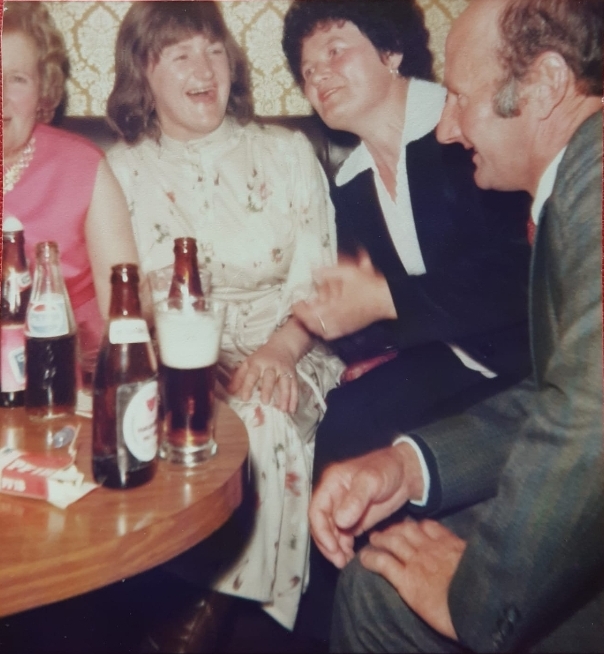
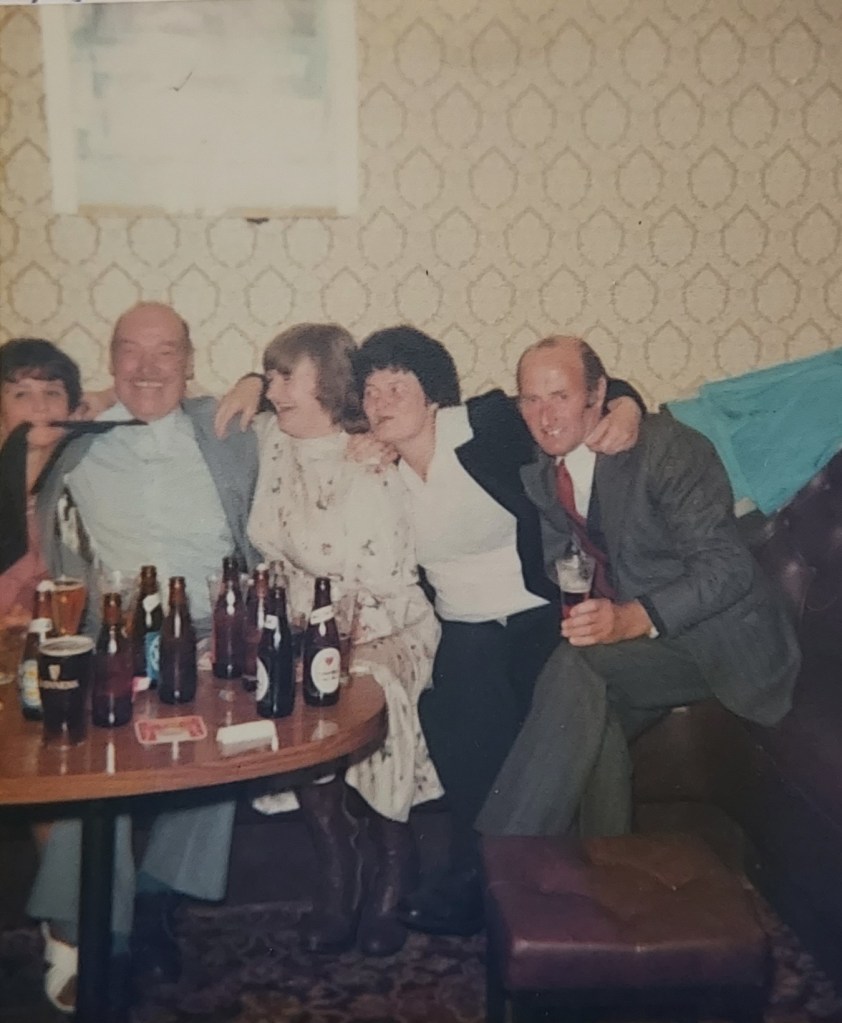
These photos were taken in The Royal Breffni during the 70’s.
Mam was never a smoker. She did this for the laugh!AuntieBridie, Marie, Veronica & Tommy!Bridie Clarke, Jay, Marie, Veronica & Tommy
The Hideout on the outskirts of town was a great venue for parties and dancing. It’s still there but I think it’s a quiet place now compared to what it once was.
These smoke-filled pubs would have been busy every weekend. They hummed with cheer and tomfoolery. Very few people drank at home back then and everyone drove to and from the pub.
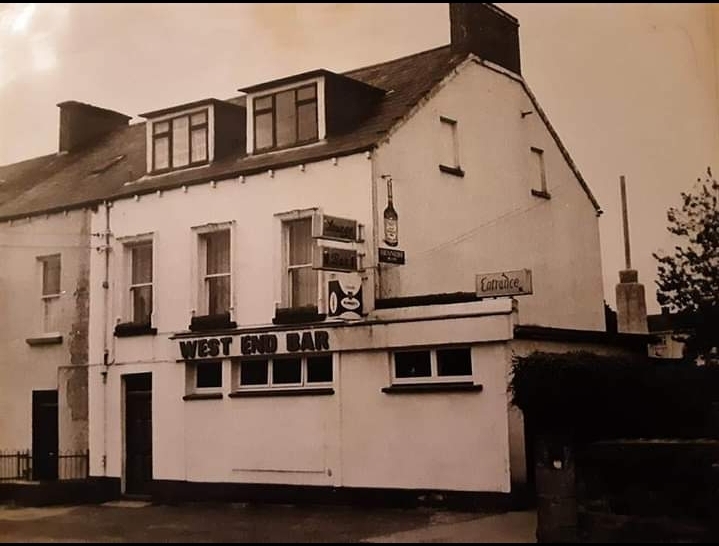
Here’s a typical pub scene from the 70’s/80’s. These photos of the West End Bar belong to Justin Kelly, whose parents owned the West End Bar for many years.
There’s very few pubs left in Bailieborough. The only ones of our 80’s haunts that’s still going is The Green Lizard and The Lemon Tree also known as Miko’s—a family run pub that hasn’t changed much over the years, apart from a bit of refurbishment.
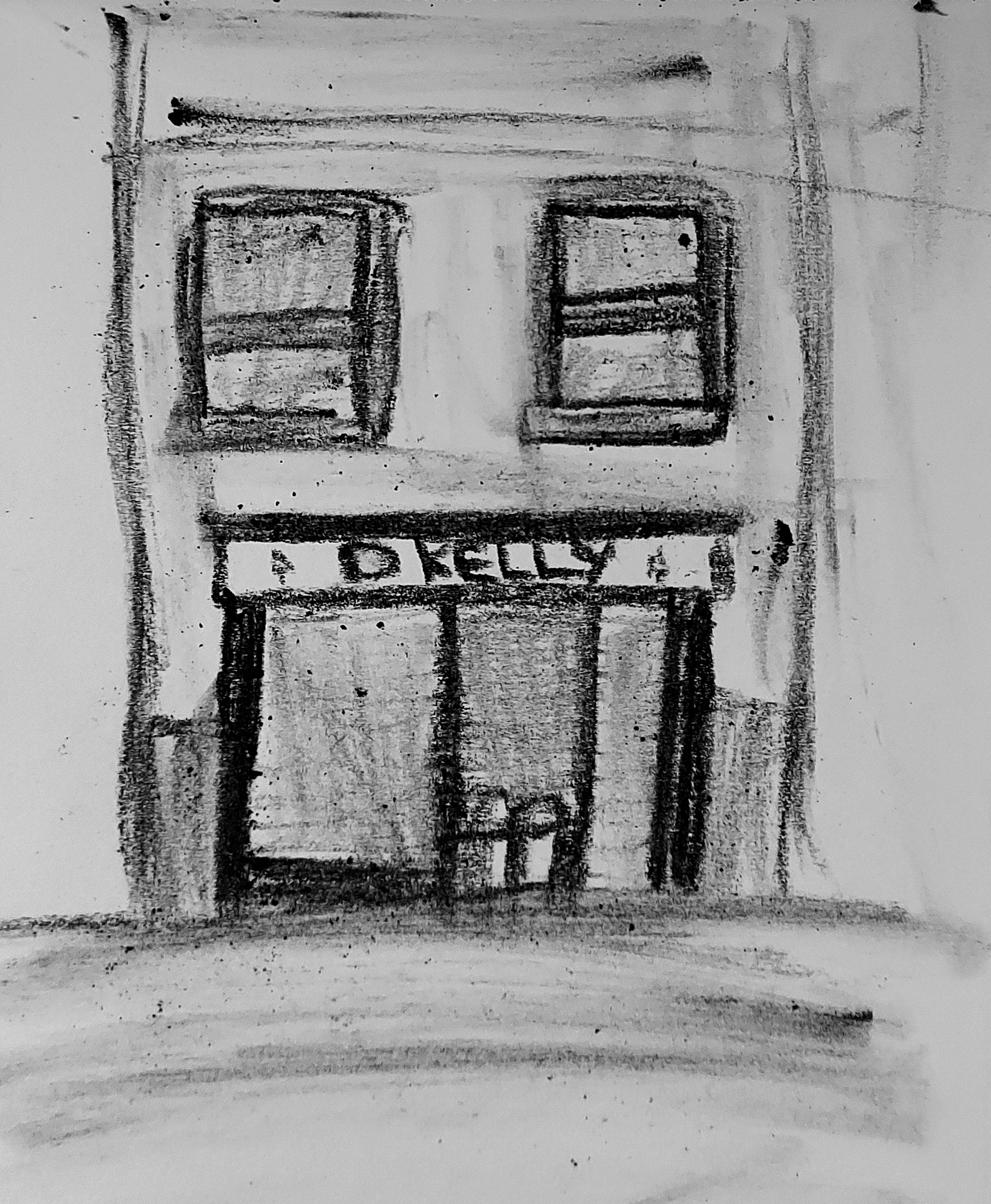
Lucy’s Drawing of The Lemon Tree, Bailieborough.
Here’s my list of the 33 pubs that used to be in Bailieborough, including the few that still are. Starting from the bottom of Main Street. I may be double counting because I believe there were only 32.
Crossons, The Snug, Ted Reilly’s, Tom Reilly’s (Post Office), Peter Murtagh’s, The Bailie Hotel, Tommy O’Brien’s, The Cusack Stand, The Lemon Tree, Petey Clarke’s known as the Fiddler, McDonnells, which is now The Green Lizard (Giles) but I’ve also been informed that it was called Dowd’s. The original Green Lizard was beside the Lemon Tree. There was McGuigan’s, and Mary Geelan’s behind Sheanon’s house (later became the Pop Inn Chipper). Apparently there was a pub at Mrs Pat Brady’s on the corner of Main Street/Barrack Street, that you entered on Barrack Street.
Henry Street ; Brady’s on the corner.
Anne Street; The Welcome Inn (Mary Ann’s), The West End Bar on the Back Road.
Back to main Street; McCabes, Clarkes, Kangley’s, The Chariot, Sullivans (later The Town and Country), John Reilly’s, Benny Duffy’s, Brennan’s Lodge, The Beaver Dam, Clarke’s, Mickey Brady’s, O’Hanlon’s (later Dicey’s).
The country pubs on the outskirts of town; The Hideout on the Cavan road, Killan, Smyths at Raelbeg and The Royal Breffini.
If you’re a Bailieborough native can you fill in any gaps?
I often think back to the days when people weren’t always in a hurry. The days when I went to town shopping with my mam. It was a leisurely event and Friday’s were my favourite because we had lots of shops to visit on Fridays.
It was a 10-15 minute walk to town but by the time Mam would have a quick chat with nearly everyone we met on the way, it took a bit longer.
Our first stop was often Clarkes furniture and hardware shop. Mam was a keen DIY woman and if it wasn’t wallpaper she was paying on it was paint or a piece of furniture. Clarke’s had the wire contraption as their payment method. The customer’s money was put into a small canister, and then attached with a quick twist to an overhead wire that ran from the counter to a little office further down the shop. It went at top speed along that wire. It was great entertainment for the children. There was craic and banter between the staff and customer while they waited for the return of the canister with the change and receipt.
Then we might have gone into Bell’s drapery shop for sewing thread or elastic. Sometimes socks for me. More friendly chat from the ladies in there.
We’d call into Kelletts to pay the rent on our black and white telly. (Read that HERE if you missed it)
The post office was a dark pokey little place tucked into the left-hand corner of Tom Reilly’s grocery shop. It had a high wooden panelled counter, completely different to what it is now. I didn’t like going into the post office because we had to queue sometimes.
I liked the butchers because they had sawdust on the floor. We went to Eugene Farrells and Black’s. Always a friendly chat and plenty of banter from Eugene and Miles Byrne. The meat was wrapped in brown paper tied with string.
I loved going into Angela Kelly’s. She sold ladies clothes. She was a lovely kind woman who always had a smile for her customers. Her husband Donal worked in the front part of the shop where he sold men’s clothes, and you had to walk through his part of the shop to get to Angela’s.
Donal & Angela Kelly’s Shop
Mam did her main grocery shopping in Moynagh’s, a family run supermarket. Going into Moynagh’s was as good as a night out. Everyone knew everyone and there was always time for talk and craic. The fun and laughter that took place in shops like that made shopping such a pleasurable and sociable event. I don’t think we appreciated the value of the personal and friendly service we received at the time. They knew every customer’s name. If they didn’t have an item you needed, Phil—The Boss—sent one of the shop assistants out to another shop for it. They always packed your bags at the checkout, then carried them to your car. There was never a rush.
You have to be an athlete these days packing your bags in the supermarket. Me nerves sometimes when my melon comes flying at me like a rugby ball. People behind you are generally impatient, or busy, or both. Getting a conversation out of the checkout girl is often like trying to get your cat to bark. Sometimes they don’t even smile and that’s the truth. What has happened?
John Reilly’s was a smaller shop that sold the best apple tarts. In all my travels, I’ve yet to come across an apple tart as good as his. They wrapped the bread in light brown tissue paper, and that paper was always saved as it came in handy when the loo roll would run out! It was softer than the stuff we had to use in the school toilets.
Shopping is a whole different experience nowadays.
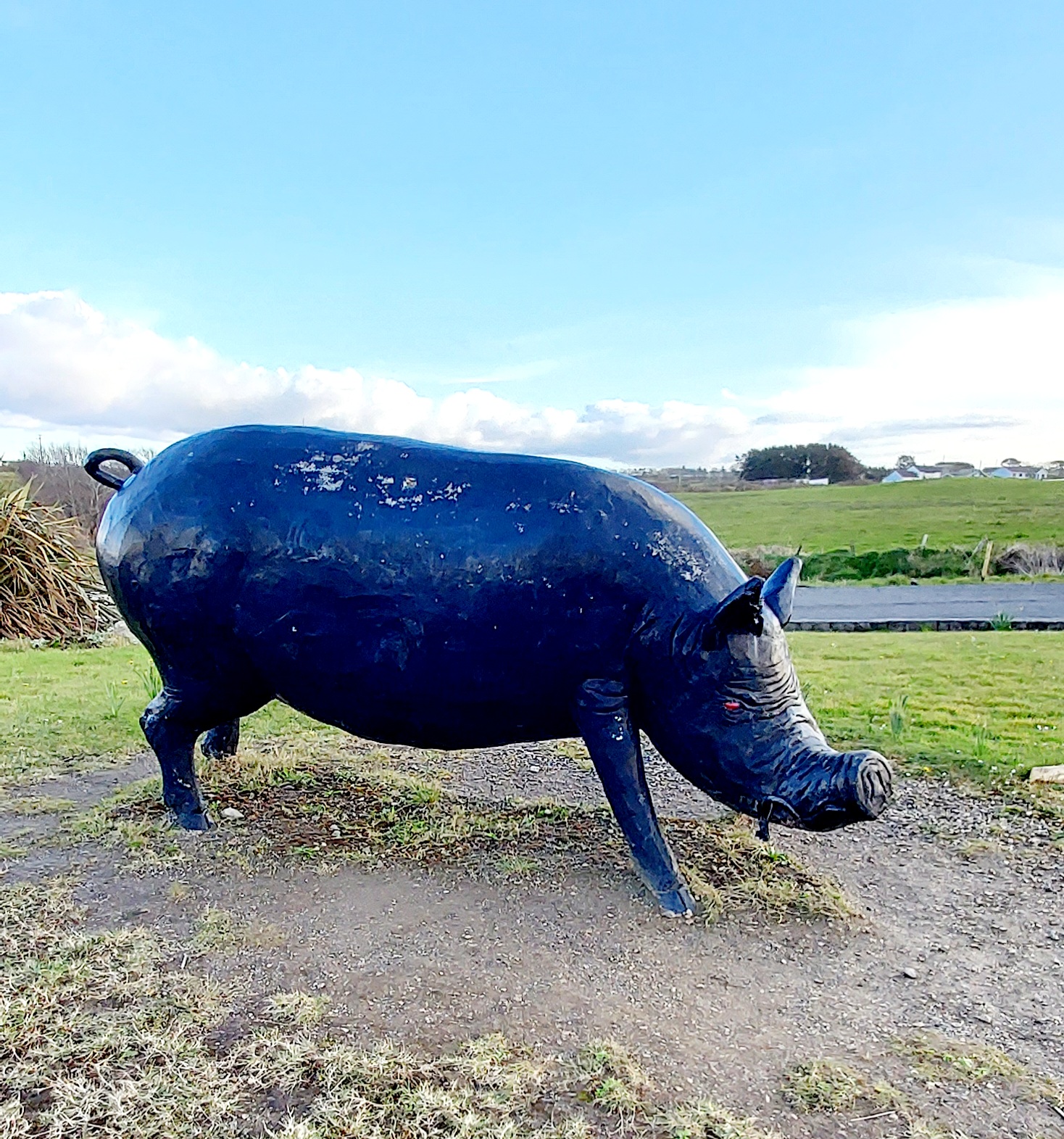
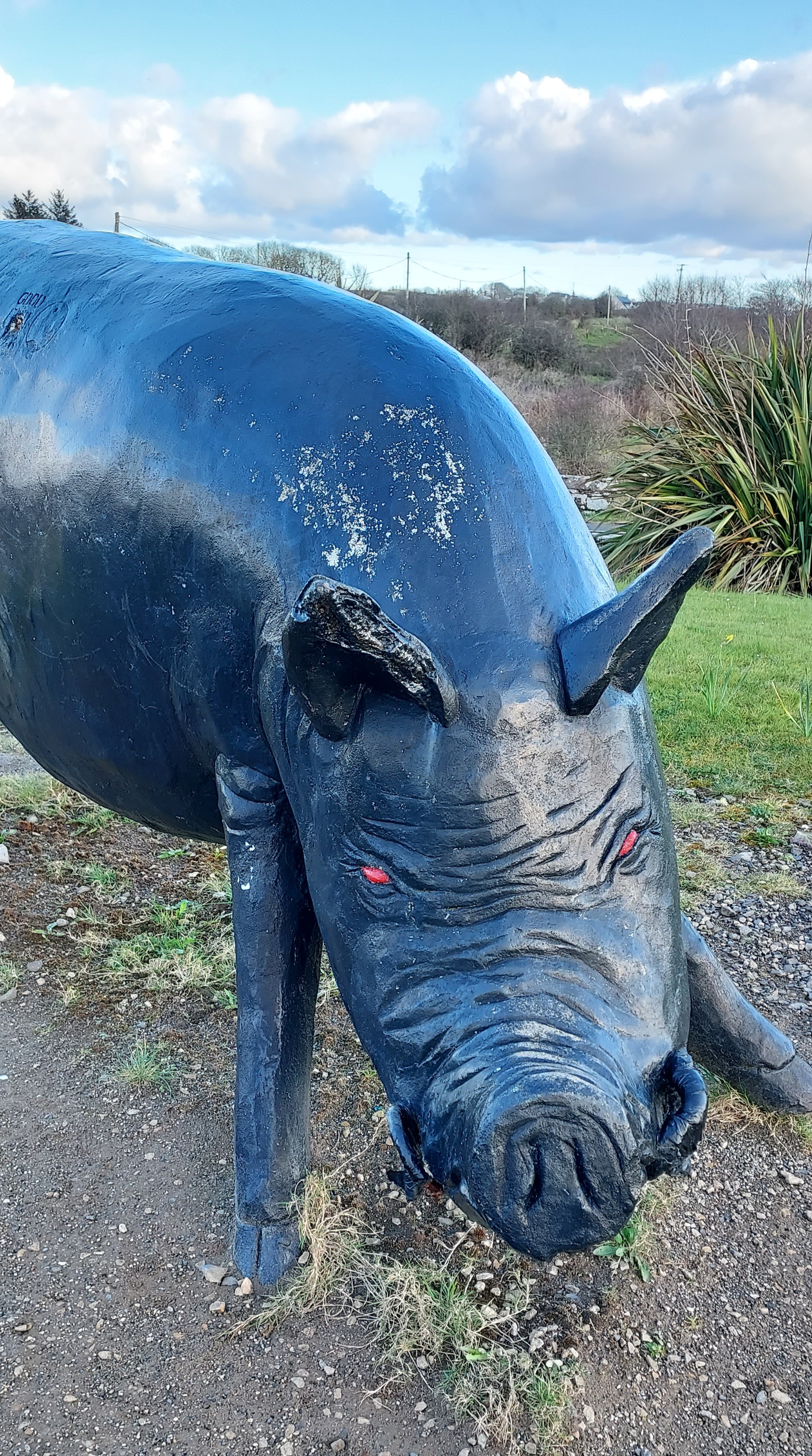
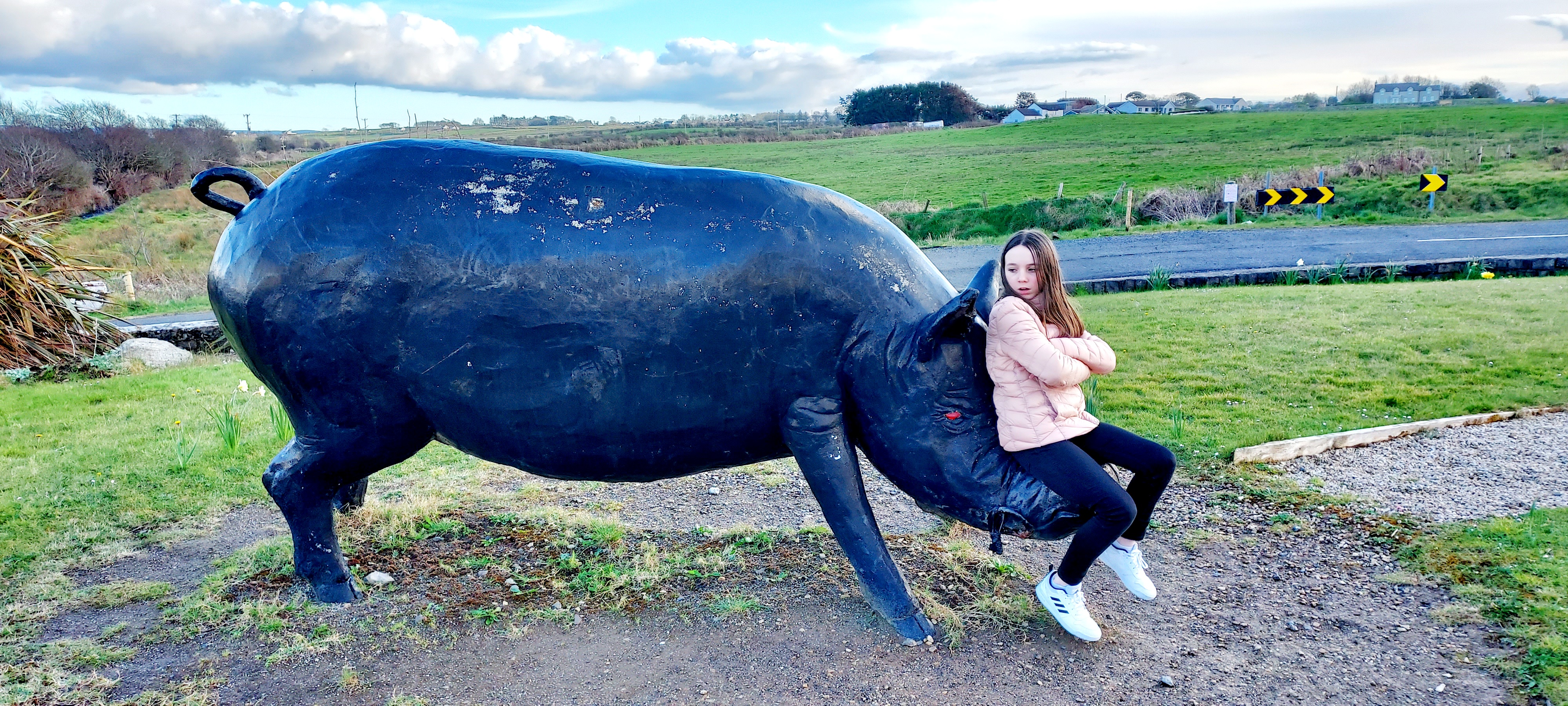
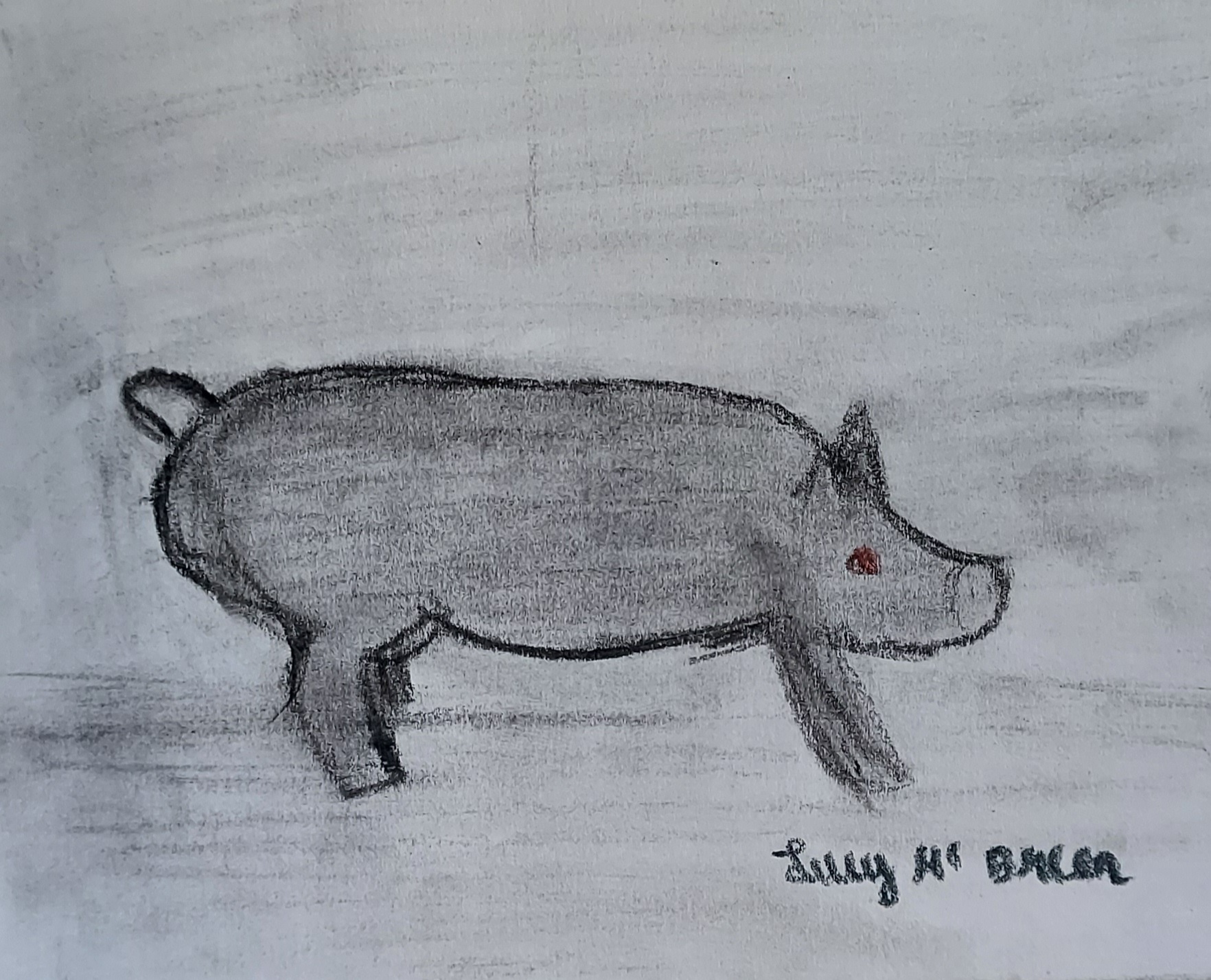
According to legend, a wild boar covered in poisonous bristles and possessed by an evil spirit once roamed the streets of Donegal killing everyone in his path. Local hunters took it upon themselves to rid the land of this treacherous beast, chasing him through to Sligo and into Lenadoon in Easkey, where he disappeared into the sea. He emerged from the waters at Enniscrone strand and continued his rampage, killing everyone in his sight.
The townsfolk joined forces with spears and poles and ran the boar out of town and slaughtered him in a field nearby. When the boar was dead, one man touched the bristles believing they were no longer poisonous; he dropped dead instantly. They buried the deadly beast under a mound of clay, giving the townland its name, Muckduff—Irish for ‘Black Pig’.






 Gloria McBreen