10 Green Bottles #100DaysOfOldDays

Day 45 #100DaysOfOldDays

My late dad was a bit of a collector. I must have taken after him for my love of old things, and old-time stories. Mam likes old things too, but only if they look pretty. And she likes old stories—but only if there’s a ghost involved! They were very well matched!

So, Dad’s collection of old bottles and pottery jars were not high on her ‘fancy list.’ He would often have them on display in the house, but they’d disappear one by one out to the garage. Eventually he’d pipe up, ‘Hi…where’s all me bottles?’ And back in they’d come.

Mam kept some of the cute little ones in the house though. They’d often blend in with some of her fancy ornaments.

I have some of Dad’s old bottles and jars in my possession and they absolutely deserve a mention in my 100 days of old days collection!

My first one here is the most unusual in the collection. It’s a torpedo or soda bottle and was common during the 1800’s. Why is it shaped like this?

During the first century AD, the Romans documented many of Europe’s mineral wells. When news of the benefits of sparkling water spread around the world, the demand grew, and shipping it to other countries began. But long distance travelling was a problem; the corks would dry out and shrink, causing the fizz to escape. So, shipping the mineral water ceased. Because only very rich people could afford to travel to the mineral wells in Europe, the thinking caps were smartened, and the torpedo bottle was invented. With its egg-shaped bottom, the bottle had to be kept on its side to kept the cork wet thus avoiding shrinkage.

The problem with this bottle of mineral was, once it was opened, you had to drink it all. A problem for the customer yes, but not for the merchant.

By 1838 flavoured fizzy drinks started to take off. Improvements were made to the bottles; flat bottoms and better corks.

In 1861 ginger ale was bottled, and Charles Hires began bottling root beer in 1876. In 1885 a pharmacist named Charles Alderton invented Dr Pepper and in 1886 Coca-Cola was born.

The next bottle in my dad’s collection is this Codd neck bottle. This particular one, embossed Walter Brights LTD Dublin, is vintage from the 1900’s and is a rare find.
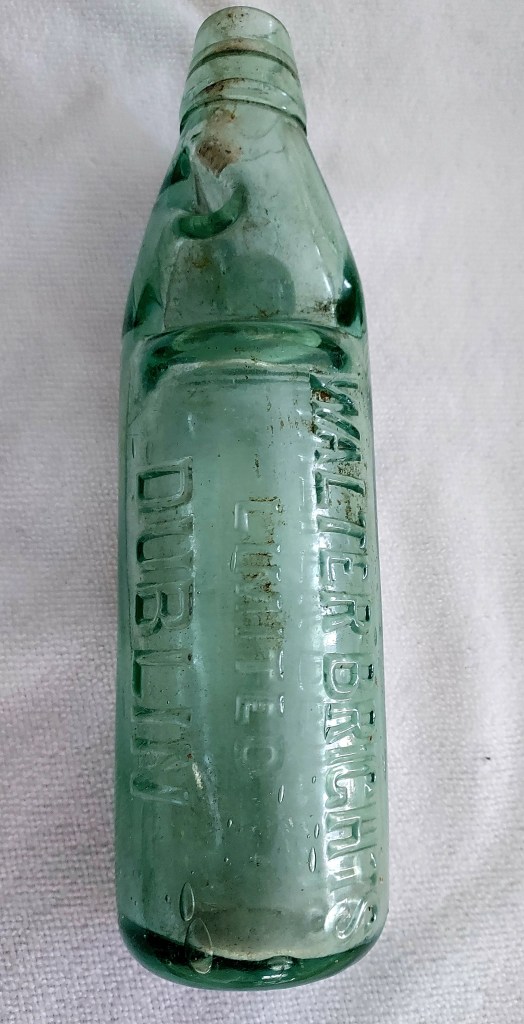
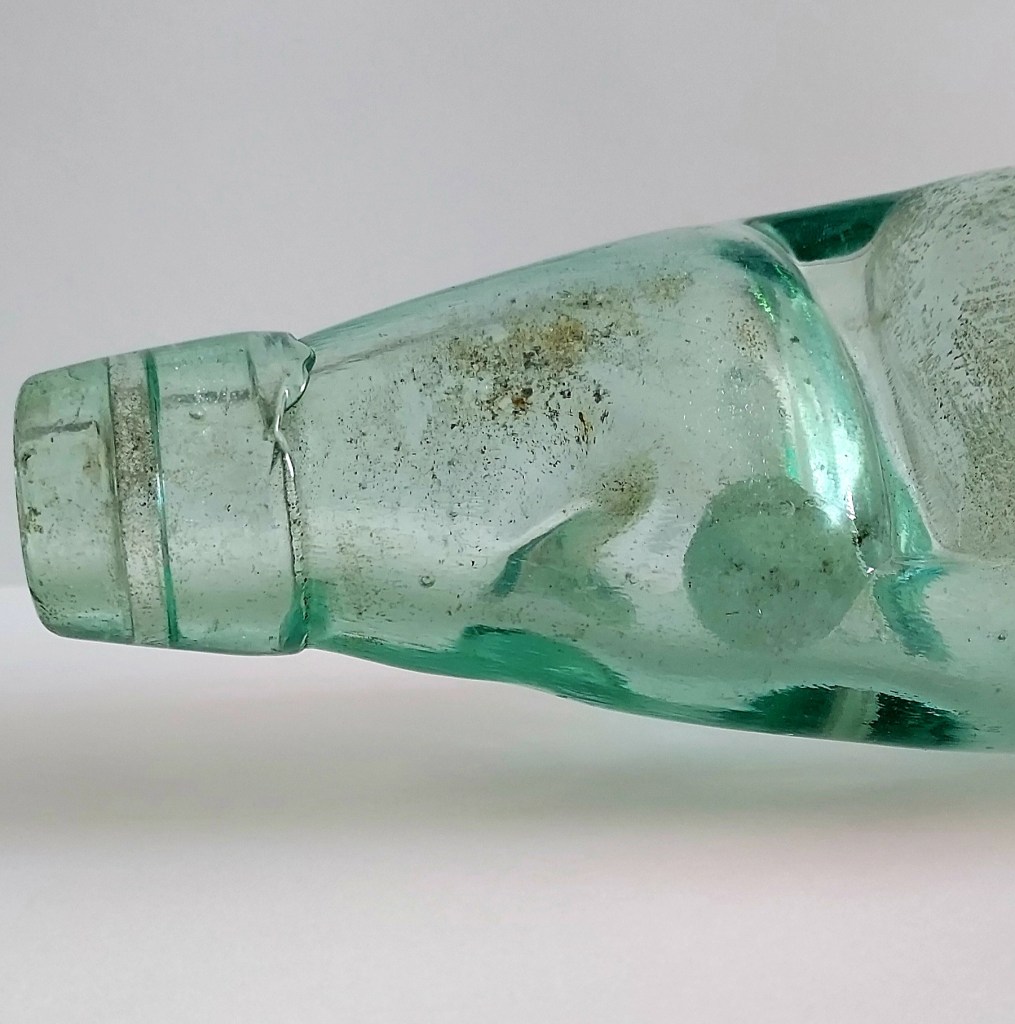
The Codd-neck bottle was designed and patented in 1872 by British soft drink maker Hiram Codd. The thick glass was designed to withstand pressure from within. The pinch on the neck of the bottle created a chamber that enclosed a marble and a rubber washer. The bottle was filled upside down and the pressure from the gas forced the marble to seal against the rubber washer at the opening. To open the bottle, the marble was pushed down into the chamber. When held in the right position the marble stayed in the chamber when the bottle was tilted for pouring the drink.
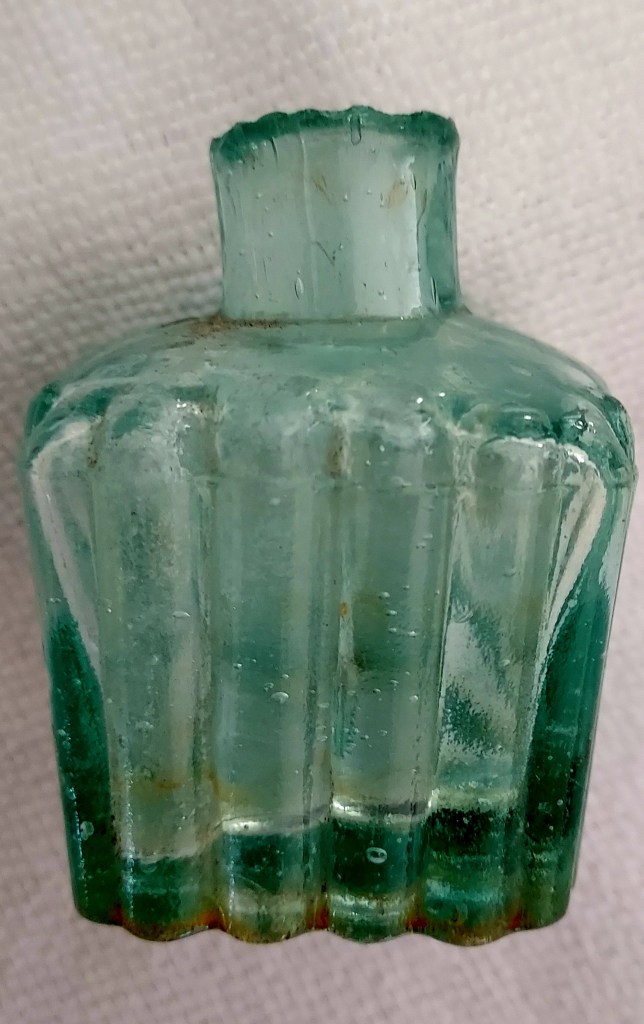
Dad had quite a few vintage ink bottles/inkwells in his collection.

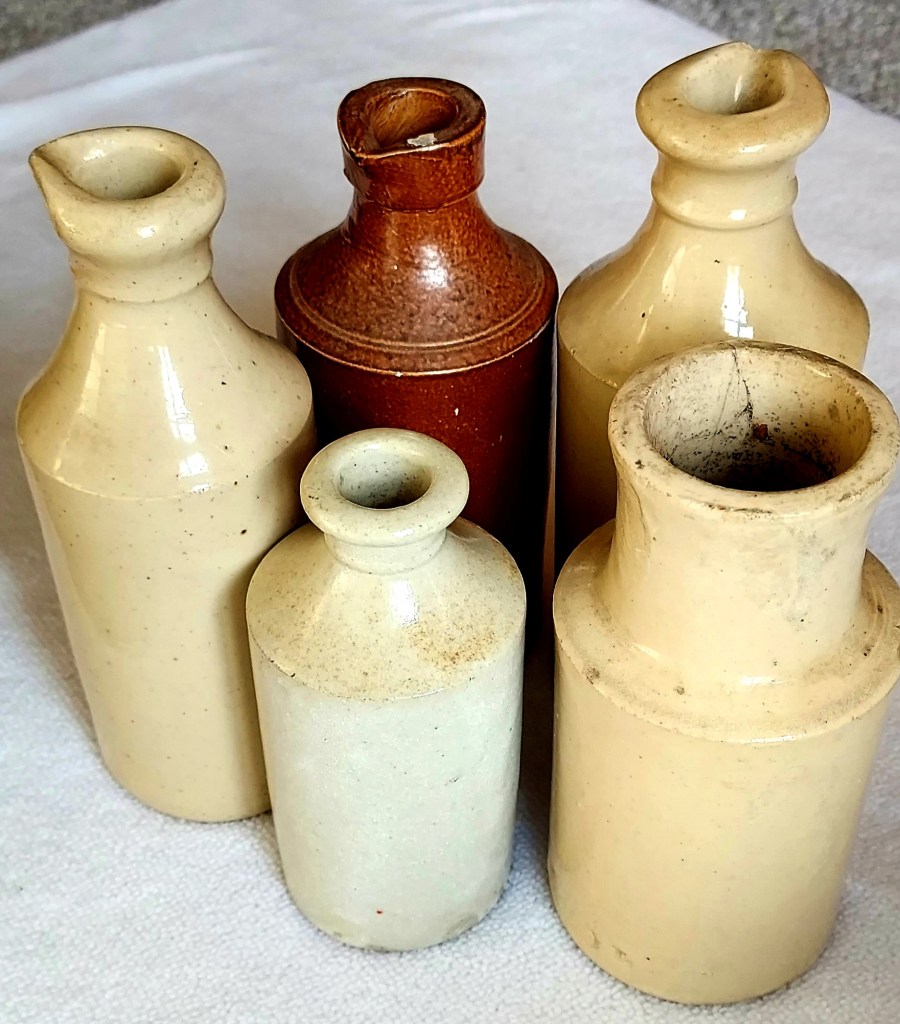
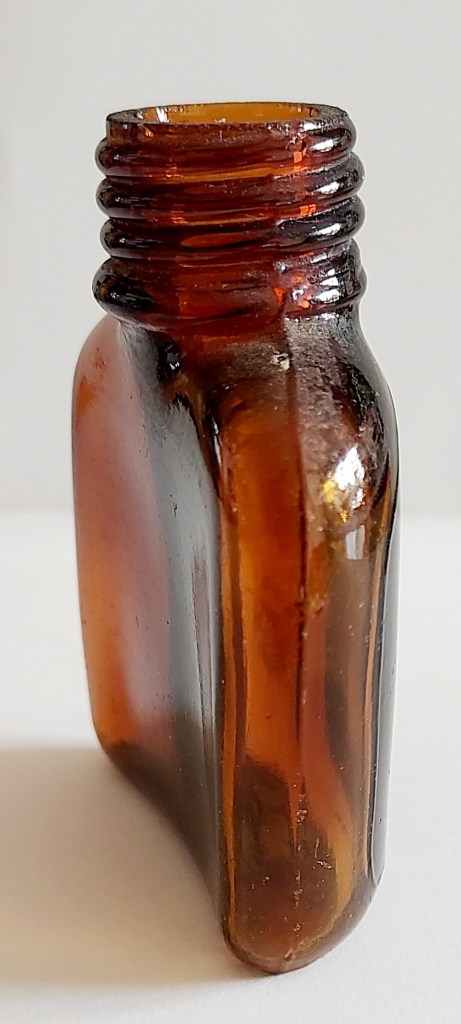
Among this collection are some old Milk of Magnesia bottles.

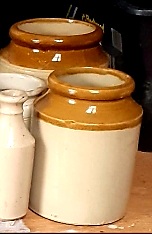
These big stoneware pots were called butter crocks.
We’ve had this already in my post about the old style hot water bottles. You can read about that HERE.

The next picture is of an antique hand blown glass rolling pin! It even has its original cork.

These old stone ginger beer bottles are my favourites!

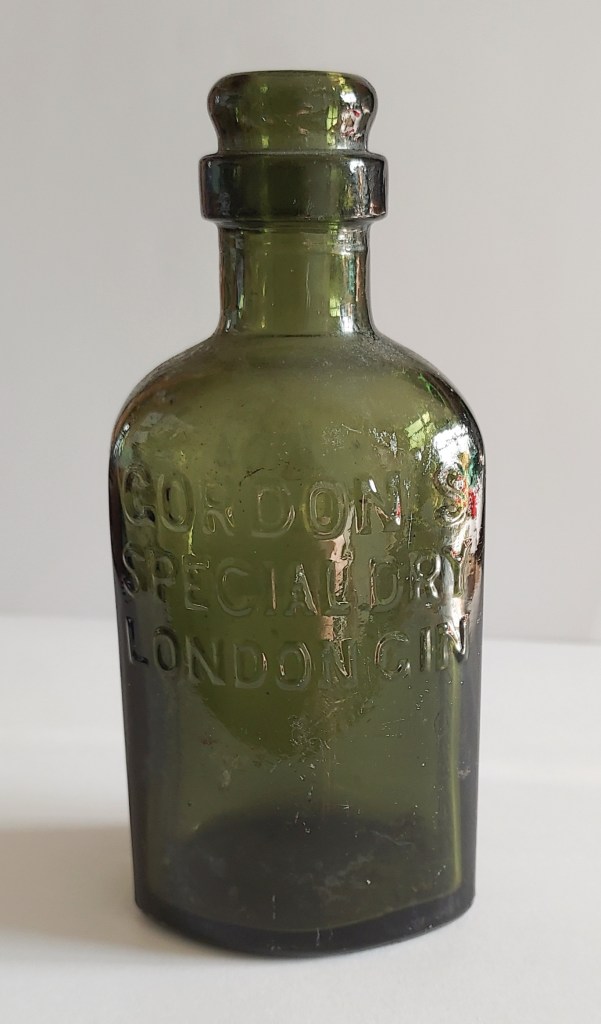
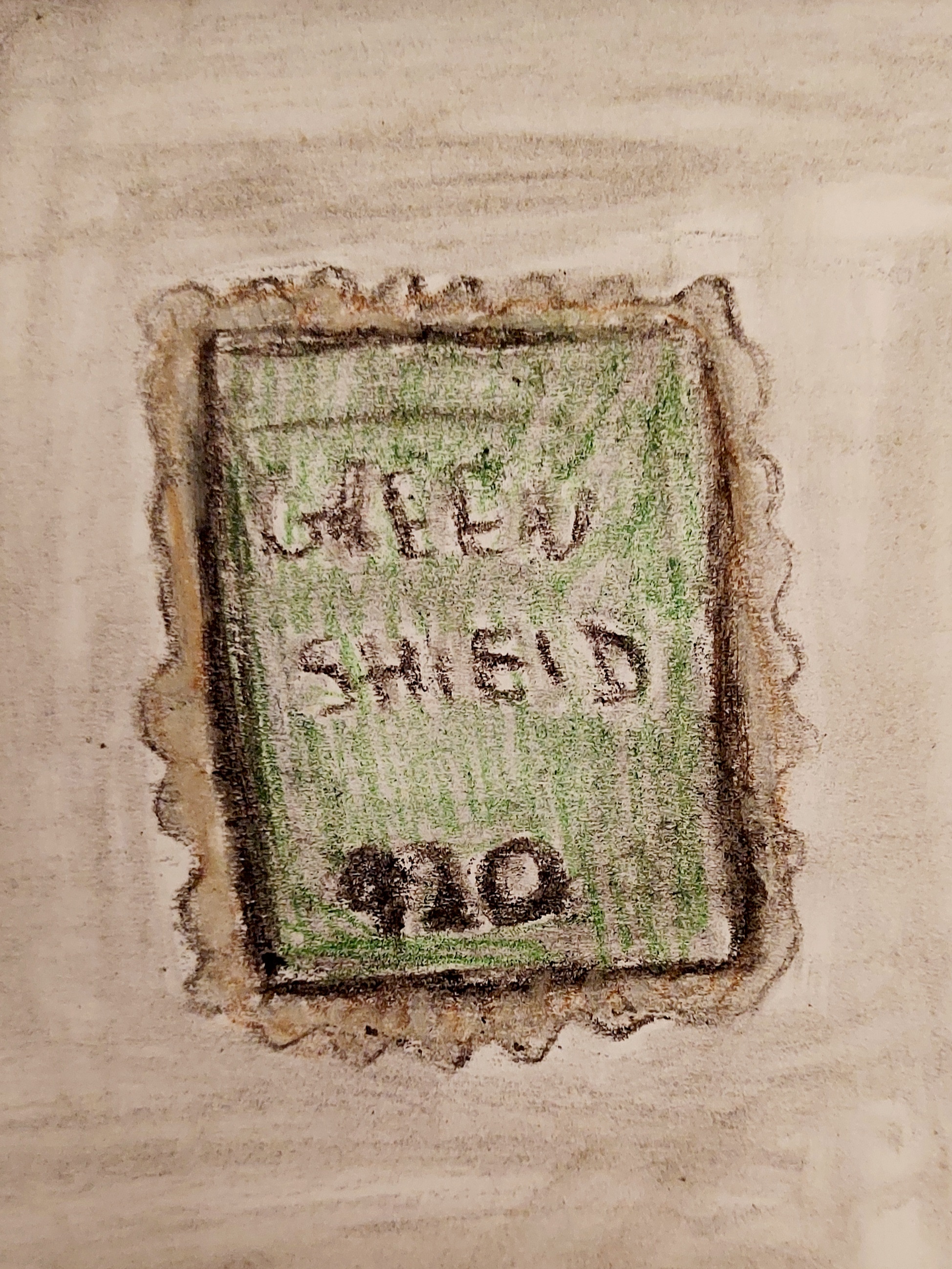
And last but not least…Lucy’s drawing of an old green ink bottle!

Saving Green Shield Stamps #100DaysOfOldDays

Day 44 #100DaysOfOldDays

I have so many customer loyalty cards, that I can’t fit them all into my purse. It’s the only thing in my purse actually; plastic cards.

Nearly every shop I go to these days asks for my loyalty card; chemists, supermarkets, coffee shops, the garden centre, the spa, sports shops, even the car wash has them.

Back in the day……we had Green Shield stamps!

Everyone everywhere saved Green Shield stamps. Certain shops and petrol stations signed up with the scheme. For every 2p spent—or maybe 2½p, shoppers got a stamp. They stuck them into a saver booklet and when it was full they went to their Green Shield catalogue to choose a gift. The more stamps they had, the more expensive gift they could choose. Or closer to the truth…the more full books they had. For example; a cassette rack that holds up to 12 cassettes, required 1½ books, but the cassette player/recorder required 25 full books.

I remember us as children, looking through the catalogue and picking out what we wanted. But it took so long to fill a book, our wish list stayed just that—a wish list!

The scheme started in England in 1958 by a man called Richard Tompkins, who had taken note of the success of a similar scheme in America.

The Irish distribution centre was in Clondalkin, Co Dublin; a building 640,000 cu. ft. in size. The gifts were transported from here to several smaller gift houses across the country. Those who couldn’t travel to collect, could get their gift delivered by post.

When Tesco in England stopped being part of the promotion, Green Shield started accepting cash along with the stamps to buy the gifts. Eventually they were accepting cash only and the catalogue was re-branded as Argos. They stopped selling the stamps in 1991 and in 2020 the company liquidated.

Brand New Retro has a more detailed article about Green Shield with photos of the stamps and the gifts in the catalogue. Have a look!

The First Mother’s Day #100DaysOfOldDays

Day 43 #100DaysOfOldDays

Everything has to start somewhere, including Mother’s Day!

In ancient times, Greece and Rome held a festival to honour their mother goddess—Cybele or Gaia, depending on the culture.

In England, Mother’s Day came about during the Middle Ages. People who had moved away from home developed the tradition of coming home to visit their mother church and their mothers, on the fourth Sunday of Lent. It became known as Mothering Sunday!

Because the first day of Lent varies from year to year, so does Mother’s Day.

In the US, the history of Mother’s Day is a different story.

It’s celebrated on the second Sunday in May each year in the US, and it started when a woman named Anna Jarvis held a memorial service for her mother on 12th of May 1907.

Her mother had often wished there was a day in the year that honoured mothers, so with the help of others, Anna petitioned to the government to make Mother’s Day an official holiday.

On May 8, 1914, President Woodrow Wilson signed a resolution, stating that Mother’s Day would be celebrated on the second Sunday in May.

Many other countries also celebrate Mother’s Day at different times of the year.

Veronica met Charlie #100DaysOfOldDays

Day 42 #100DaysOfOldDays

We grew up listening to Charlie Pride records. I could sing The Crystal Chandeliers long before I knew what a chandelier was.

Charlie was my mam’s idol. She loved him. Not just his singing—everything about him. He was gorgeous!

So, as you can imagine, one of the most exciting and memorable times of her life is the day she shook hands with Charlie Pride!  

She was first in queue at the Oasis to hear him sing. She stood for hours. It was worth the wait because she got a front seat close to the stage. She knew the words of every song and sang along with Charlie the whole night!

Charlie Pride; born 18 March 1934; died 12 December 2020

No drawing from Lucy! She’s too busy with her best friend today. She’ll be back tomorrow!