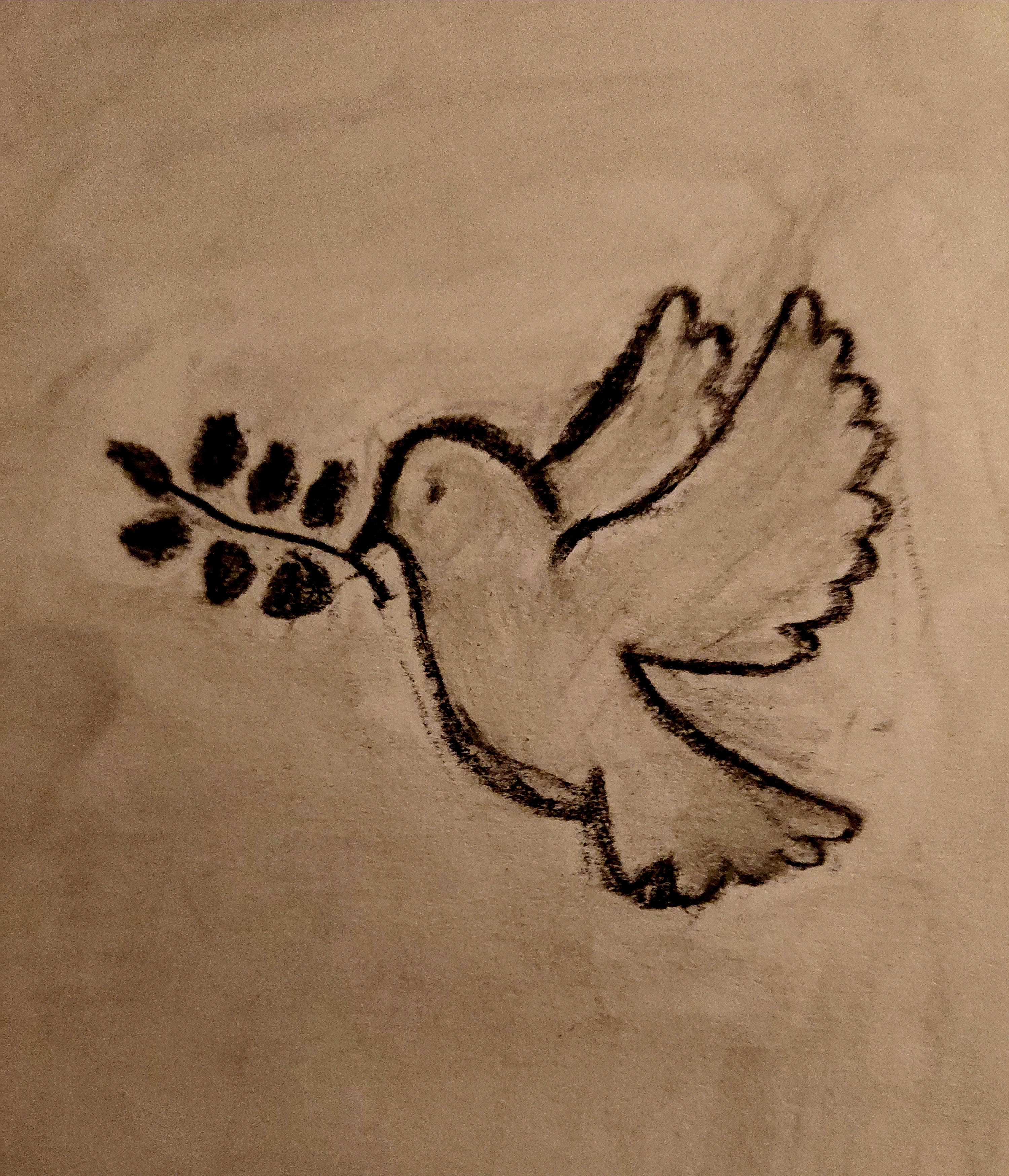
Irelands favourite folk song is The Green Fields of France. The song was originally called No Man’s Land and was written by Scottish-born Australian songwriter, Eric Bogle in 1976. It’s a story of a man stopping by the graveside of a young Irish WW1 soldier, Willie McBride, killed in his prime at the age of nineteen. The man sits by the grave to reflect on the waste of the life of the young soldier, and others like him.
The anti-war song was written to address the prejudice against the Irish in Britain, a year after the Birmingham and Guildford bombings. A reminder that many Irishmen died in the war while serving for the British Army.
The Furey Brothers and Davey Arthur’s version of the song, The Green Fields of France, was recorded in 1979 and it remained in the Irish charts for twenty eight weeks.
I think the most significant verse of this song is the last one.
Ah young Willie McBride, I can’t help wonder why
Do those that lie here know why did they die?
And did they believe when they answered the cause
Did they really believe that this war would end wars?
Well the sorrow, the suffering, the glory, the pain
The first St Patrick’s Day parade didn’t take place in Ireland as you’d imagine. The first ever parade was held in a Spanish colony in Florida in 1601 organised by the colony’s Irish Vicar, Ricardo Artur.
In 1737 Irish soldiers serving in the English army, who yearned for home, marched in Boston on St Patrick’s day and again in New York City in 1762. And so it began.
Some parades are flamboyant and impressive, where people go to extremes to put on an entertaining show for their spectators, especially in big towns and cities.
That doesn’t mean the small towns don’t put on good parades. I have fond memories of the parades from years ago.
I remember the parade in Kingscourt (our neighbouring town) in 1978, and the memory is not a fond one. I was playing the tin whistle in the Bailieborough Marching Youth Band. It was snowing and freezing! Our skirts were just above the knee and we wore knee high socks. Coats were not part of our uniform, but on that particular day we did wear coats—otherwise we’d have frozen to death.
My fingers were numb against the cold steel of the tin whistle. The parade hadn’t even started. We were lining up and practicing at that stage. My piano accordion was in the car and my dad gave it to me thinking it might be easier to play with blue fingers than the whistle. It was a little easier, but not much. That was the worst skinning I ever got.
The parades were always great fun, even in our small little towns. Everyone made a huge effort to get out and enjoy themselves. What was different then?
The big thing that’s missing from our parades are the marching bands. They were the essence of the parades. There are very few marching bands left in Ireland. A terrible shame.
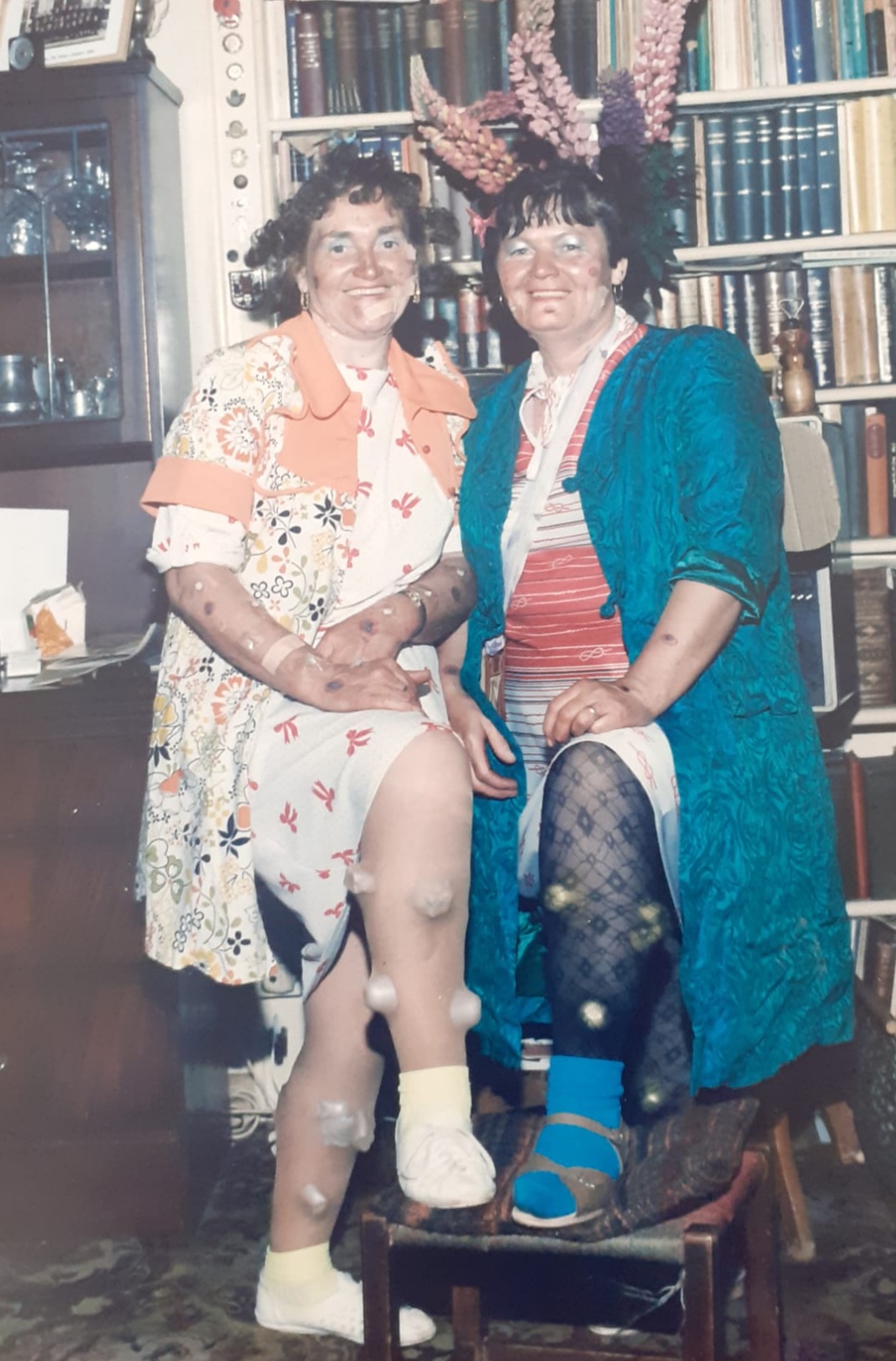
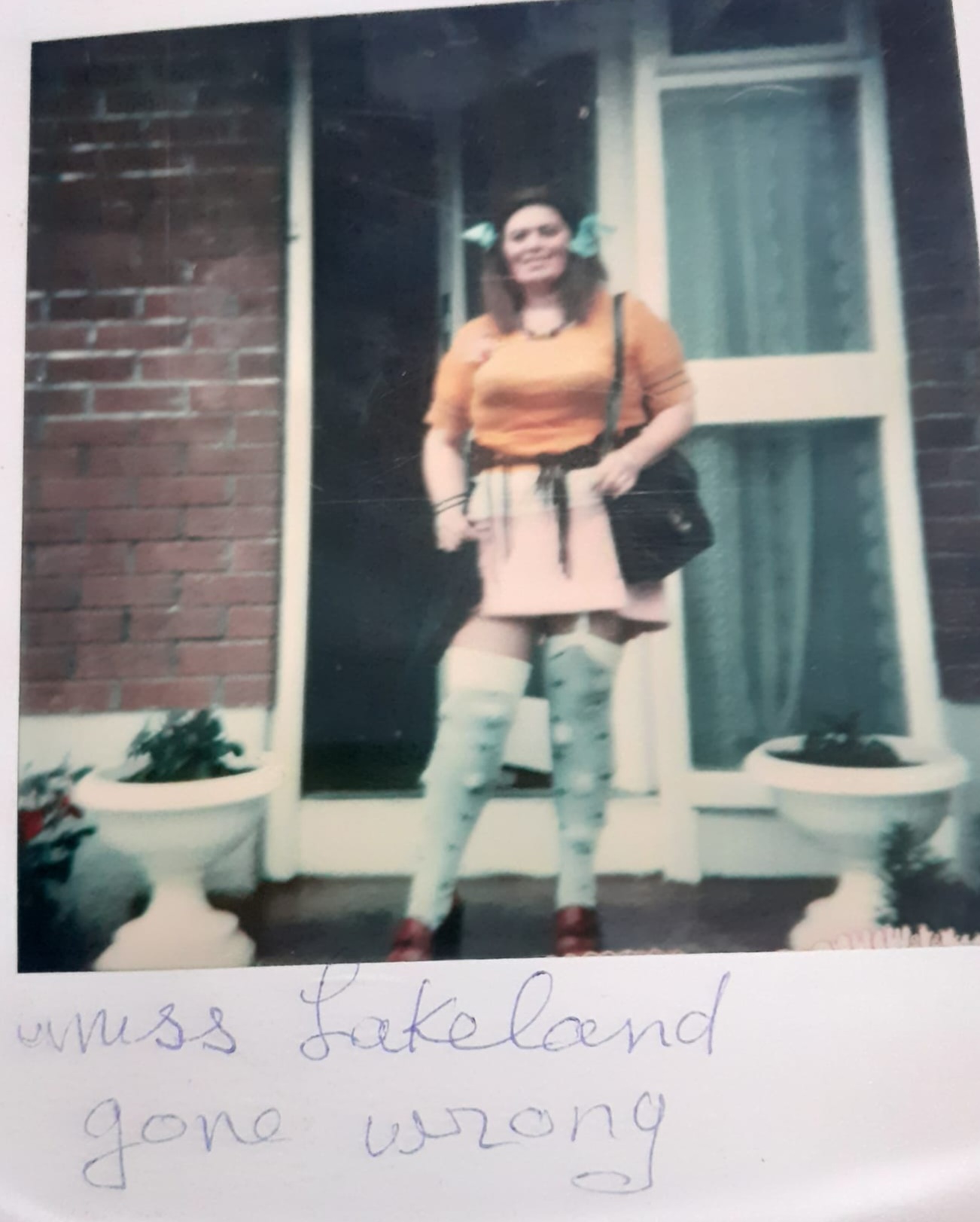
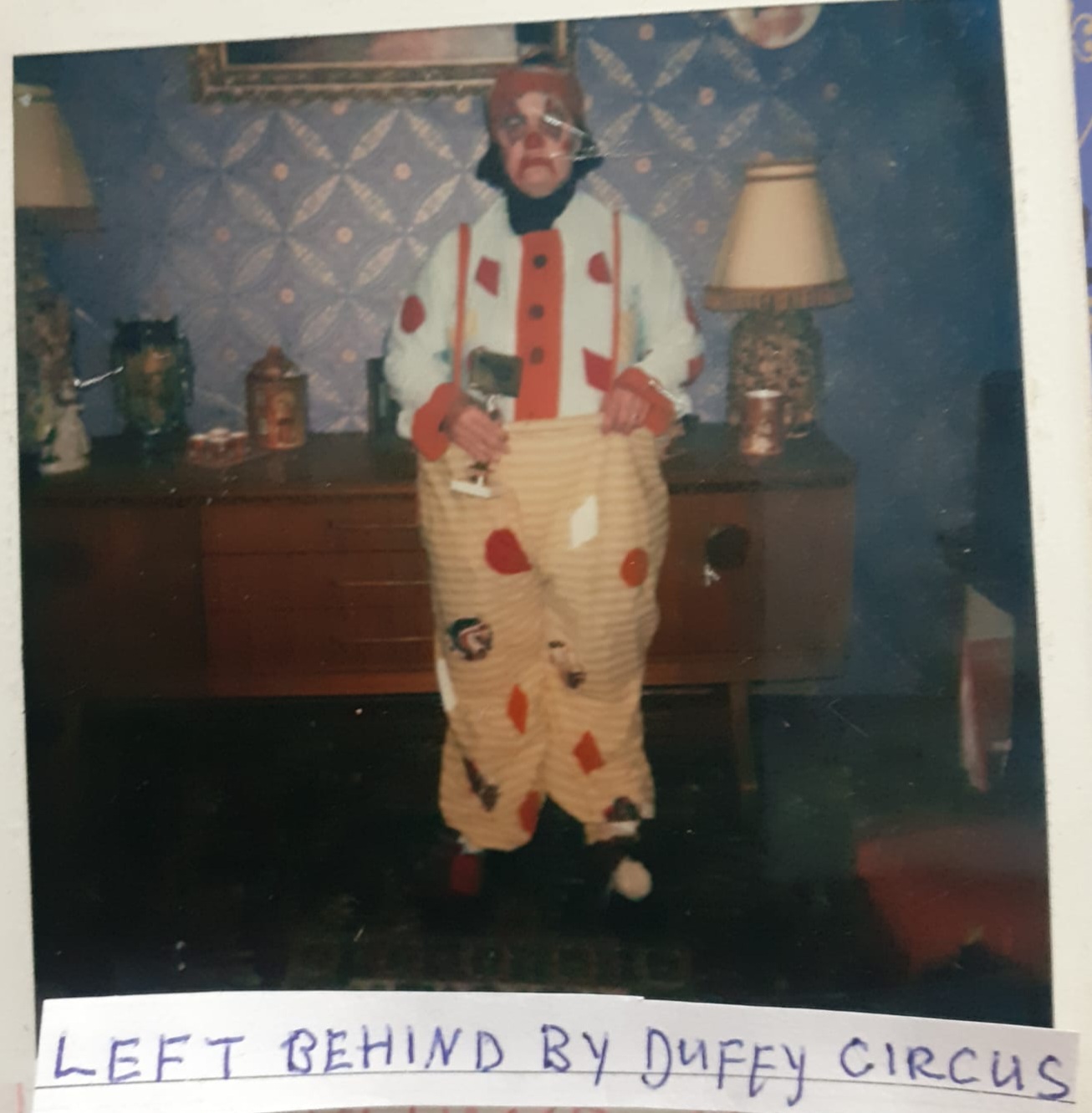
Another thing that was very popular in parades was the fancy dress. Not completely gone, but not as many people take part these days. My mother and a couple of her friends were experts at dressing up for the parades. Not just on St Patrick’s Day, but for the festivals too.
As a young teenager, I used to be sooooo embarrassed! But as I matured a bit, I saw the fun in it. I’ve been known to take part in fancy dress myself on occasion.
Laughter is the Best Medicine
Thanks to local photographer, Kevin Gorman, for this photo of my mam and her late friend, Shirley.
St Patrick’s Day 2004 – Veronica & Shirley
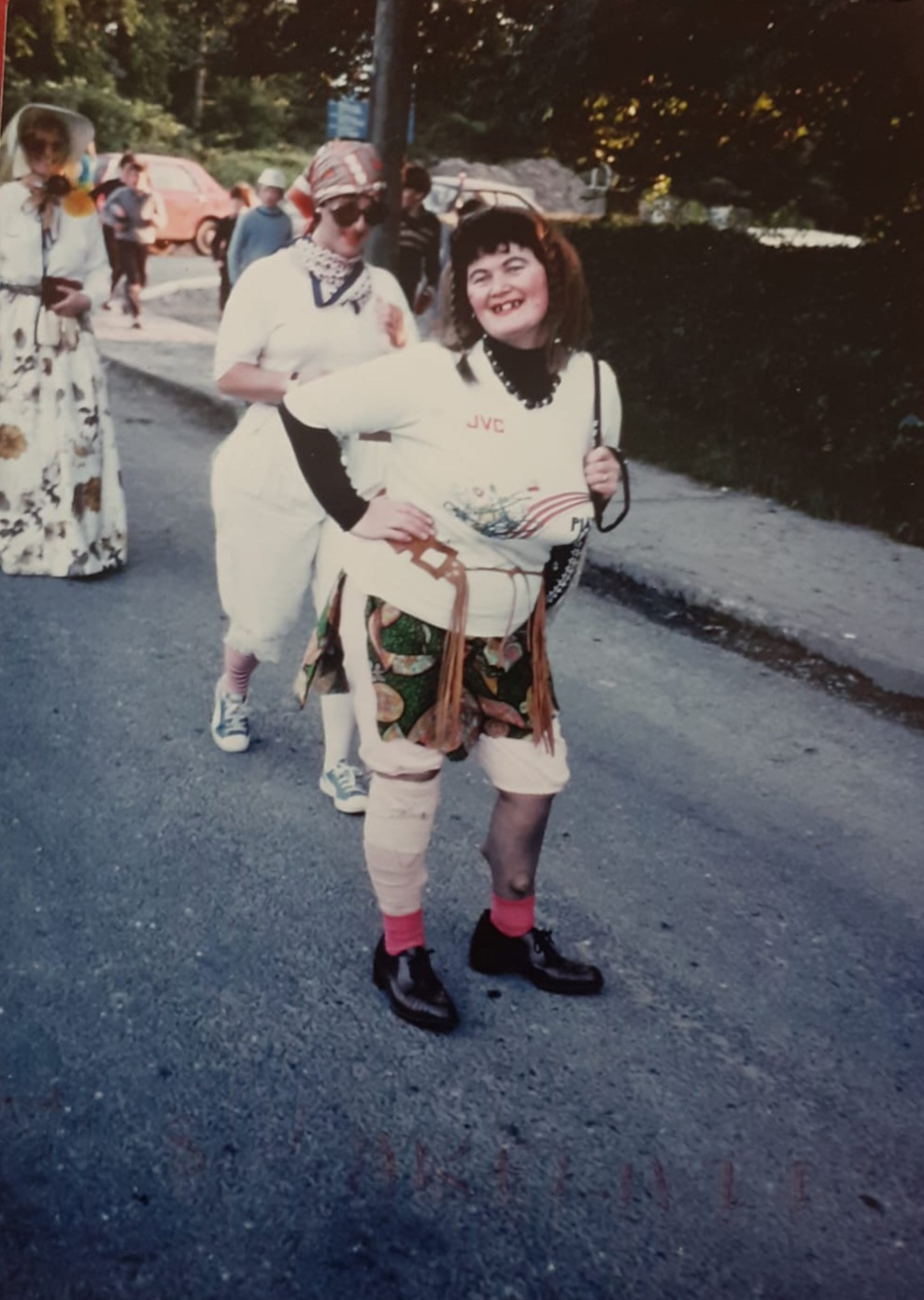
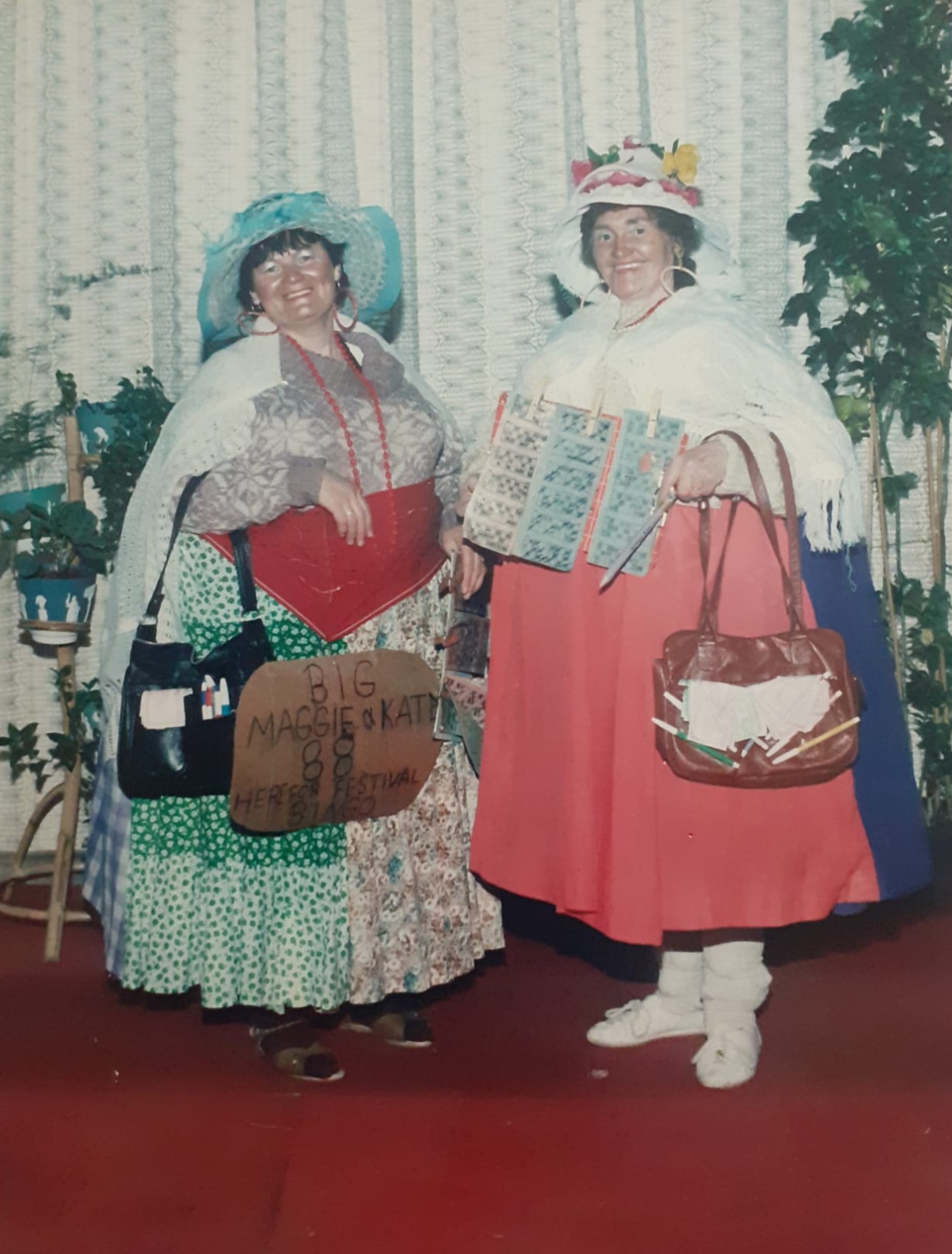
My mam sent me these photos. She said, “There’s no craic like that any more!”
In this next photo, they were dressed up for the pram race which used to happen every year at the festival!
Charlie ChaplinBig Maggie & Kate 88. Off to Bingo.
Yes, those were the days!
Lucy didn’t draw a picture today, instead she made this mask to represent fancy dress.
It’s hard to believe that our wee leprechauns are around since the 8th century. I think they’ve been around much longer than that, they just hadn’t been discovered.
They like to hide away from humans because everyone wants to catch one. I don’t know why Irish people feel the need to catch a leprechaun anyway…sure aren’t we well known around the world as being lucky sods!
If you’re ever lucky enough to catch a leprechaun, don’t forget he comes from the fairy family and he’s full of trickery. He’ll promise you gold and youth, and make all sorts of deals with you in return for some of his gold. Be careful…he is not to be trusted.
Leprechauns will spot a Cavan man a mile away, and totally take the mickey out of him. So if you’re from Cavan and you’re going out hunting for wee green men, wear the Kerry jersey. (They love the Kerry people)
Centuries ago, leprechauns wore red. They changed from red to green because of their love for the Irish people and the country’s attachment to the colour green. That’s my theory anyway!
No one has ever seen a female leprechaun. Legend has it that there are no females! Suspicious as well as curious.
Maybe it would be easier (and safer) to look for a four-leaf clover.
They’re hard to find too. But hey…the three-leaf clover which is also called a shamrock, is just as lucky.
Shamrock comes from the Irish word seamróg, which means, little plant. Each leaf on the shamrock has its own meaning; faith, hope, love. It is said that St Patrick used the shamrock to teach about the Holy Trinity—The Father, Son and The Holy Spirit.
An Irish BlessingIreland’s Emblem—the Shamrock by Lucy McBreen
If you can’t catch a leprechaun, or find a four-leaf clover……..
“May the saddest day of your future be no worse than the happiest day of your past.”
The Irish people are well known for their love of the cup of tea. It’s likely the first thing you’ll be offered when you enter the home of an Irish person. The offering might go like this;
“You’ll have a cup of tea.”
You might refuse at first but then you’ll be ‘offered’ a second time. “Sure ya will.”
“No thanks. I’m fine.”
“You will of course.”
It’s easier to say yes the first time you’re offered.
You won’t find a better cup of tea anywhere else in the world. And what you’ll get is a good strong cuppa too. Some Irish people drink their tea so strong, you could dance the jig on it.
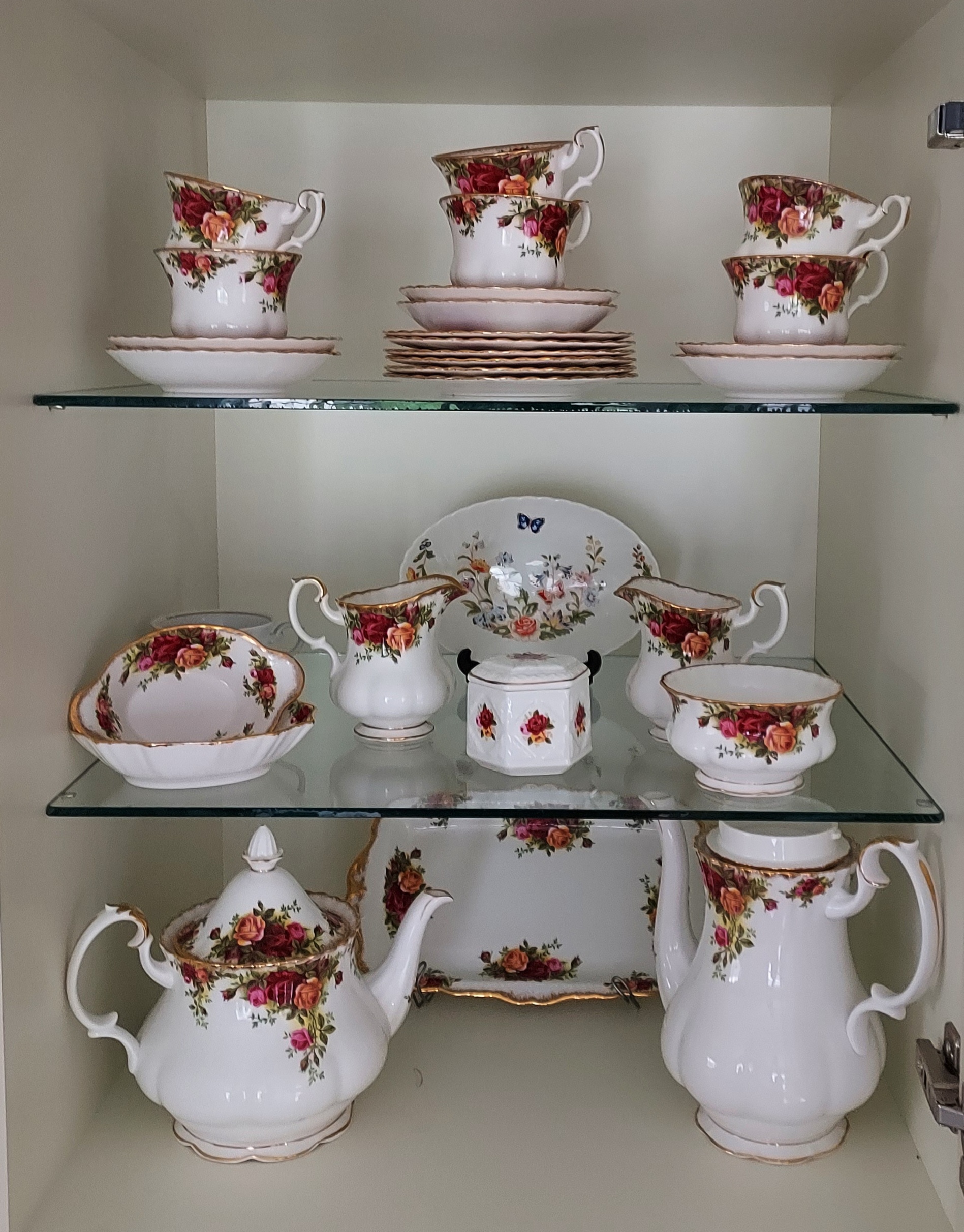
Before the tea bag made it’s way here, tea was made with tea leaves in a tea pot. Most Irish mammies had a china tea set that came out only for special occasions, or when a special visitor called. Posh mammies drank from a china cup every day.
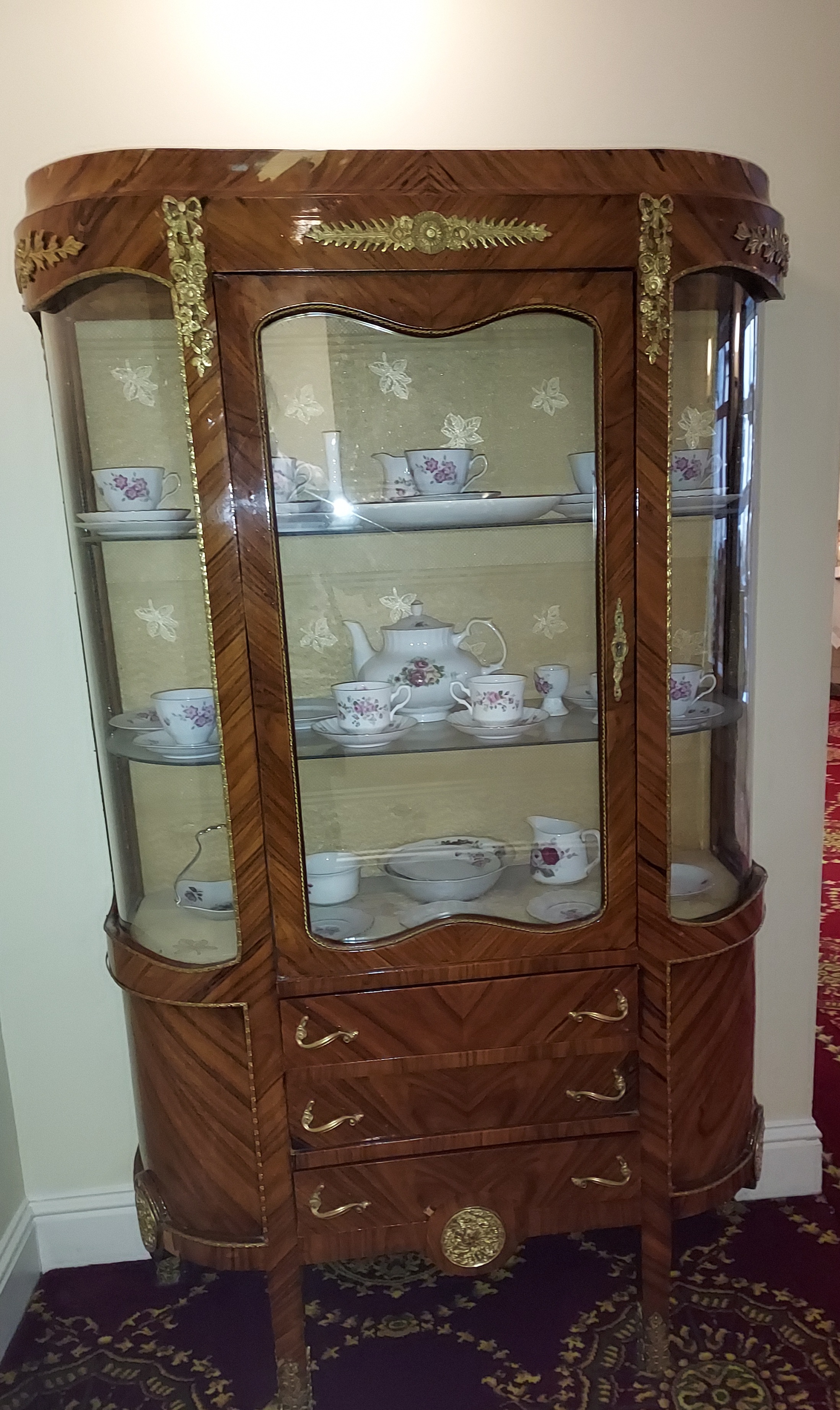
The good china was kept in a china cabinet along with the good glasses and anything else that only came out for the visitors. If you were a child who broke the china cabinet or anything that was in the china cabinet…you have my sympathy. I hope your punishment wasn’t too severe.
This particular cabinet would have been quite stellar back in the day. Cabinet lovers would pay a small fortune for this today.
I was lucky to get this beautiful Royal Albert Old Country Roses tea set from a friend a few years ago. This set is over forty years old—maybe closer to fifty. Old Country Roses was originally launched in 1962 and it is one of the most recognised and most sought after bone china tea sets.
My Royal Albert OId Country Roses Tea Set
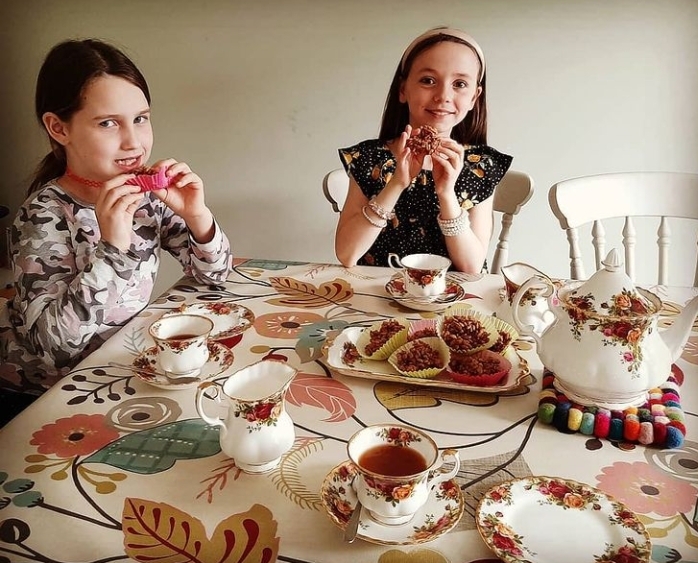
No, we don’t drink from china cups every day, but the set does come out now and again. Why not?
There’s Always Time For Tea
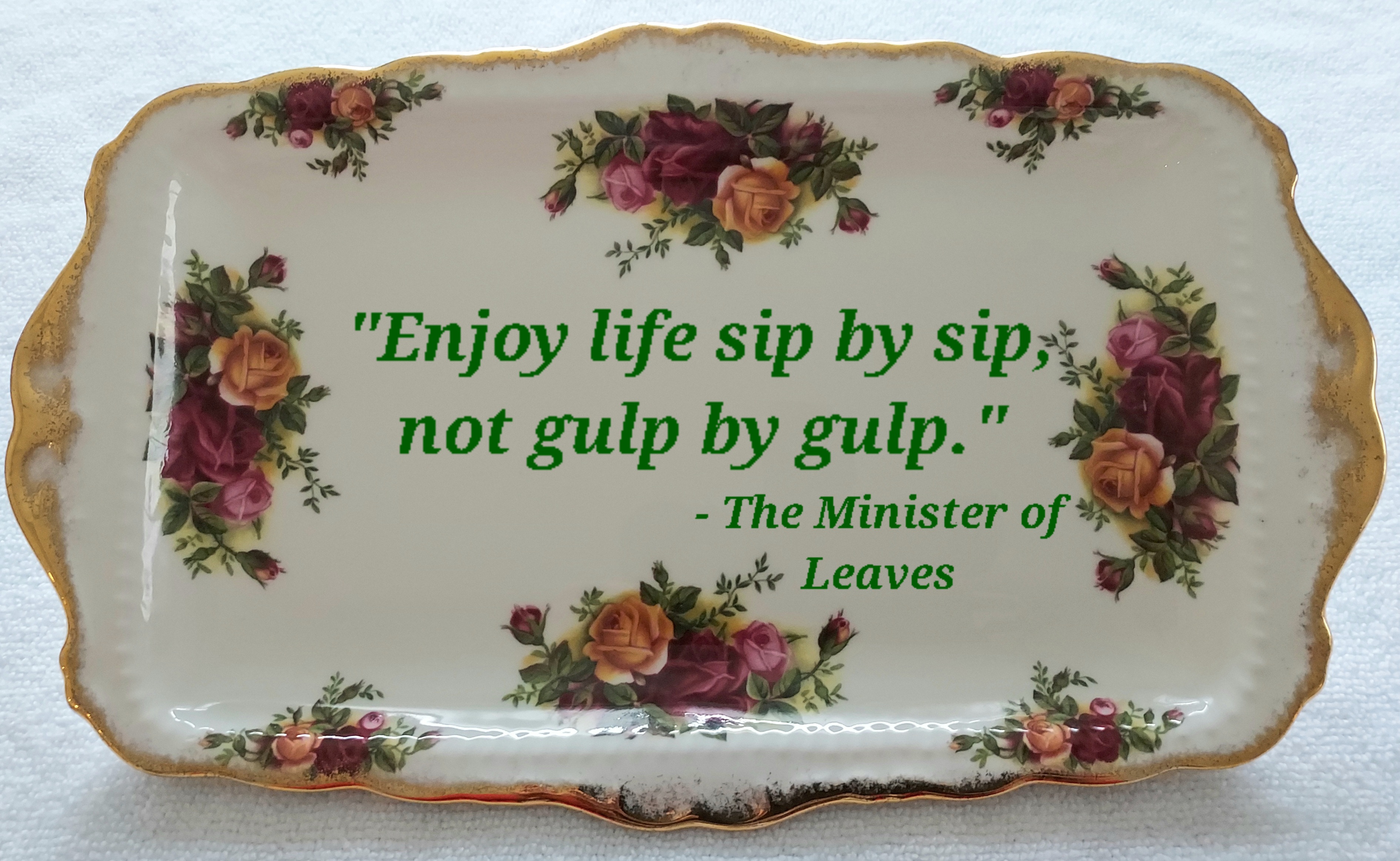
Take Life One Sip at a Time!
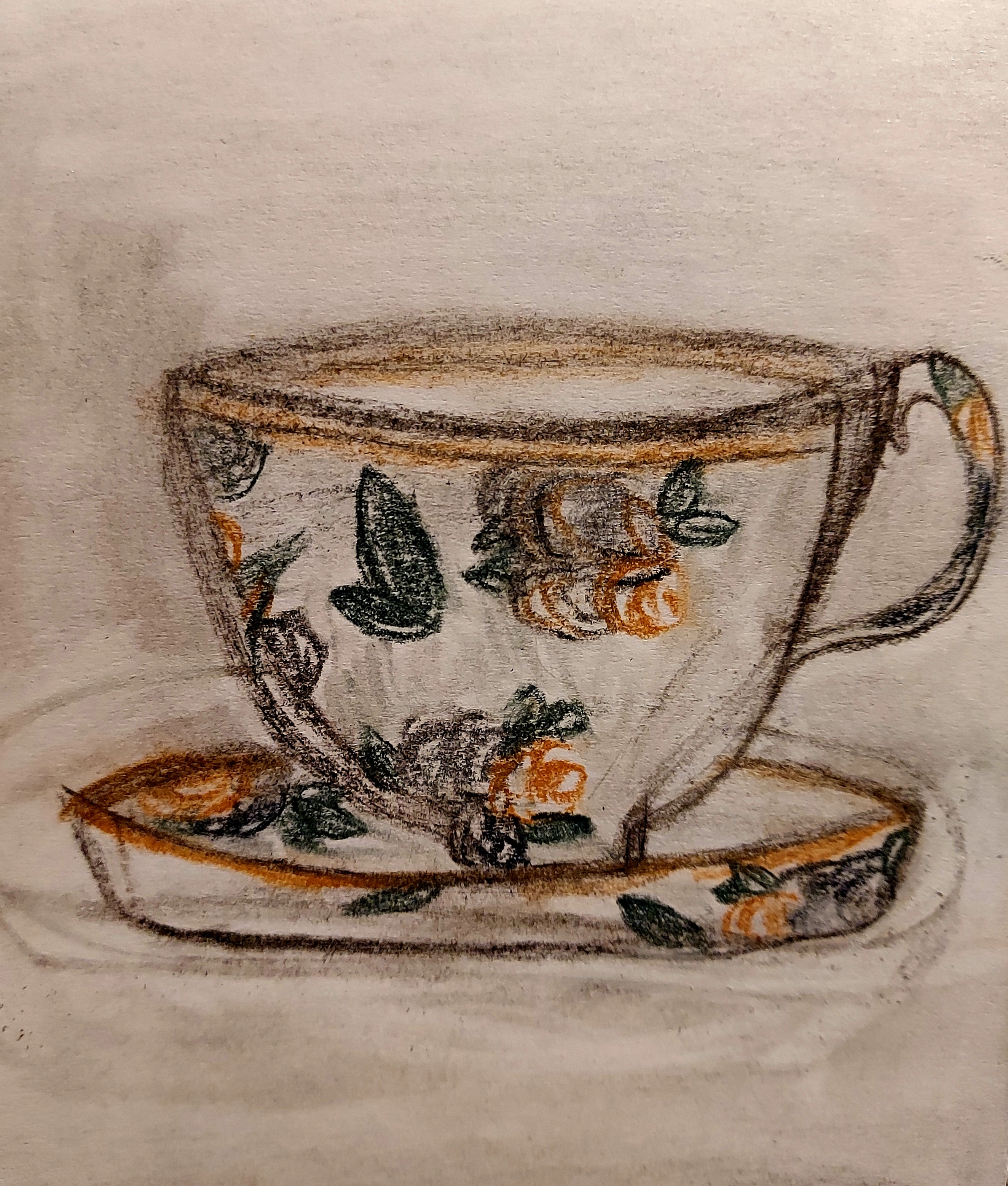
And Lucy’s drawing today is of nothing other than a china tea cup!









 Gloria McBreen