Thank You Great Women #100DaysOfOldDays #InternationalWomensDay

Day 24 #100DaysOfOldDays #InternationalWomensDay

When we talk about days gone by, we often call them ‘the good ole days’. We talk about the simplicity of life, being happy with our lot, less expectations. We praise the women, and how hard they worked in the home. They had many children. None of it was easy.

Life may have been simpler, but that doesn’t mean it was better.

Having a big family wasn’t necessarily a choice. Contraceptives were illegal in Ireland from 1935 until 1980. Look at how many women suffered from post-natal depression but it often went undiagnosed, or simply misunderstood. Many poor women were subjected to electric shock treatment, others stayed locked away in asylums.

Then of course we had all those young women who got pregnant out of wedlock and got sent to mother and baby homes, where their babies were either sold or didn’t survive. No suffering for the men who got these women pregnant though! All too often these were women who were taken advantage of by men who should have known better.

Divorce wasn’t allowed. If you married a beast, you stayed with him. Battered women shut up and put up.

Then there was the marriage bar.

In 1893 women typists who worked for the civil service campaigned to be made permanent in the their jobs. The government agreed. However, the agreement came with a clause. Their contract would be terminated if they were to marry. They wouldn’t receive a pension; instead they would be paid a month’s salary for each year worked, and only for a maximum of twelve months. This was merely a sweetener to reduce the temptation to stay single.

This ‘rule’ supported societal attitudes that women should stay at home and men should provide for the family.

School teacher Maureen Cronin from County Clare, defied the marriage ban and continued to work for a year without pay. During this time she was ignored by the school inspectors, and barely acknowledged by parents. She was eventually dismissed from her job. When the Bishop got involved he was appalled that she had worked for a full year without pay. He took a trip to Dublin and returned with her salary.

After that Maureen was allowed to work part-time but not full-time. She got a job teaching music in a protestant school and continued to fight for the ban to be lifted. It was lifted in 1958 and married school teachers returned to work.

The marriage ban remained for the rest of the public sector workers until 1973.

There are many great Irish women who fought for equal rights in our country—although we’re not fully there yet.
Dr Kathleen Lynn 1874—First female doctor at the Royal Victoria Eye and Ear Hospital. Founder of St Ultan’s Children’s Hospital. She was a member of the Irish Women’s Suffrage and Local Government Association.

Lilian Bland 1878—the ‘Flying Feminist’. In 1910 she designed and constructed the first biplane in Ireland; The Mayfly. She flew it herself making her the first woman to fly an aircraft in Ireland. To date there are 64,979 female pilots in the world. Thank you Lilian for showing the world that women can do anything!

Rosie Hackett 1893—an Irish rebel and trade union founder of the Irish Women Worker’s Union. She was a member of the Irish Citizen Army and an activist in the 1916 rising.

Hannah Sheehy Skeffington born 1903—one of our great suffragettes, who co-founded the Irish Women’s Franchise League and later a founding member of the Irish Women Workers Union.

Maureen Cronin 1916—advocate for the abolishment of the marriage ban for school teachers.

Mary Robinson 1944—the first female to be elected as President of Ireland in 1990. She fought for the right to make contraceptives legally available in Ireland, and she passed the bill of decriminalising homosexuality. She was also involved in the fight for the removal of the marriage ban.

Thank you to these women and all the others around the world. Strong women are getting stronger!

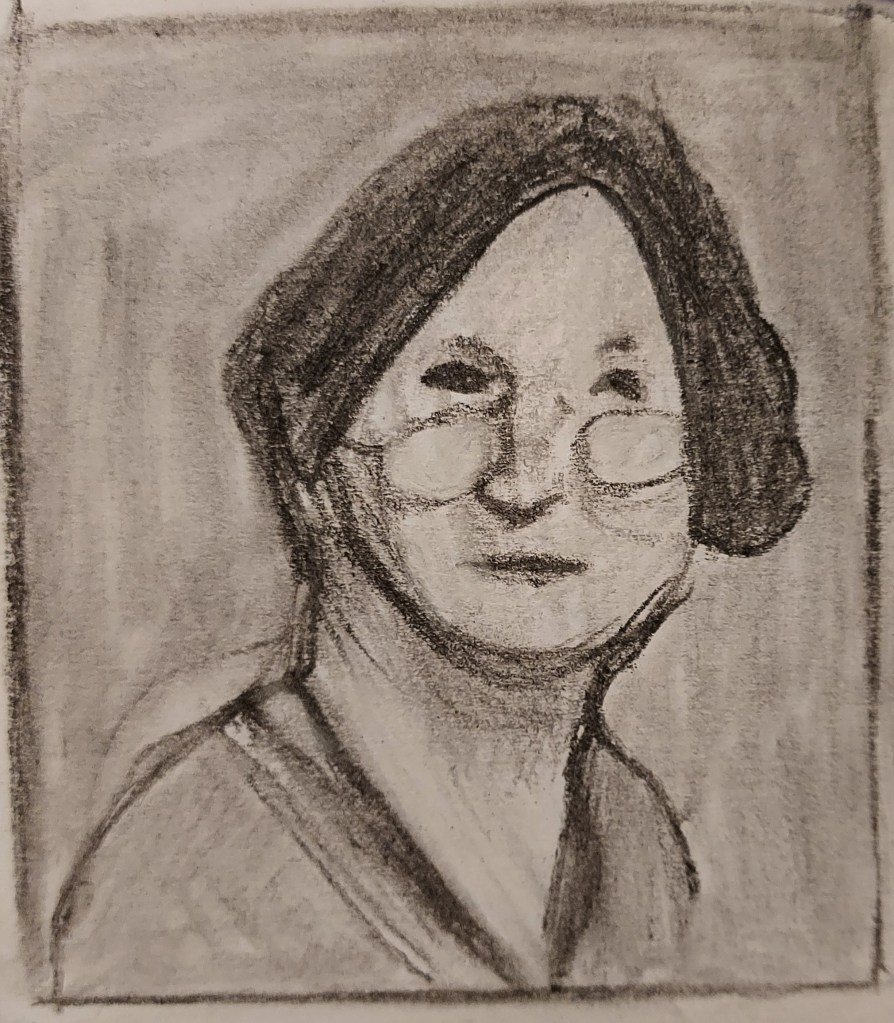
From all the great women in today’s post, Lucy decided she’d like to draw Dr Kathleen Lynn.
I’m linking this post to Marsha Ingrao’s weekly Writer’s Quotes Wednesdays (#WQW) #9 Women in History.
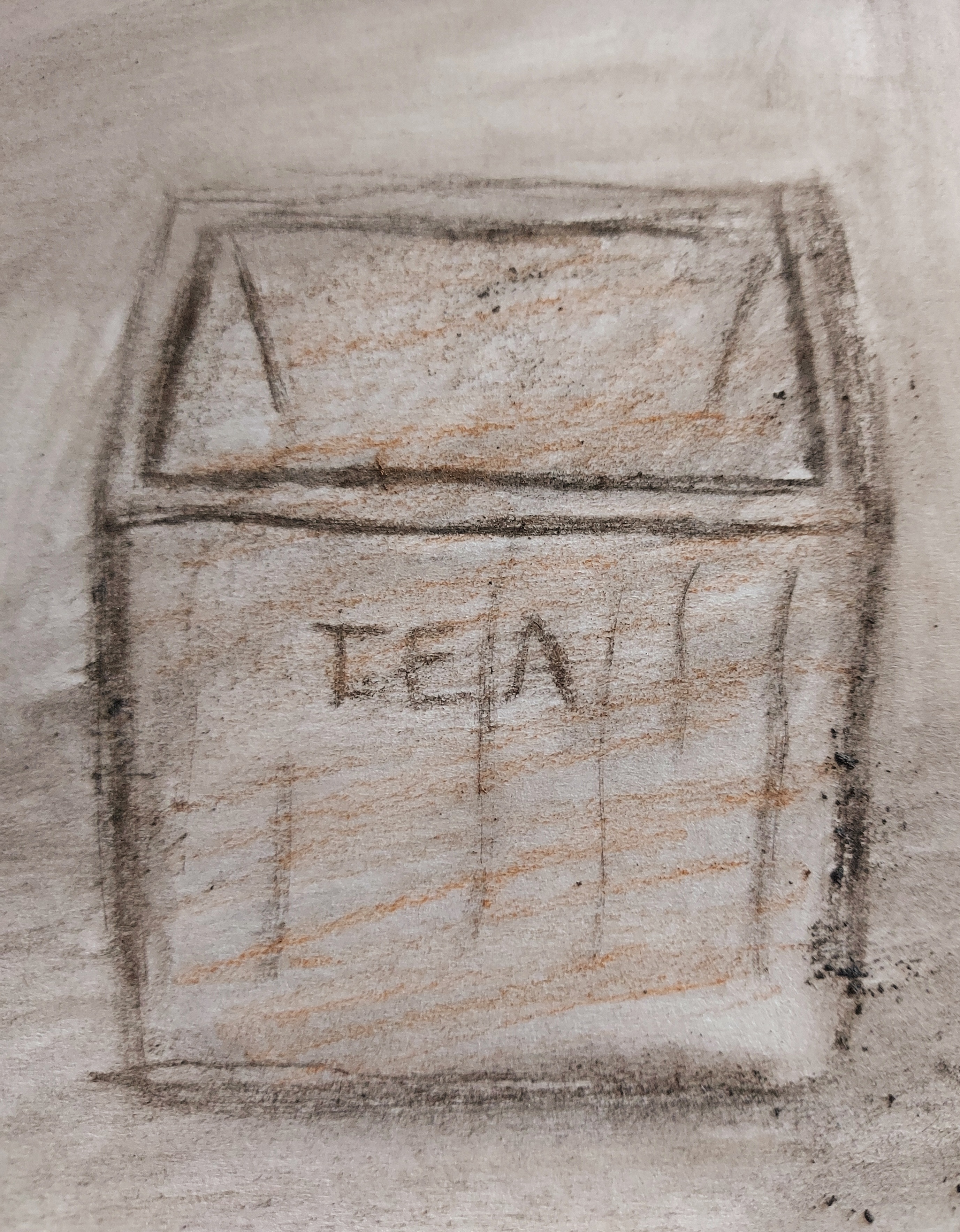
Baby in the Tea Chest #100DaysOfOldDays

Day 23 #100DaysOfOldDays

I’m too young to remember the big tea chests that were used to ship loose tea from one country to another. Back in the 40’s & 50’s the tea chest sat on the shop floor and the loose tea leaves were scooped out and weighed into bags for the customers.

The most interesting story I’ve heard about tea chests is that they were often used as playpens back then.

Before the wooden railed playpen came on the scene, mothers had to use their imaginations when it came to protecting their inquisitive tots from harm.

A tea chest was a safe and acceptable option in those days. Sizes varied from 400×400×620 mm to 500×500×750 mm. At least the child had a little bit of space to move around in, compared to being strapped into her pram.

I’m sure if you were seen putting your child into a big wooden box these days, eyebrows would raise and tongues would wag. Although, there’s nothing like a big cardboard box to keep children occupied when they’re bored!

Here’s Lucy’s sketch today!

Twin Tub #100DaysOfOldDays

Day 22 #100DaysOfOldDays

Where would we be without our automatic washing machines? I remember when they first came on the scene but my mam waited until 1995 before getting one. Until that she carried on pulling the twin tub washing machine out of the cubby hole.

It was called a twin tub because it had two compartments; one for washing the clothes and one for spinning them. A top loader. She’d fill up the washing part with hot water (the machine didn’t heat the water) add the washing powder, and press the button. The clothes tumbled round one way and then the other.

Then mam would use huge wooden tongs to pull them from the washer tub across into the spinner tub. Close the lid and off it would go. It made such a racket, hopping off the floor like a kango hammer. As it spun the clothes, the water through a pipe that went from the machine to the sink.

When there was no drying outside the clothes were hung on a line in the kitchen over the hot range and on a clothes horse.

And then she had days when it wouldn’t work. Those were the days when you kept out of her way!

It was such a chore. I don’t know how she put up with it for so long.  

But she always reminds me that the twin tub was a luxury in comparison to the days when she scrubbed the clothes on a washboard with a big bar of sunlight soap. She said it used to cut the knuckles of her. Rinsed them in clean water and then fed them through the wringer. Imagine all the washing in big families. One thing was for sure, you didn’t change your clothes every day back then!

Lucy’s drawing of a washboard in a bath of water.

Way to go Happy Nappy #100DaysOfOldDays

Day 21 #100DaysOfOldDays

Today’s post also forms part of Linda G Hill’s Stream of Consciousness Saturday #SoCS and the prompt this week is ‘way to go‘.

Disposable nappies were invented in the 40’s but they weren’t used very much until the late 60’s. My man never used them. We all got the Terry nappy bum treatment—and the youngest in our family was born in 1972.

I used Terry nappies in 1994.

It took me a while to get used to them. Learning how to do a nappy fold and finding the right technique to suit me. A nappy liner was used to catch the solids, so changing was less messy and easier.

Over the nappy went a pair of plastic pants to prevent leaks (they weren’t always reliable though). They were called plastics or rubbers.

Used nappies were soaked in a bucket of Napisan before being washed. Napisan is a germicide and it also helped to keep the nappies white and stain free.

If you’re familiar with the Irish mammy, you’ll know that nothing pleases her more than a good dry windy day. “Great day for the drying.” You’ll hear her say. And a line full of white cloth nappies was a satisfying sight back in the old days!

Reusable nappies are still the way to go for eco-conscious mothers of today. They come in all sorts of fancy shapes and styles. Special nappy buckets are available too. Bambino Mio for example, are very easy to use—no nappy folding techniques to learn—and they come in really snazzy designs.

Here’s Lucy’s drawings of cloth nappies and the rubber pants drying on the clothes line.