I went there for a new-born girl, but I ended up with a twelve-year-old boy! He looked out of place with his shaggy hair and bald patch, so I asked about him. They said that when his mamma had died, he ran away. He was found wandering in the grounds of a nursing home. No one knew his name.
His eyes followed me. He looked sad but I sensed he had charisma. I signed the papers, and took him home. When he strutted into our kitchen, he charmed us immediately with his feline cockiness. We christened him Sexy Pat.
Sexy Pat with his bald patch. He was truly amazing! Pat has long since passed away.
Would you like a peek inside the pages of my fictional novel? It might just be your cup of tea!
Set in a gossipy small town in Ireland at a time when marriage is for keeps and sexuality is repressed,Secrets in the Babby House is a family saga over three decades that starts in 1956. It isa story of love, deception, and stolen diaries filled with sins and secrets.
Dog and cat spaying wasn’t as common back in the 70s as it is now. I remember in those days, dogs roamed the streets and puppies and kittens were born in the hedges on the back lane. Not all the time of course, but sometimes!
Once, my father found a bag of newborn kittens at the foot of a steep hill. The person who got out of their car and threw the bag across the hill was aiming for the river, but they missed!
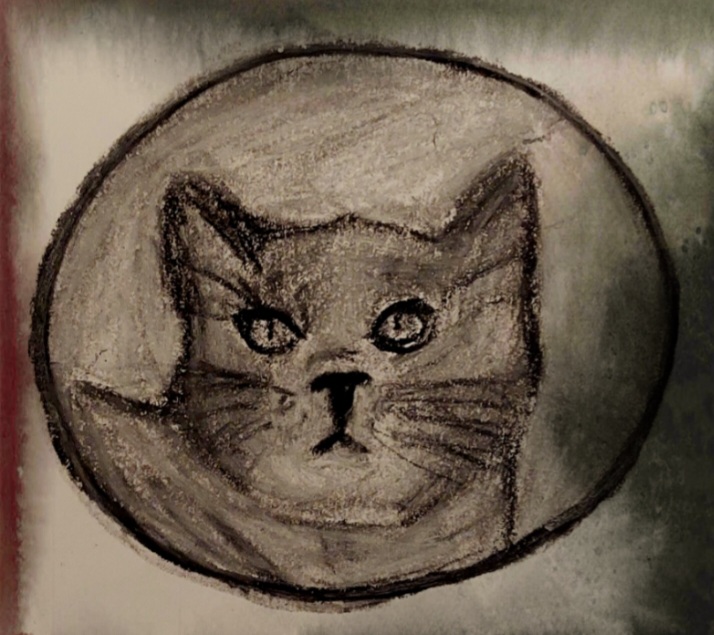
Like yesterday, Lucy drew a picture and asked me to relate it in some way to the old days.
Domestic Feline by Lucy McBreen
As it happens, there’s lots to be told about our feline friends. Whether you’re a cat lover or not, I’m sure you’ll find the history of cats to be quite interesting.
Here’s a brief look at the life of cats down through the centuries.
Apparently cats existed for millions of years before dogs did—although dogs were domesticated long before cats were. Smilodon is one of the most famous pre-historic sabre-toothed tigers. Not the kind of cat you’d want lying on your favourite mat.
In Ancient Egypt, the Egyptians developed a relationship with cats when they became known for keeping rats and mice away from their food supplies. Over time, they became part of the Egyptian household and before long cats were seen as celestial creatures that were to be worshipped. Around this time it was illegal to export a cat from Egypt and to kill one resulted in the death penalty.
The Egyptians mummified their dead cats and buried them in consecrated plots. Researchers discovered 300,000 mummified cats in one such plot.
India, China and other Asian countries began to keep cats as pets too. They were still considered Godlike creatures and treated like royalty.
The Romans and Greeks didn’t worship cats but they did keep them as pets; more for their ability to keep the rodent population down. They became more domesticated over time as people saw them as a most suitable human companion.
In the 14th century, during the time of the Black Death, cats played an important role in keeping vermin under control, thus lessening the spread of the plague.
Cats weren’t treated so kindly during medieval times. They were still thought of as magical—but of a devilish nature. Not many kept one as a pet because it was believed that only witches kept cats. Anyone suspected of dabbling in witchcraft was put to death along with their cat. Cats weren’t welcome in most homes during the 17th century. They almost became extinct around this time.
Their decline in population during the return of the Black Death, meant a higher percentage of vermin scourged the streets and helped with the spread of the plague.
Some people believed that black cats were witches in disguise. And it was said that the black cat aided a witch in her spells and magic (a familiar). Hence the reason why we associate black cats with Halloween.
Lucky for all cats, witch hunts ceased to exist and people began to welcome them into their homes again.
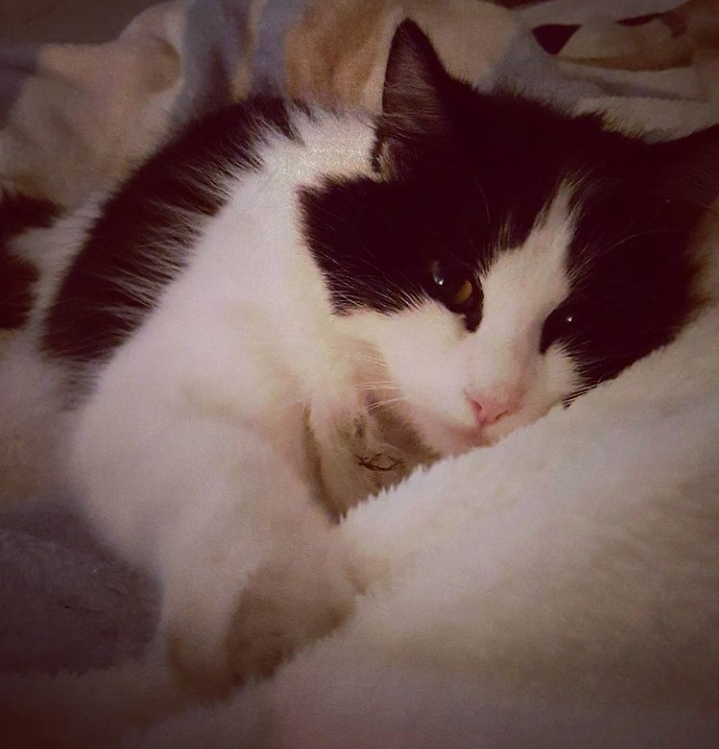
This is the gorgeous Malibu…my daughter’s pampered cat.



 Gloria McBreen