Day 24 #100DaysOfOldDays #InternationalWomensDay
When we talk about days gone by, we often call them ‘the good ole days’. We talk about the simplicity of life, being happy with our lot, less expectations. We praise the women, and how hard they worked in the home. They had many children. None of it was easy.
Life may have been simpler, but that doesn’t mean it was better.
Having a big family wasn’t necessarily a choice. Contraceptives were illegal in Ireland from 1935 until 1980. Look at how many women suffered from post-natal depression but it often went undiagnosed, or simply misunderstood. Many poor women were subjected to electric shock treatment, others stayed locked away in asylums.
Then of course we had all those young women who got pregnant out of wedlock and got sent to mother and baby homes, where their babies were either sold or didn’t survive. No suffering for the men who got these women pregnant though! All too often these were women who were taken advantage of by men who should have known better.
Divorce wasn’t allowed. If you married a beast, you stayed with him. Battered women shut up and put up.
Then there was the marriage bar.
In 1893 women typists who worked for the civil service campaigned to be made permanent in the their jobs. The government agreed. However, the agreement came with a clause. Their contract would be terminated if they were to marry. They wouldn’t receive a pension; instead they would be paid a month’s salary for each year worked, and only for a maximum of twelve months. This was merely a sweetener to reduce the temptation to stay single.
This ‘rule’ supported societal attitudes that women should stay at home and men should provide for the family.
School teacher Maureen Cronin from County Clare, defied the marriage ban and continued to work for a year without pay. During this time she was ignored by the school inspectors, and barely acknowledged by parents. She was eventually dismissed from her job. When the Bishop got involved he was appalled that she had worked for a full year without pay. He took a trip to Dublin and returned with her salary.
After that Maureen was allowed to work part-time but not full-time. She got a job teaching music in a protestant school and continued to fight for the ban to be lifted. It was lifted in 1958 and married school teachers returned to work.
The marriage ban remained for the rest of the public sector workers until 1973.
There are many great Irish women who fought for equal rights in our country—although we’re not fully there yet.
Dr Kathleen Lynn 1874—First female doctor at the Royal Victoria Eye and Ear Hospital. Founder of St Ultan’s Children’s Hospital. She was a member of the Irish Women’s Suffrage and Local Government Association.
Lilian Bland 1878—the ‘Flying Feminist’. In 1910 she designed and constructed the first biplane in Ireland; The Mayfly. She flew it herself making her the first woman to fly an aircraft in Ireland. To date there are 64,979 female pilots in the world. Thank you Lilian for showing the world that women can do anything!
Rosie Hackett 1893—an Irish rebel and trade union founder of the Irish Women Worker’s Union. She was a member of the Irish Citizen Army and an activist in the 1916 rising.
Hannah Sheehy Skeffington born 1903—one of our great suffragettes, who co-founded the Irish Women’s Franchise League and later a founding member of the Irish Women Workers Union.
Maureen Cronin 1916—advocate for the abolishment of the marriage ban for school teachers.
Mary Robinson 1944—the first female to be elected as President of Ireland in 1990. She fought for the right to make contraceptives legally available in Ireland, and she passed the bill of decriminalising homosexuality. She was also involved in the fight for the removal of the marriage ban.
Thank you to these women and all the others around the world. Strong women are getting stronger!
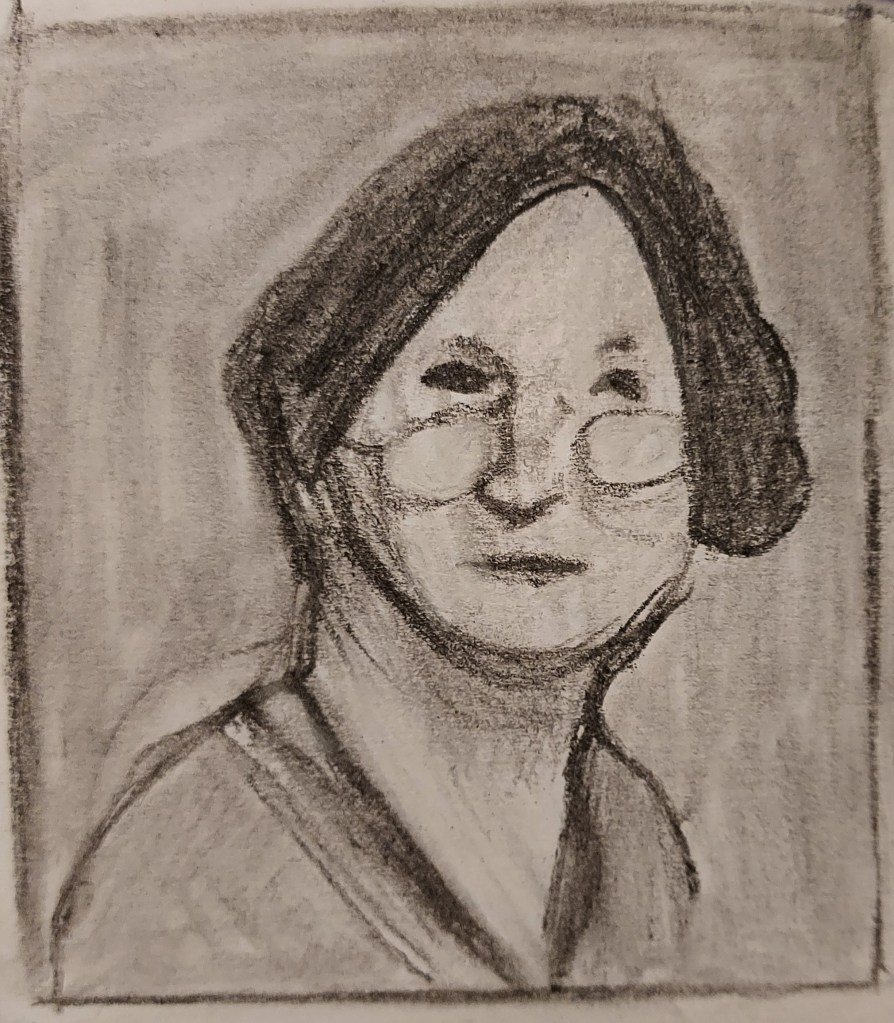
From all the great women in today’s post, Lucy decided she’d like to draw Dr Kathleen Lynn.
I’m linking this post to Marsha Ingrao’s weekly Writer’s Quotes Wednesdays (#WQW) #9 Women in History.
 Gloria McBreen