Day 64 #100DaysOfOldDays
Today’s post is also for Marsha Ingrao’s PPAC #44

Tobar Mhuire, the ‘Holy Well’, is located on sacred ground in Co Mayo, close to where the Rosserk river meets the estuary of the River Moy. (Find it here.)
According to local folklore, an apparition of the Blessed Virgin Mary occurred on this site circa 1680.
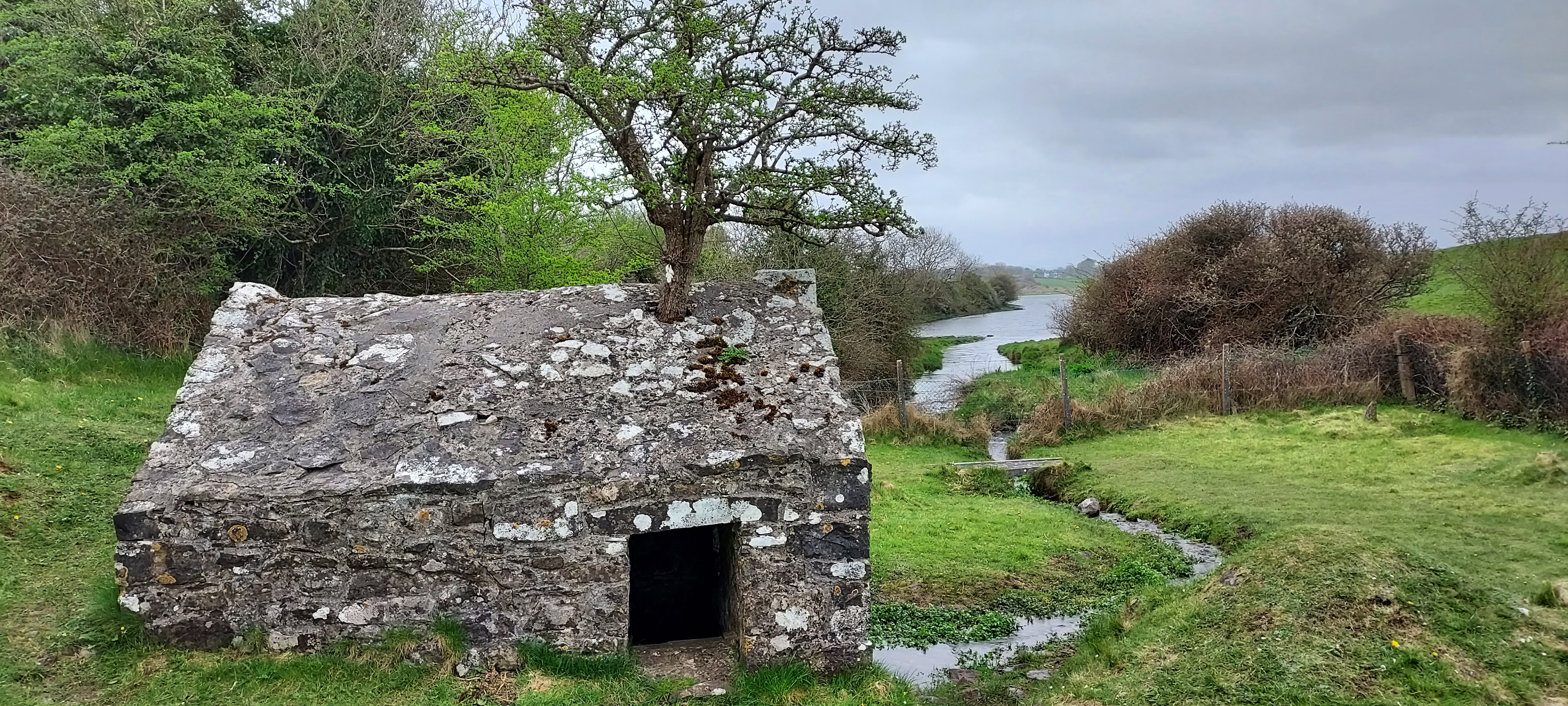
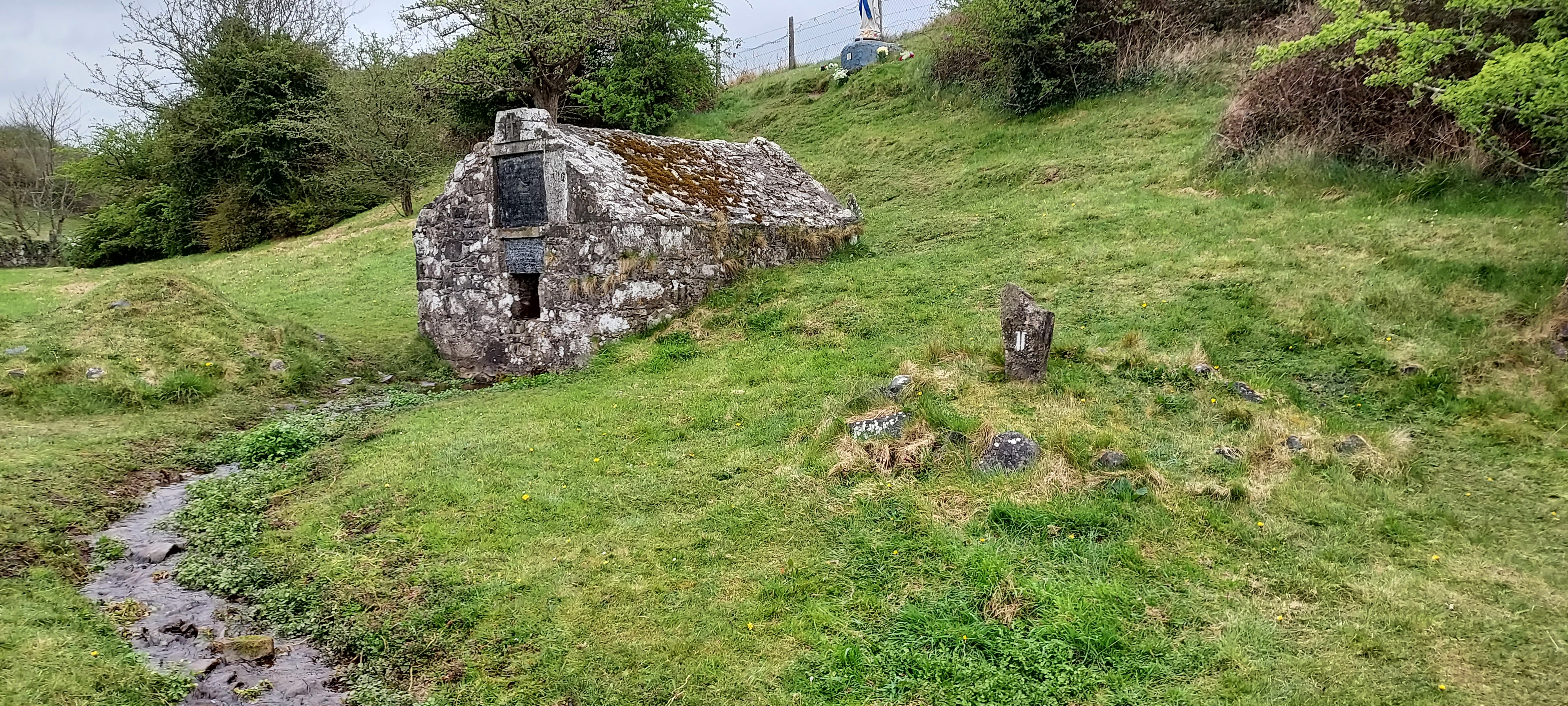
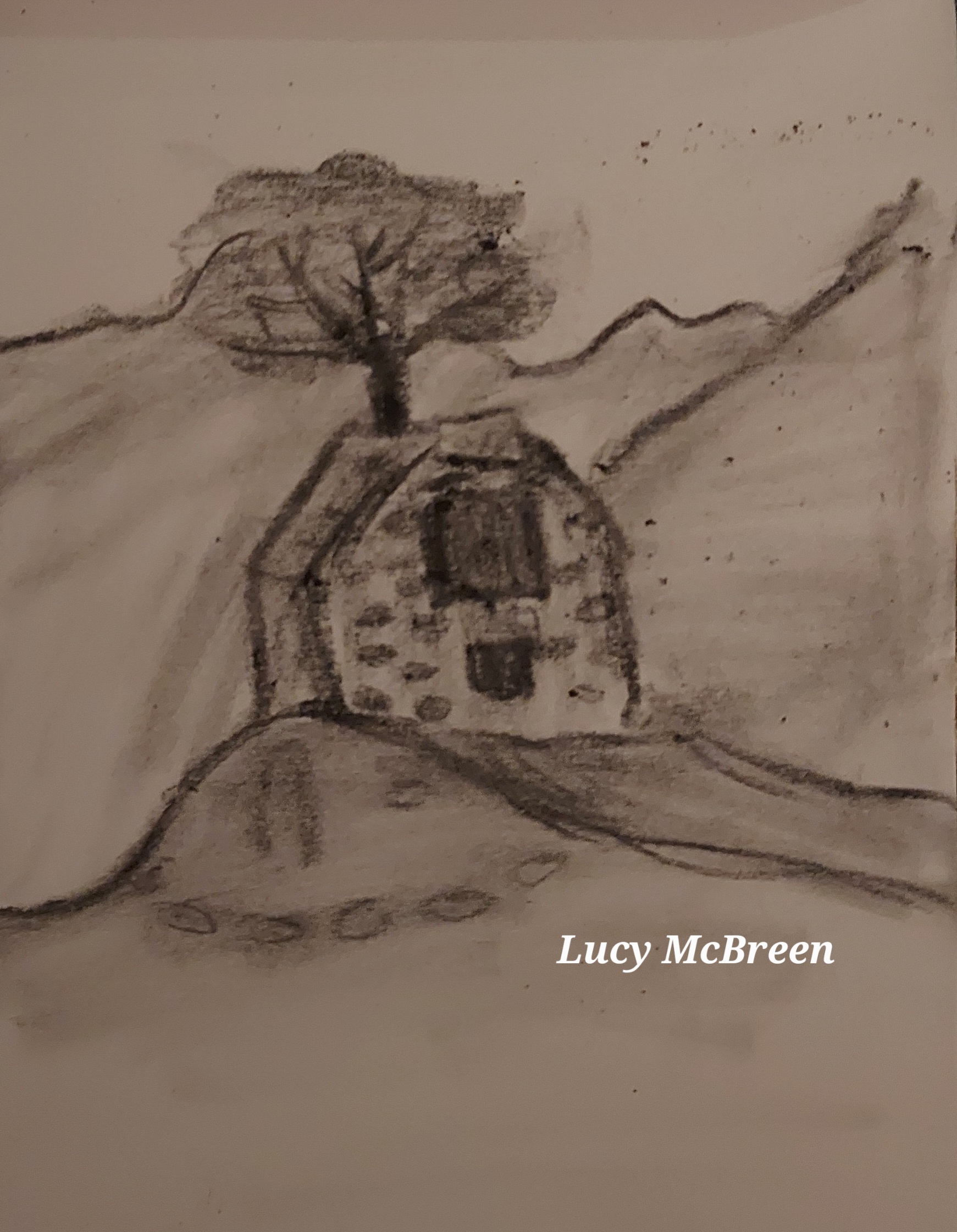
The Holy Well is cocooned in a little stone house. On the front there’s an engraving of the words; “This chapel was built in honour of the Blessed Virgin in the year of Our Lord 1799 by John Lynott of Roserk.” Beneath this inscription is a carving of a dove bordered either side with the motto “Peace and Love,” under which are two Latin inscriptions.
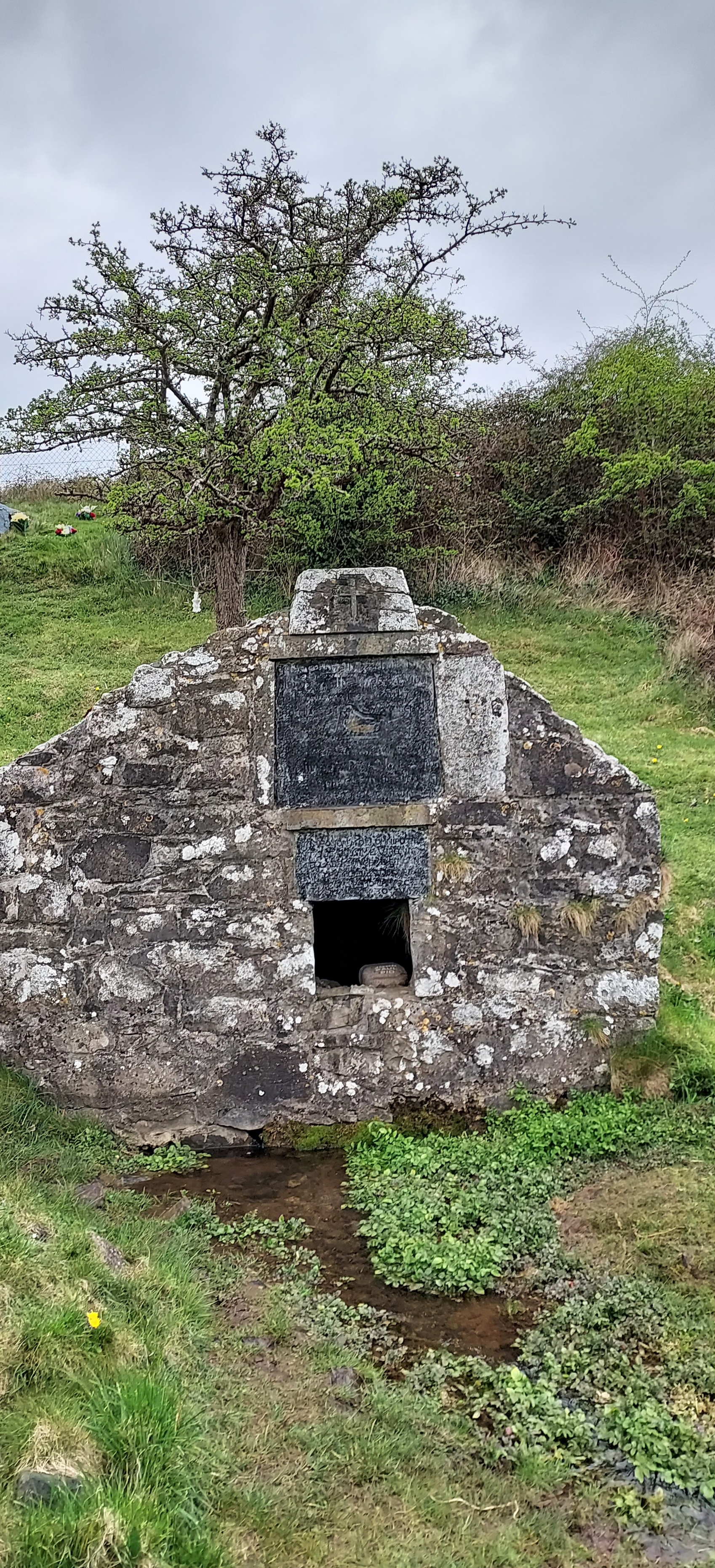
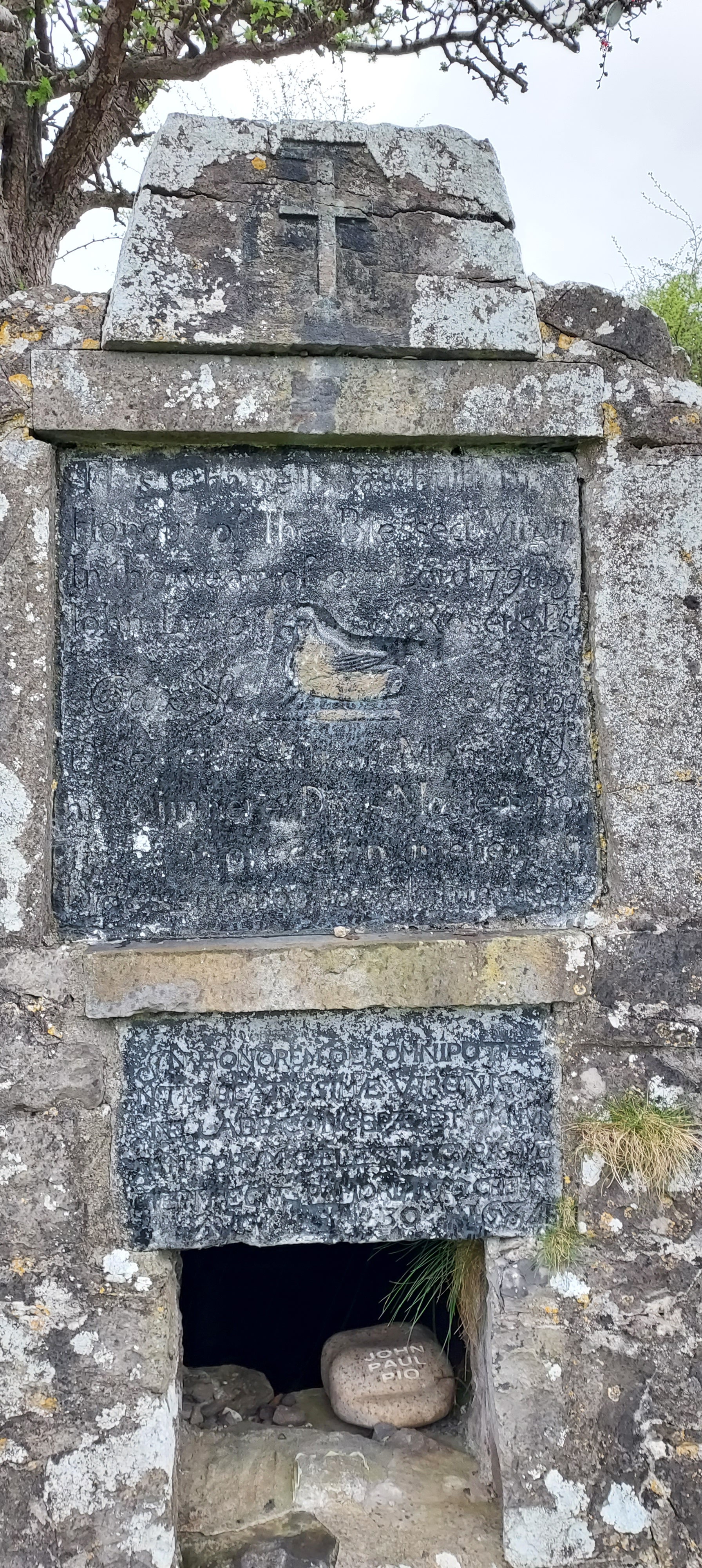
The top Latin inscription reads: “Pax, &c., and after it “Amon.” Further down it says; “Discite justitiam moniti et non temnere divis mortem non timeo mons est in limine nostro Decessem a mundo velut umbra sol 1810”. According to Goggle translate this means; “Learn justice, warned, and do not fear the death of the gods. There is a mountain at our doorstep. I departed from the world like a shadow of the sun 1810.”
The bottom slab is from a preceding building and it’s also in Latin; “In honorem Di omnipotentis Beatissimae Virginis sine labe conceptae & omnium Sanctorum Caelestis Curiae me fieri fecit pater Moriatus Crehn August+30,1684.” This translates to; “In honor of the Almighty Gods of the Most Blessed Virgin conceived without stain and of all the Saints of the Celestial Curia did I become the father of Moriatus Crehn August+30,1684.”
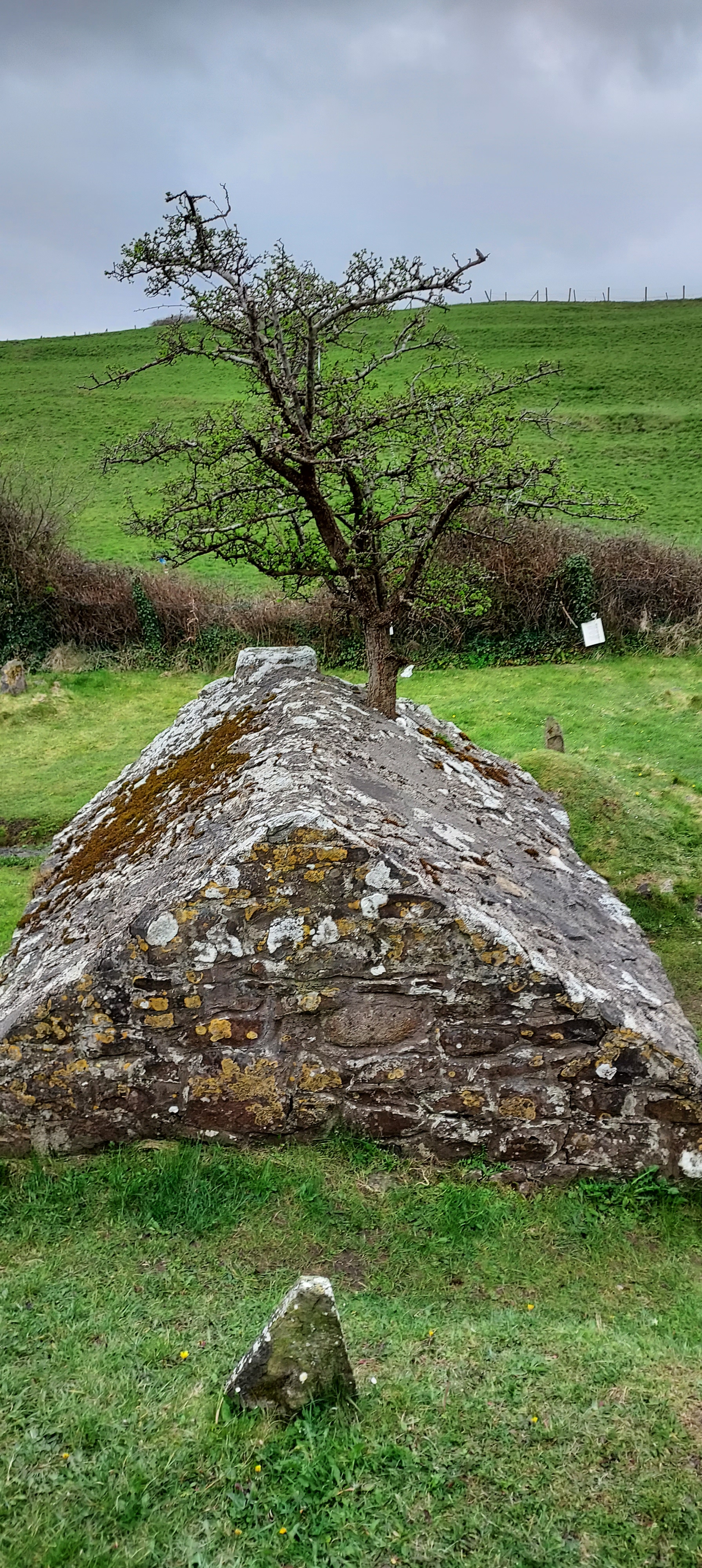
That tree has grown out from the stones in the roof of the building. Up until recently—2 or 3 years ago—people visiting the well would hang ribbons, holy medals, Rosary beads and items belonging to a sick person they would be there to pray for. These offerings were traditionally for the spirit in charge of the well and to the priestess who acted as the guardian.
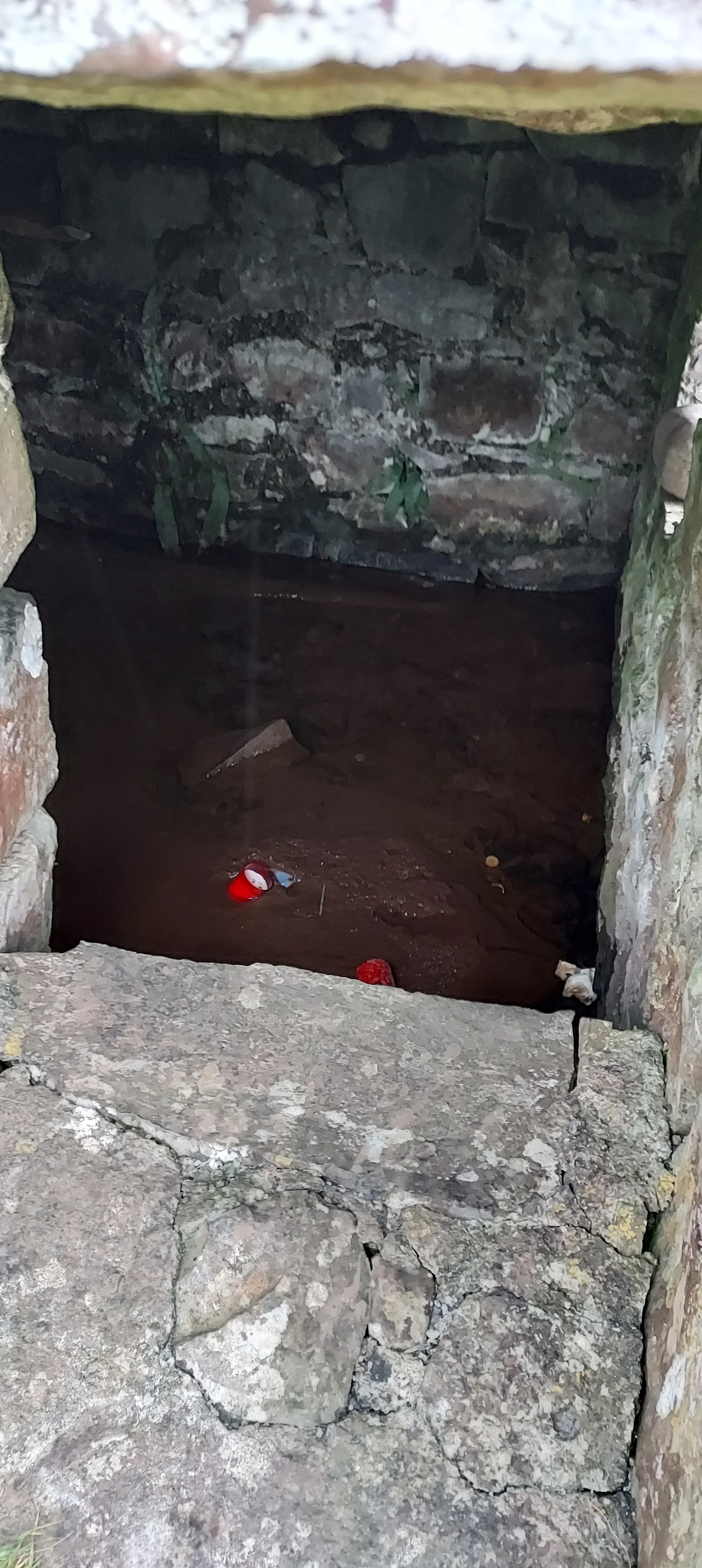
People also throw money into the well and light candles to place along the edges, or leave them floating on the water.
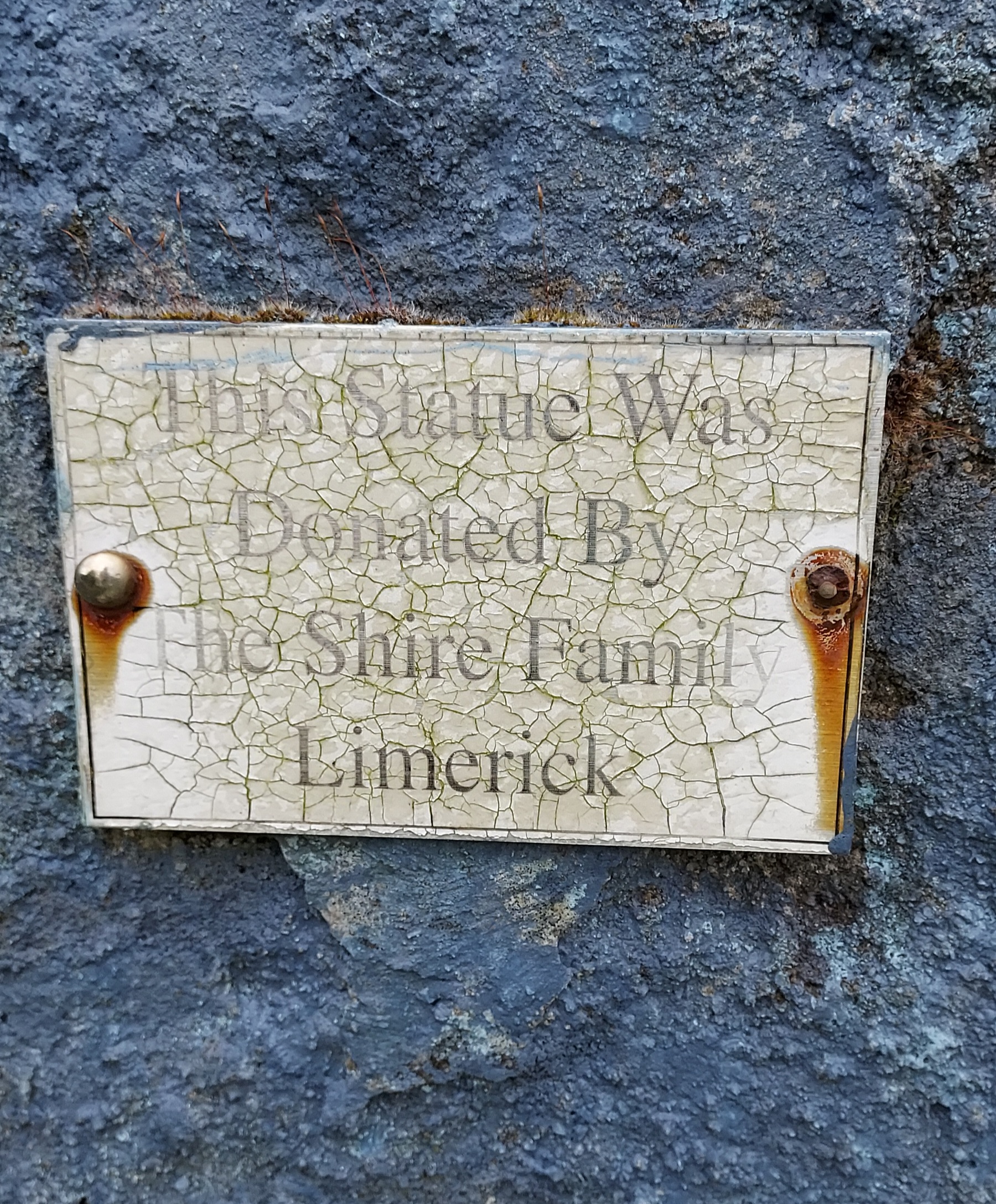
Read HERE for a more in-depth account of Tobar Mhuire and the history of holy wells in general.
Lucy’s drawing of Tobar Mhuire.


 Gloria McBreen