I never knew my father’s mother because she died in 1960, seven years before I was born. I believe she was a lady and I wish I had known her. Her husband, my grandfather, died in ’68 when I was a year old, so I never got to know him either.
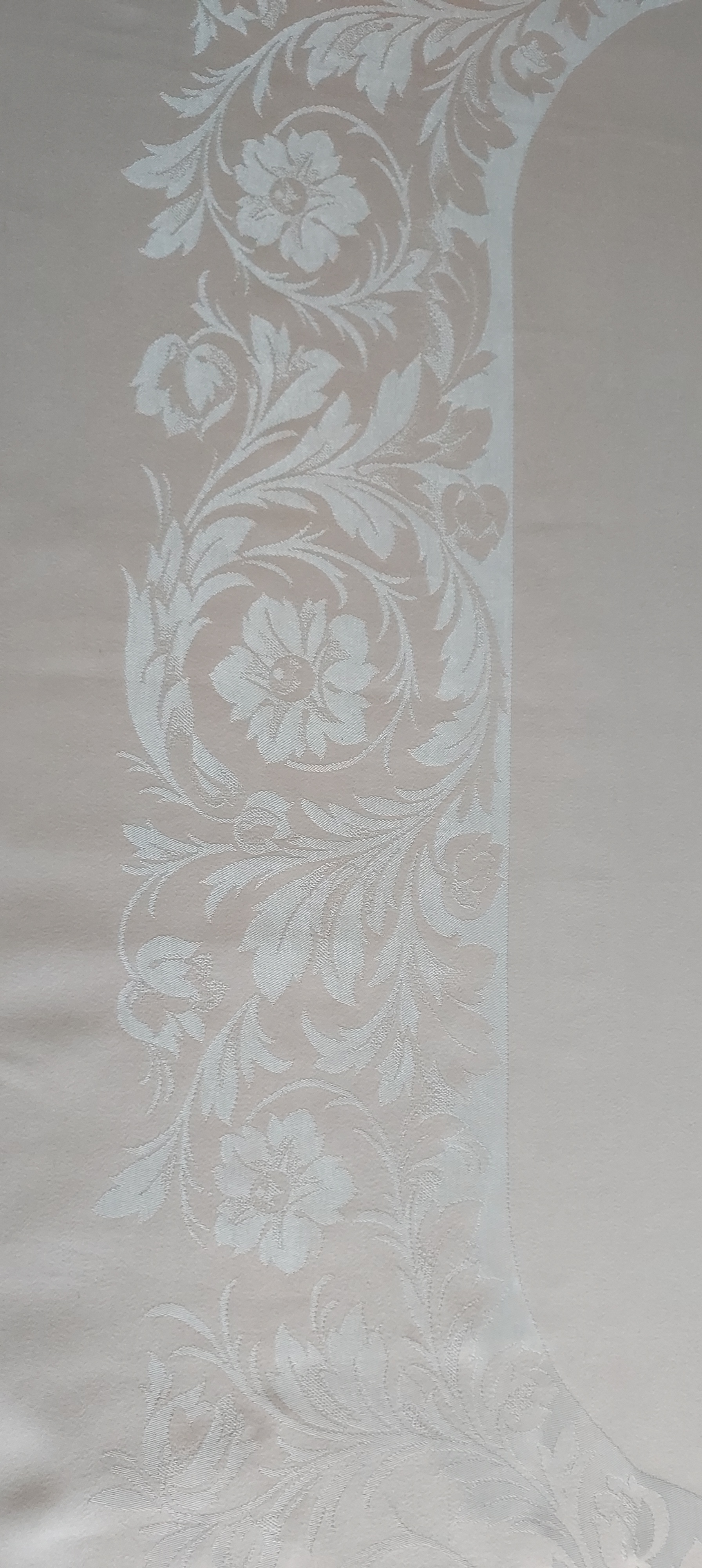
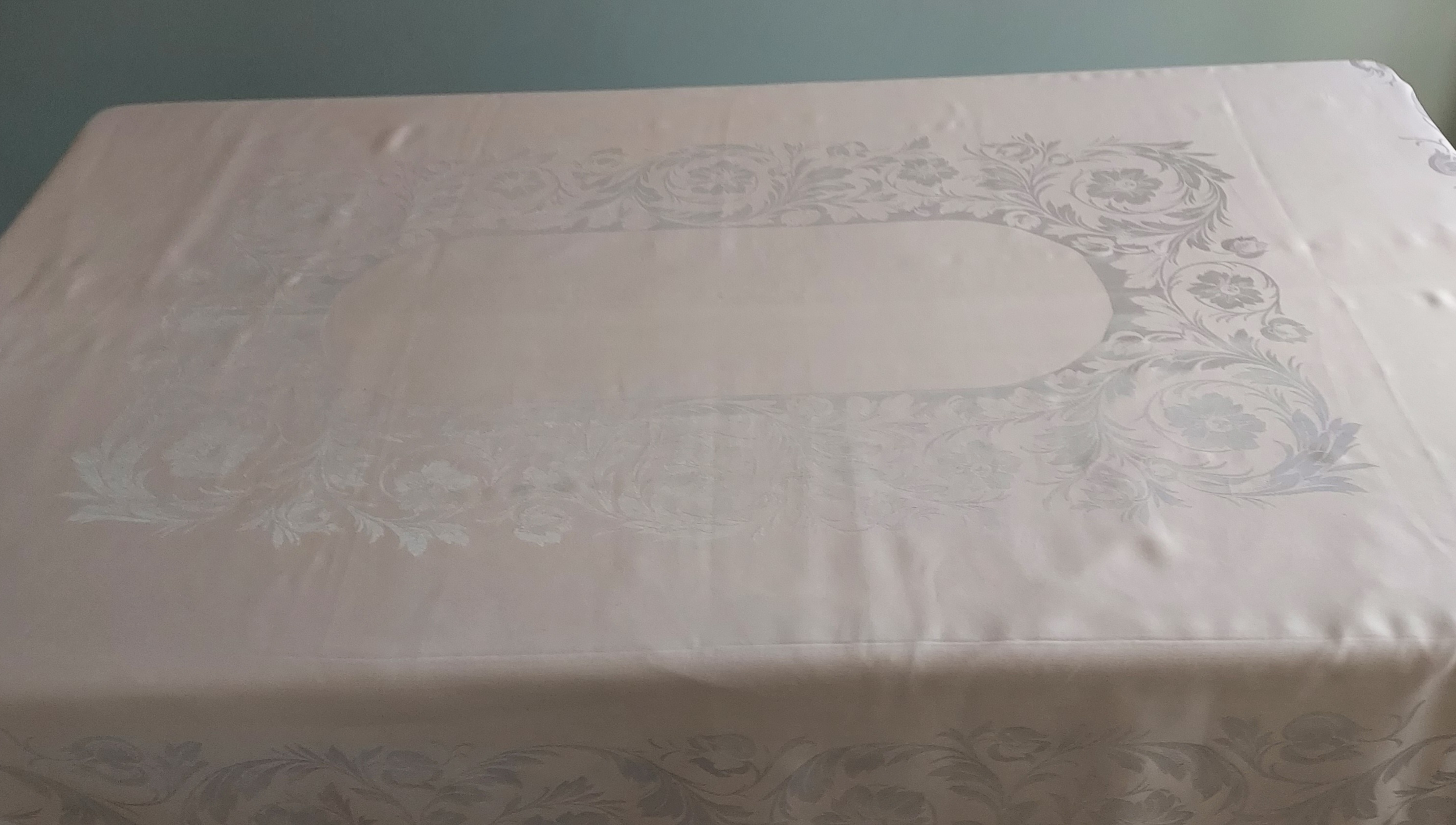
I was absolutely thrilled when two days ago, my uncle Philip, Dad’s brother, gave me a beautiful pink damask linen tablecloth that belonged to their mam. I’m a sentimental ole biddy and to own something that once belonged to my grandmother is a big thing for me, especially as I had nothing of hers before this.
This tablecloth was a present to her from my auntie Kay in 1950. So it’s at least 72 years old. It’s beautiful, I love it, especially the colour. The photos don’t do it justice unfortunately!
As you can see, I’m not great with the iron. I don’t get enough practice! I was afraid of damaging it. If you have any tips for safely ironing a linen tablecloth, please let me know. 😊 Not that I’ll be using it on a daily basis but I will take it out for special occasions.
My Grandmother’s Tablecloth
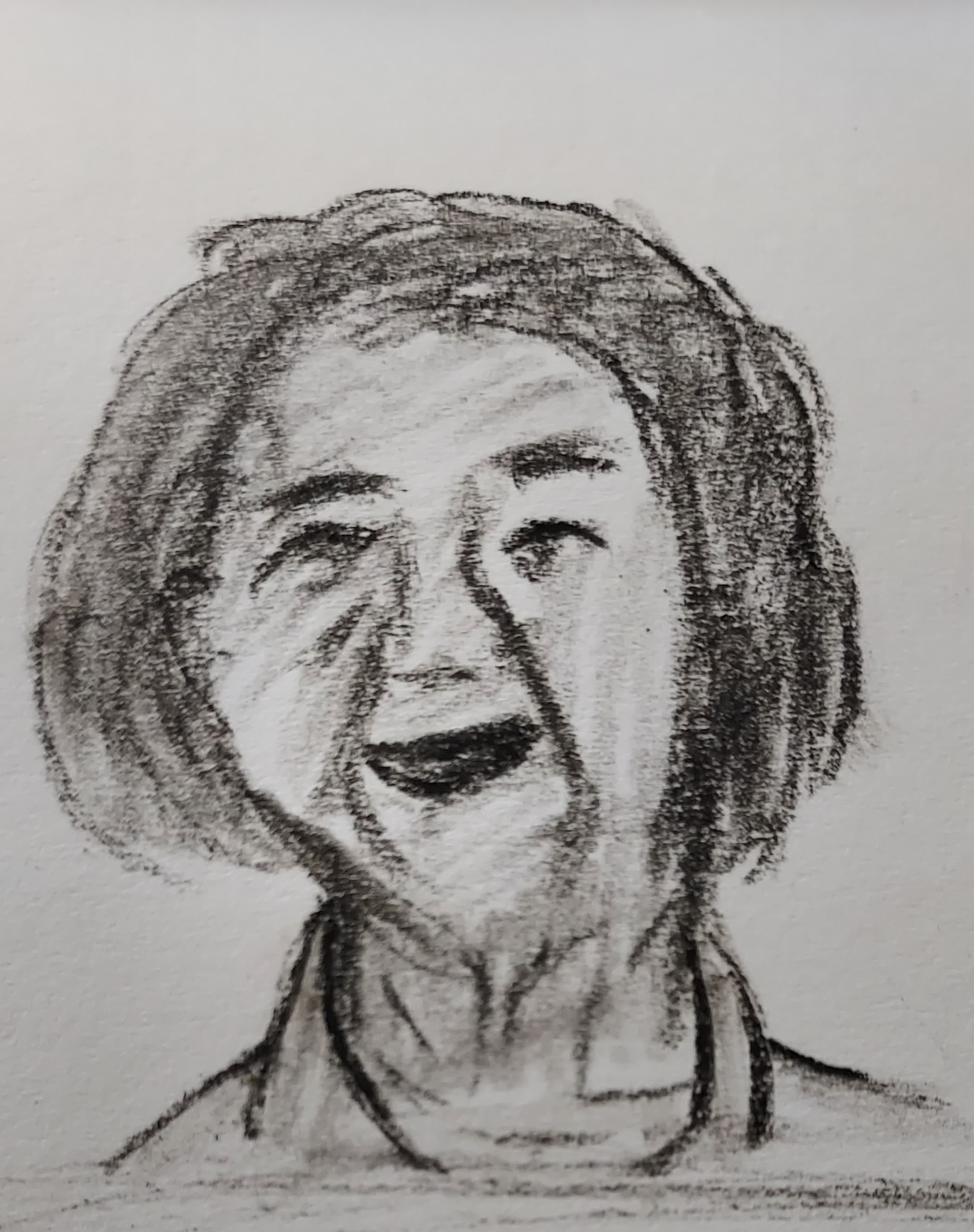
The photos I have of my grandmother are quite old and not too clear. Lucy drew this picture of her from one of the photos.
My late dad was a bit of a collector. I must have taken after him for my love of old things, and old-time stories. Mam likes old things too, but only if they look pretty. And she likes old stories—but only if there’s a ghost involved! They were very well matched!
So, Dad’s collection of old bottles and pottery jars were not high on her ‘fancy list.’ He would often have them on display in the house, but they’d disappear one by one out to the garage. Eventually he’d pipe up, ‘Hi…where’s all me bottles?’ And back in they’d come.
Mam kept some of the cute little ones in the house though. They’d often blend in with some of her fancy ornaments.
I have some of Dad’s old bottles and jars in my possession and they absolutely deserve a mention in my 100 days of old days collection!
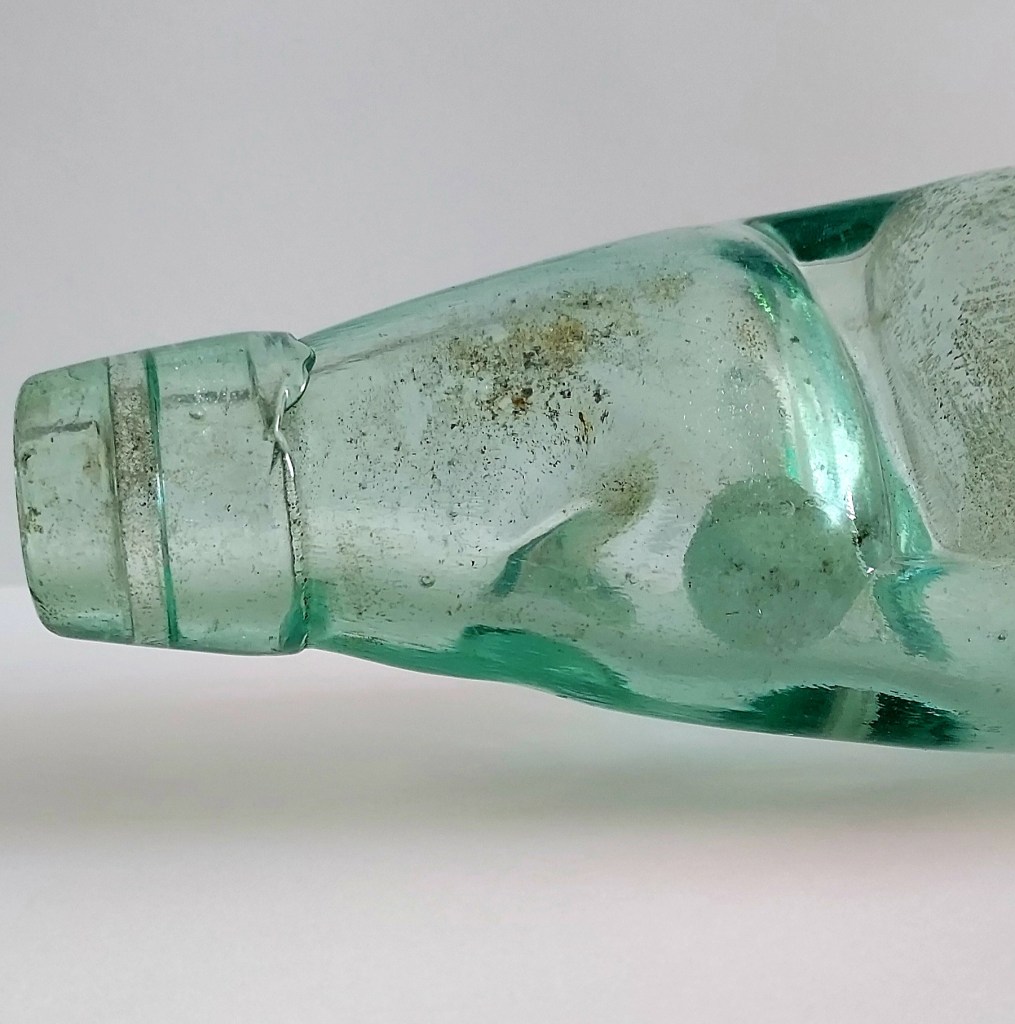
My first one here is the most unusual in the collection. It’s a torpedo or soda bottle and was common during the 1800’s. Why is it shaped like this?
Torpedo Bottle
During the first century AD, the Romans documented many of Europe’s mineral wells. When news of the benefits of sparkling water spread around the world, the demand grew, and shipping it to other countries began. But long distance travelling was a problem; the corks would dry out and shrink, causing the fizz to escape. So, shipping the mineral water ceased. Because only very rich people could afford to travel to the mineral wells in Europe, the thinking caps were smartened, and the torpedo bottle was invented. With its egg-shaped bottom, the bottle had to be kept on its side to kept the cork wet thus avoiding shrinkage.
The problem with this bottle of mineral was, once it was opened, you had to drink it all. A problem for the customer yes, but not for the merchant.
By 1838 flavoured fizzy drinks started to take off. Improvements were made to the bottles; flat bottoms and better corks.
In 1861 ginger ale was bottled, and Charles Hires began bottling root beer in 1876. In 1885 a pharmacist named Charles Alderton invented Dr Pepper and in 1886 Coca-Cola was born.
The 1915 Coca-Cola Bottle
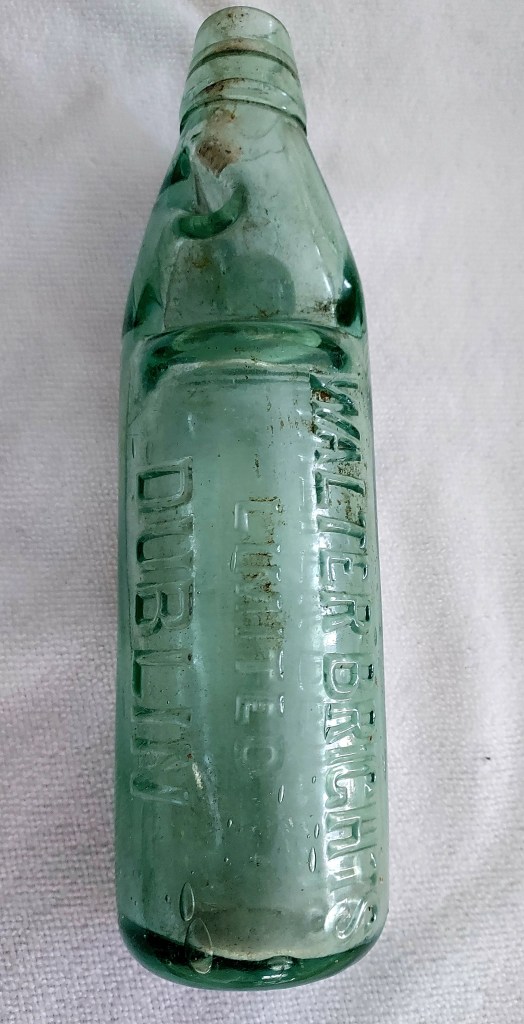
The next bottle in my dad’s collection is this Codd neck bottle. This particular one, embossed Walter Brights LTD Dublin, is vintage from the 1900’s and is a rare find.
The Codd-neck bottle was designed and patented in 1872 by British soft drink maker Hiram Codd. The thick glass was designed to withstand pressure from within. The pinch on the neck of the bottle created a chamber that enclosed a marble and a rubber washer. The bottle was filled upside down and the pressure from the gas forced the marble to seal against the rubber washer at the opening. To open the bottle, the marble was pushed down into the chamber. When held in the right position the marble stayed in the chamber when the bottle was tilted for pouring the drink.
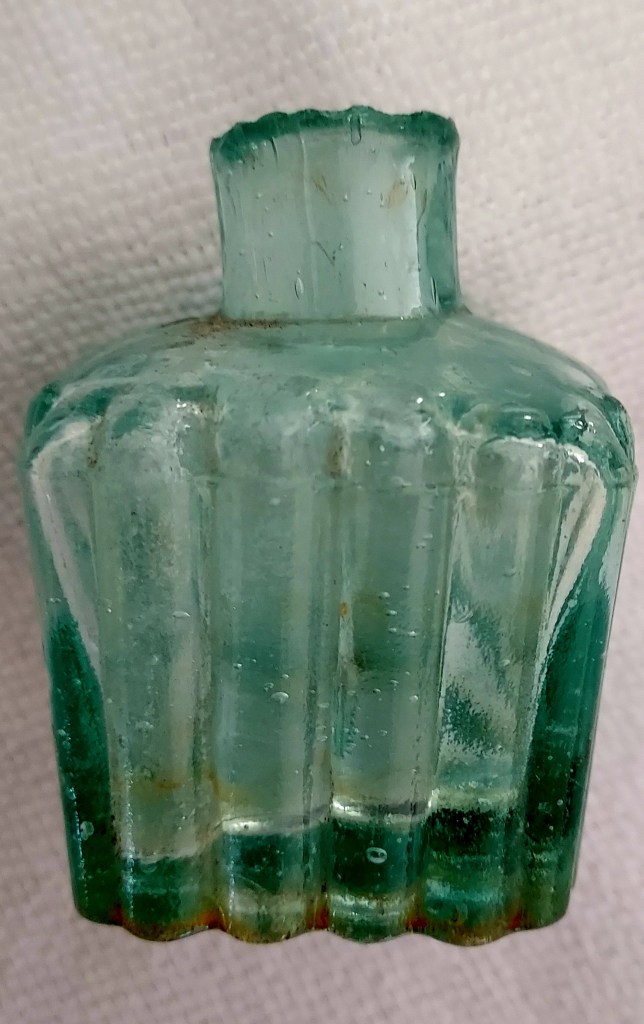
Dad had quite a few vintage ink bottles/inkwells in his collection.
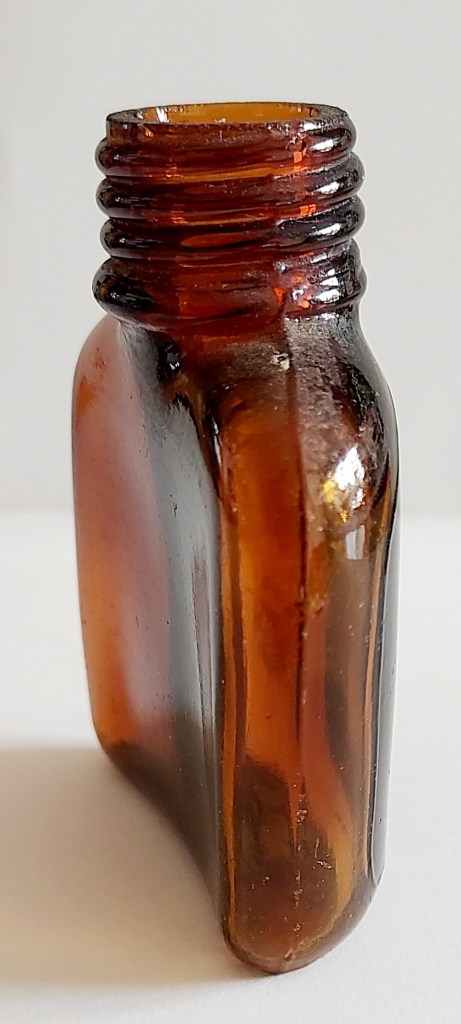
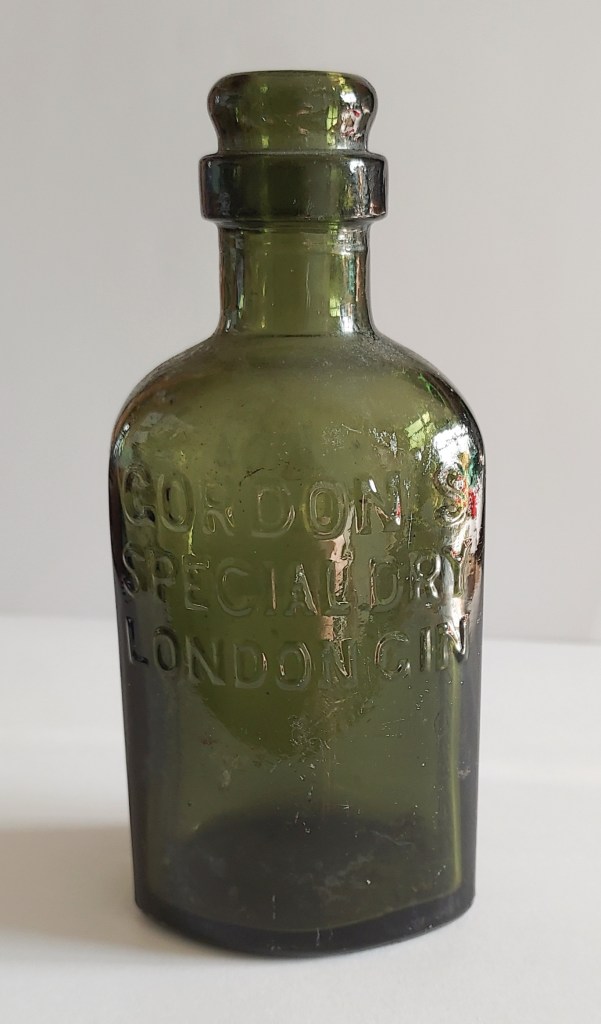
Victorian Ink BottleVintage Glass Ink Bottles A Glass Stopper2oz Vintage Bovril JarA Poison Bottle“NOT TO BE TAKEN” Amber Medicine BottleAmber Curved BottleI’m not sure what the amber curved bottle on the right was used for. Gordon’s Special Dry London Gin
Among this collection are some old Milk of Magnesia bottles.
More Than 10 Green Bottles and 9 Blue Bottles
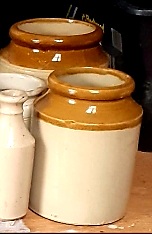
These big stoneware pots were called butter crocks.
Butter Crocks
We’ve had this already in my post about the old style hot water bottles. You can read about that HERE.
Stoneware Hot Water Bottle
The next picture is of an antique hand blown glass rolling pin! It even has its original cork.
Glass Rolling Pin
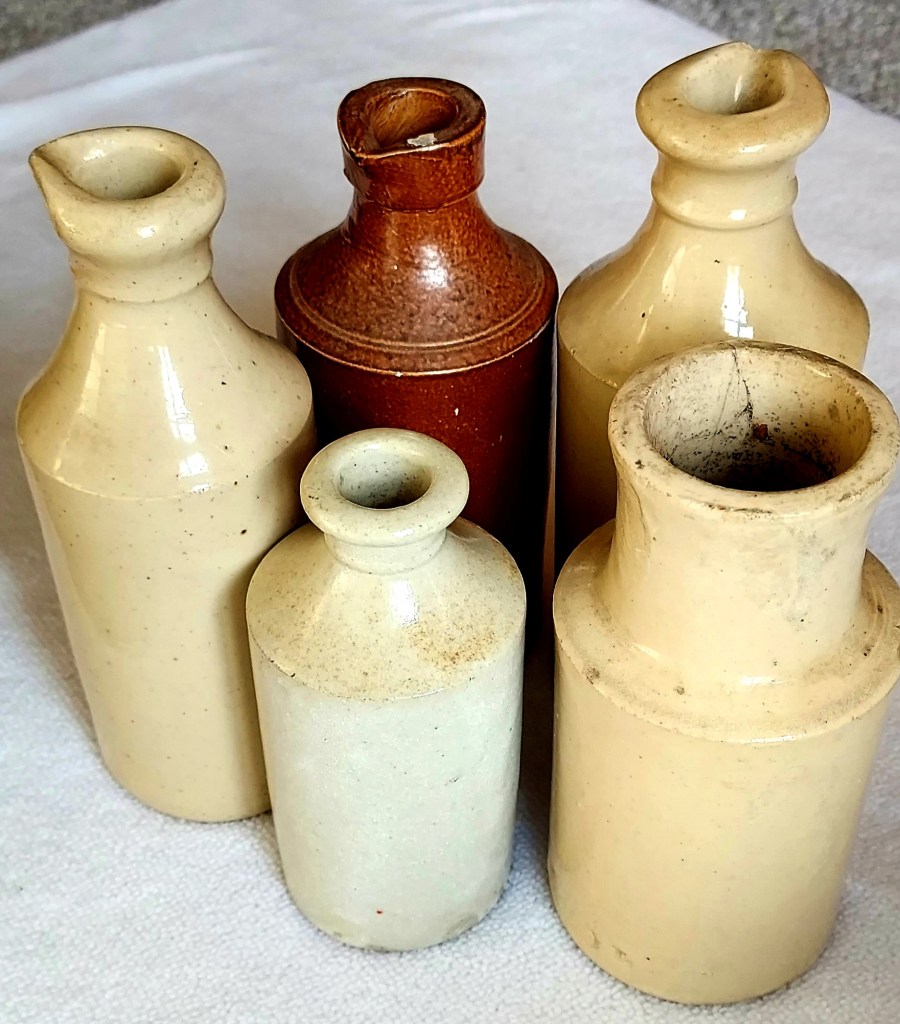
These old stone ginger beer bottles are my favourites!
And last but not least…Lucy’s drawing of an old green ink bottle!
My husband found this vintage enamel jug in the old hen house at his grandfather’s derelict house. After cleaning it up, we thought about trying to remove the rusty bits. But we decided not to, as it adds to its old-fangled charm.
Granda Rogers’ Enamel Jug
Enamel has been around for thousands of years. Coating cast iron cooking pots with enamel began in Germany in the 1760’s. By the early 1800’s porcelain enamel lined cookware had made its way to European countries.
Enamel kitchenware is by no means a thing of the past. The cookware of today is coated in a higher grade enamel. For example; Le Creuset, is coated in a glass enamel made with a ‘secret’ enamel recipe.
The enamel mugs and jugs might not be coated with the same high quality enamel as the pots and pans. The mugs have always been a popular choice for campers, and I see they’re back on the mug stands in many homeware stores.
Enamel Mug by Lucy McBreen
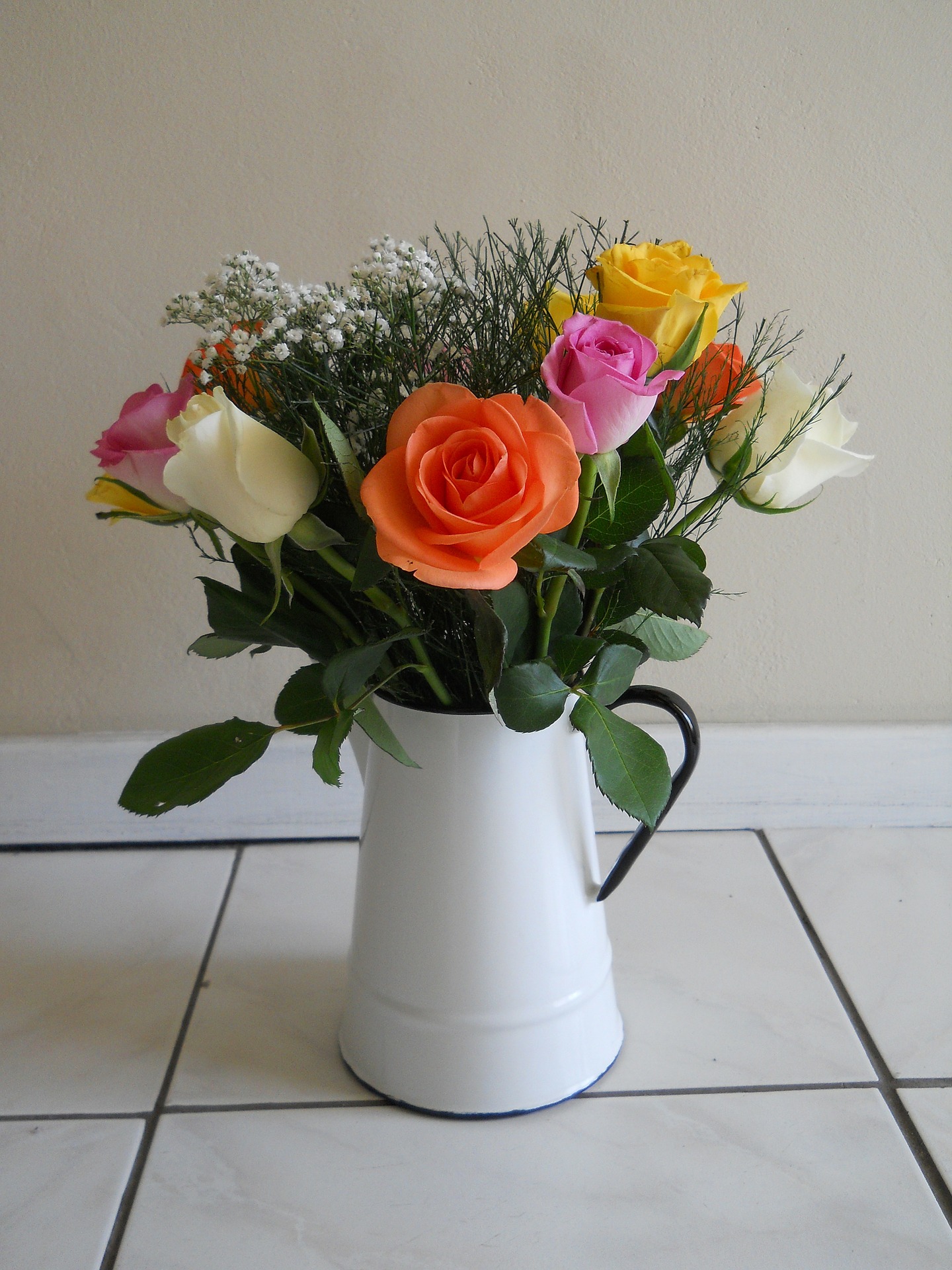
The jugs are often used these days as a vase for flowers. They’re really pretty.











 Gloria McBreen