Fancy biscuits were for Christmas time and other special occasions. My mam bought chocolate and cream filled biscuits whenever she’d host a Tupperware or make-up party. The parties were usually on a Friday night, so we didn’t have to be in bed early. We weren’t allowed near the sitting room where the party was being held but we’d hang around on the stairs waiting for the women to finish their tea because Mam would always give us the left-over biscuits. It’d seem like hours before she’d come out with the trays and empty cups. Often we’d fight over the last chocolate biscuit, and argue about who got it the last time.
My sister-in-law Margaret, reminded me of the days when buttered plain biscuits were a treat. Margaret remembers getting Thin Arrowroot biscuits from her grandfather; plain on a plain day, buttered on a good day!
Arrowroot biscuits were/are the plainest of all biscuits. I’m not sure if they are still available in Ireland.
A chocolate digestive was the Roll Royce of the biscuit world and an Arrowroot was the Lada.
However, when you’d sandwich two together with real butter and a blob of strawberry jam, they became a Ferrari to a 70’s child.
My great-granny used to give us Marietta biscuits, but not with butter or jam. We didn’t mind either way. A biscuit was a biscuit and it wasn’t every day we got one!
Thank You Lucy for your Drawing of the Arrowroot Biscuit!
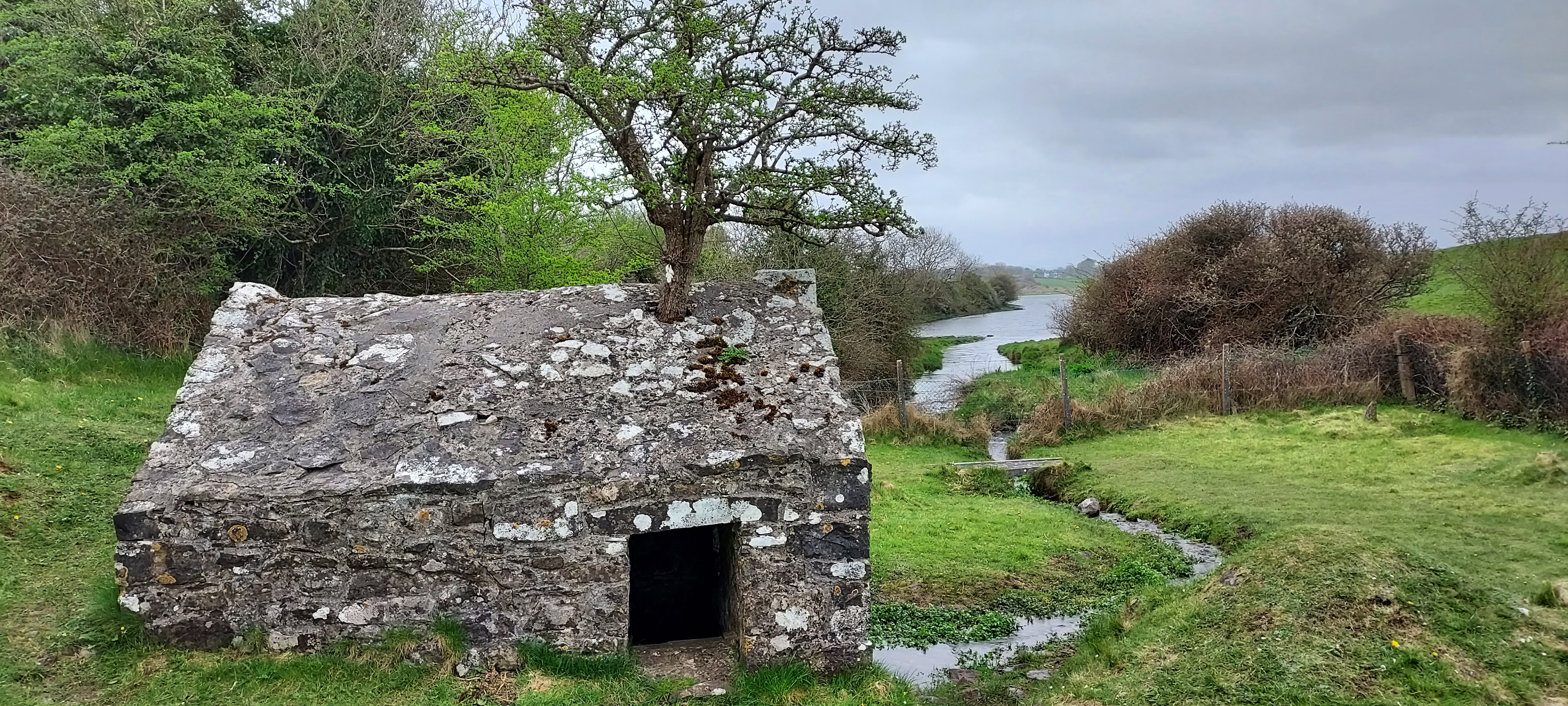
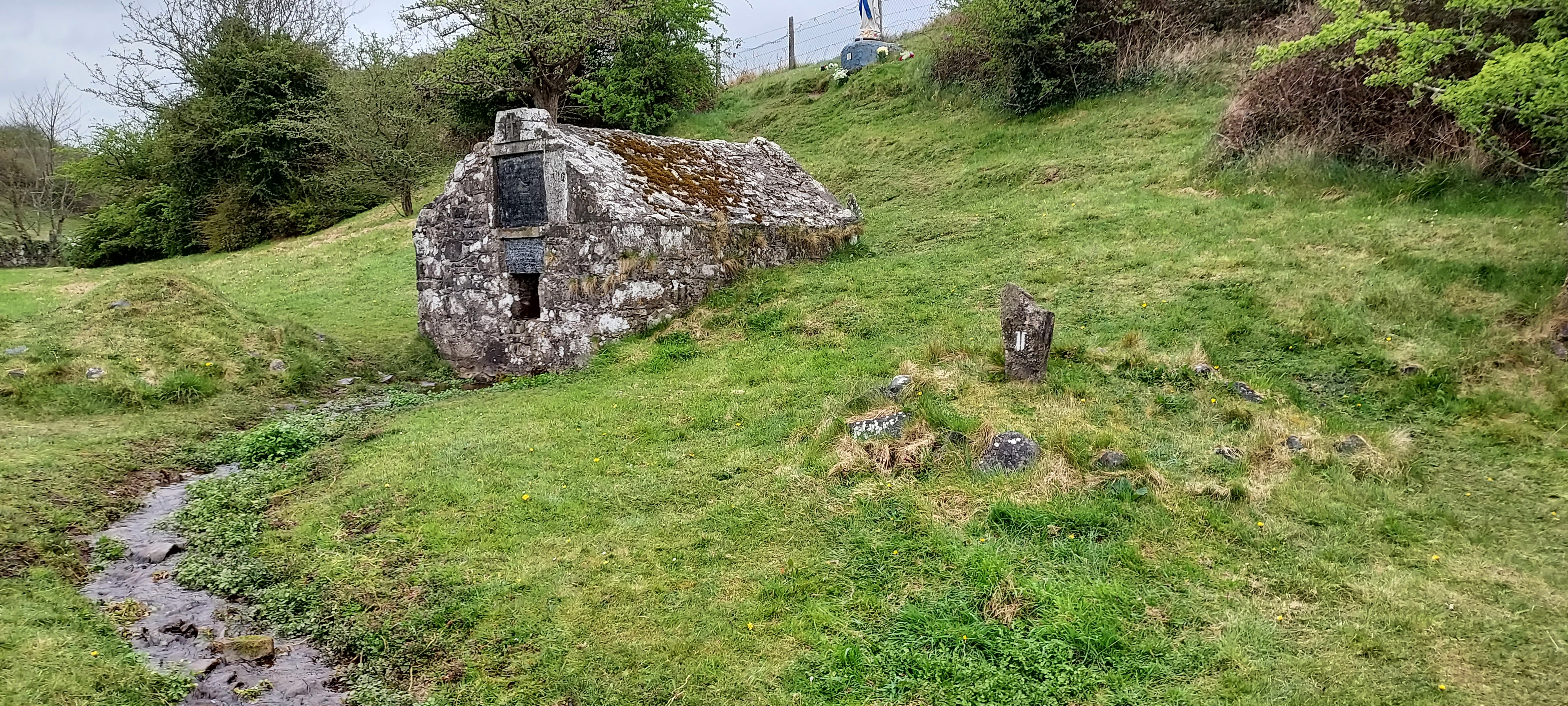
Tobar Mhuire, the ‘Holy Well’, is located on sacred ground in Co Mayo, close to where the Rosserk river meets the estuary of the River Moy. (Find it here.)
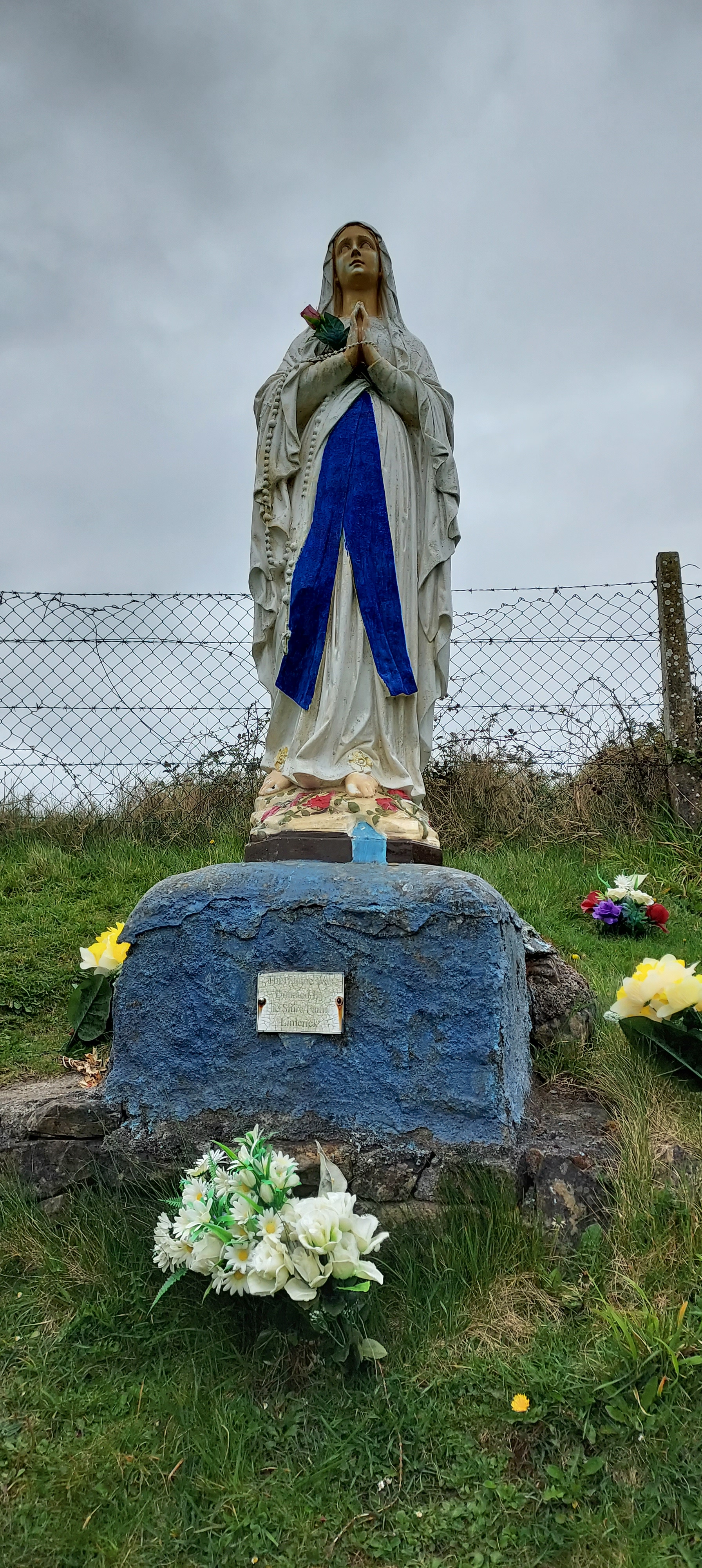
According to local folklore, an apparition of the Blessed Virgin Mary occurred on this site circa 1680.
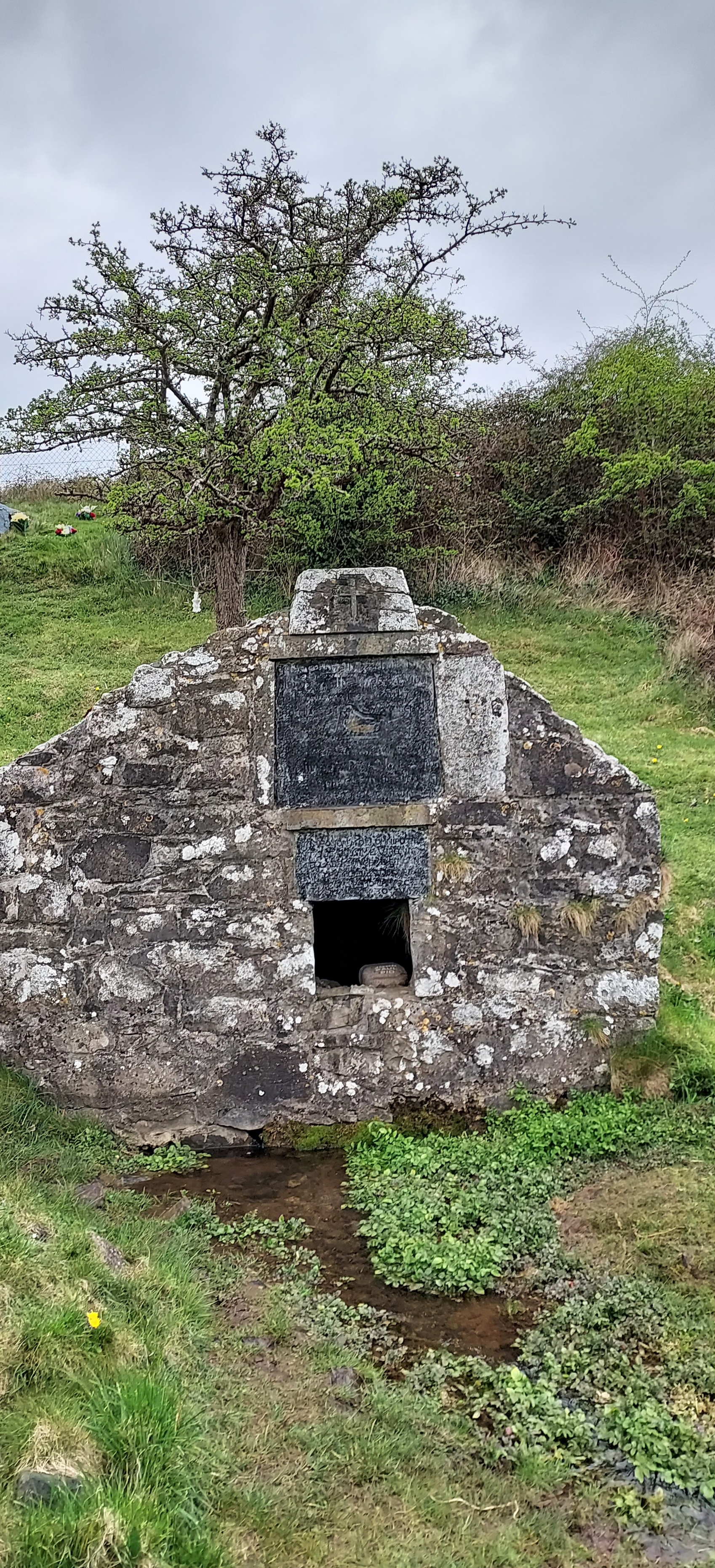
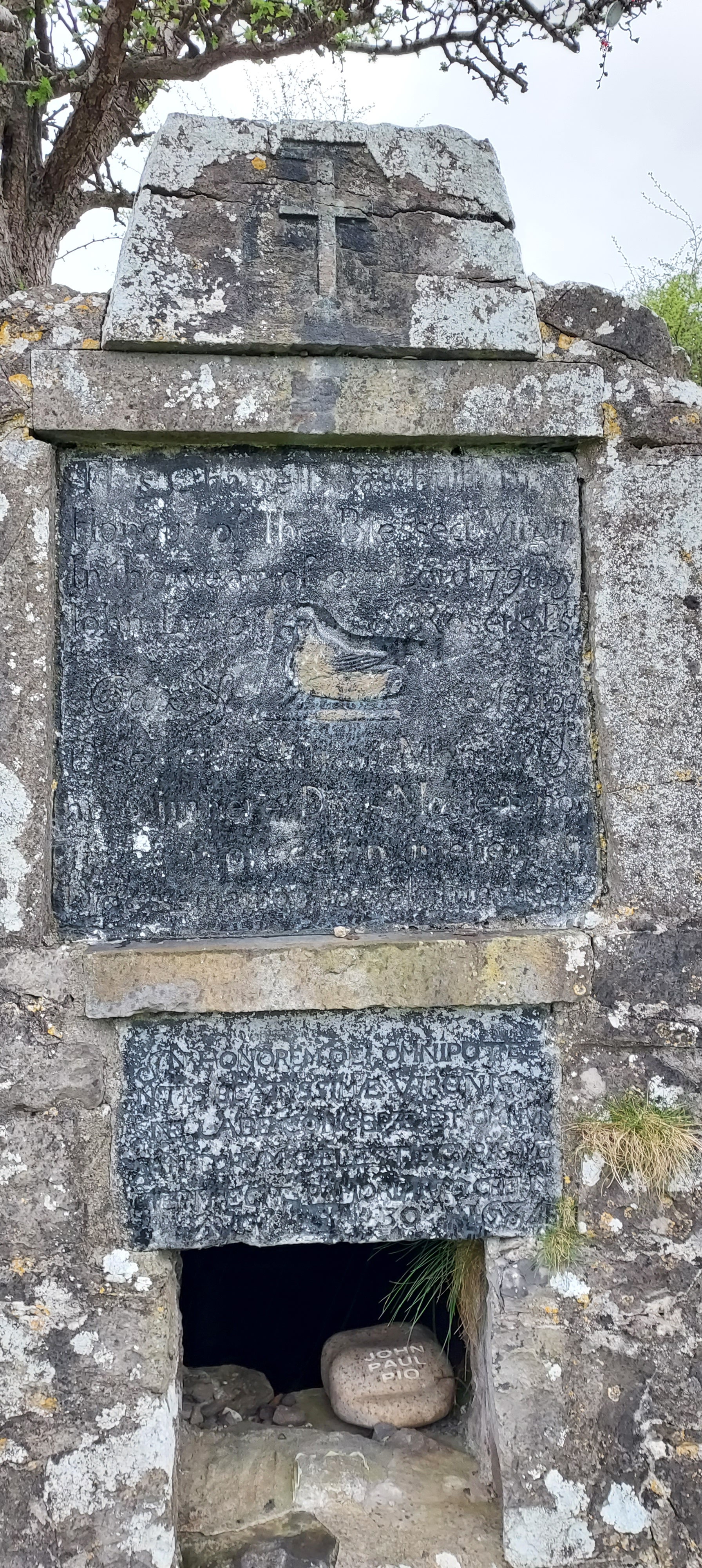
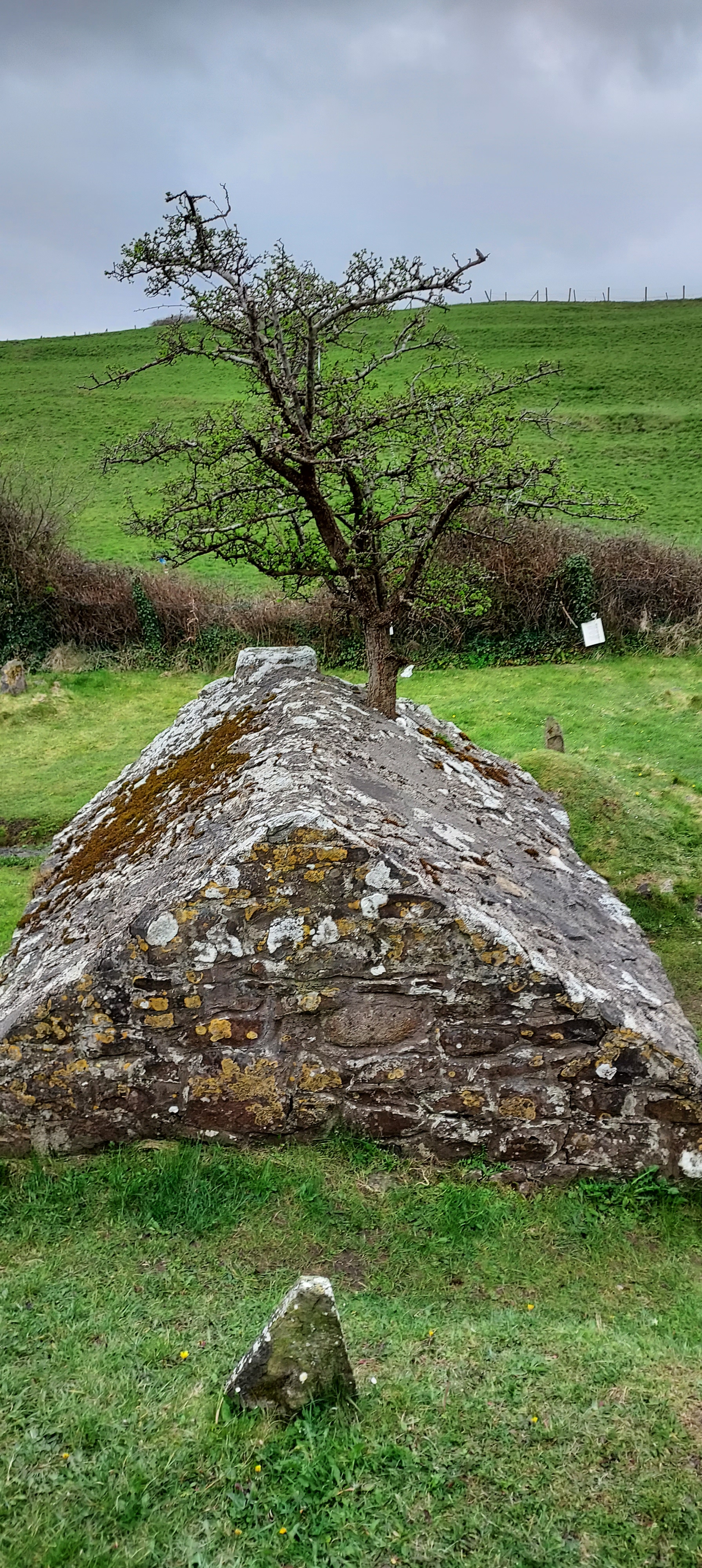
The Holy Well is cocooned in a little stone house. On the front there’s an engraving of the words; “This chapel was built in honour of the Blessed Virgin in the year of Our Lord 1799 by John Lynott of Roserk.” Beneath this inscription is a carving of a dove bordered either side with the motto “Peace and Love,” under which are two Latin inscriptions.
The top Latin inscription reads: “Pax, &c., and after it “Amon.” Further down it says; “Discite justitiam moniti et non temnere divis mortem non timeo mons est in limine nostro Decessem a mundo velut umbra sol 1810”. According to Goggle translate this means; “Learn justice, warned, and do not fear the death of the gods. There is a mountain at our doorstep. I departed from the world like a shadow of the sun 1810.”
The bottom slab is from a preceding building and it’s also in Latin; “In honorem Di omnipotentis Beatissimae Virginis sine labe conceptae & omnium Sanctorum Caelestis Curiae me fieri fecit pater Moriatus Crehn August+30,1684.” This translates to; “In honor of the Almighty Gods of the Most Blessed Virgin conceived without stain and of all the Saints of the Celestial Curia did I become the father of Moriatus Crehn August+30,1684.”
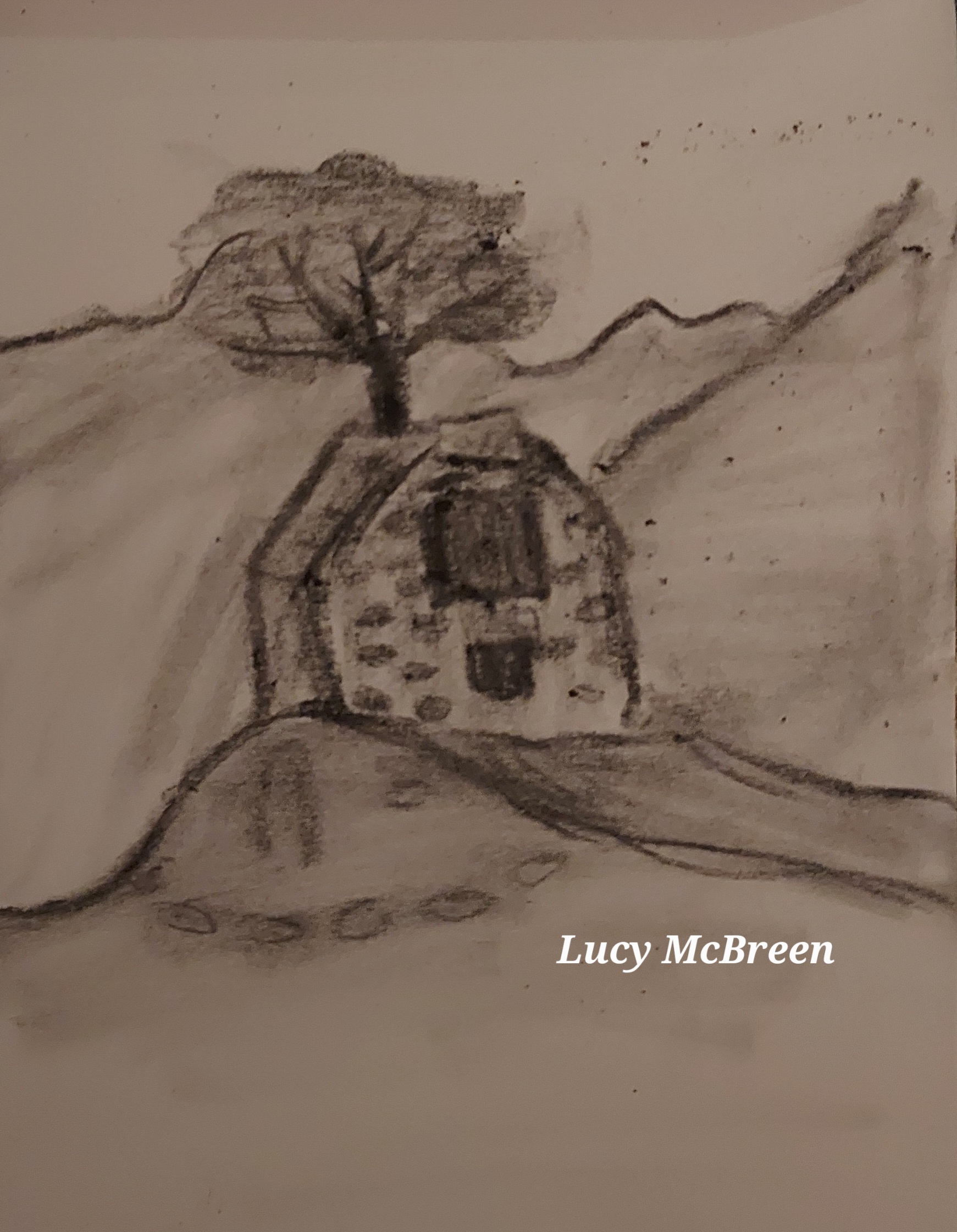
That tree has grown out from the stones in the roof of the building. Up until recently—2 or 3 years ago—people visiting the well would hang ribbons, holy medals, Rosary beads and items belonging to a sick person they would be there to pray for. These offerings were traditionally for the spirit in charge of the well and to the priestess who acted as the guardian.
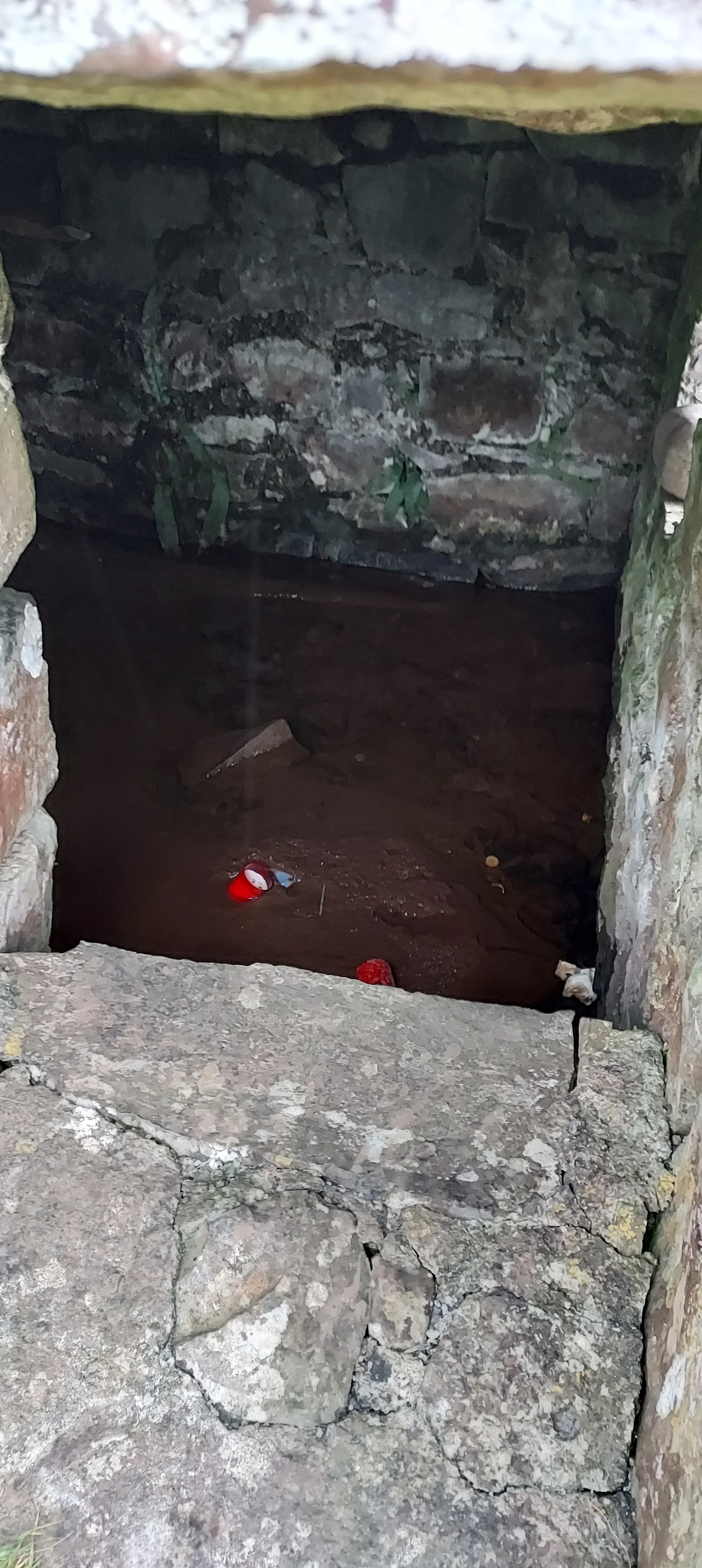
People also throw money into the well and light candles to place along the edges, or leave them floating on the water.
Holy Well
Read HERE for a more in-depth account of Tobar Mhuire and the history of holy wells in general.
The old tradition of the Easter Cludóg goes back a long way. I think they died out after the 80’s or so. But I’d love to know if there’s anyone that still does them.
As soon as we’d eat our Easter Sunday dinner, dad would bring us off out to the countryside for an Easter cludóg. He’d light a little fire and put on a saucepan of water. We’d all have our own eggs ready for the pot. Some people painted their eggs…we never did.
The saucepan would be black before the water would even get warm. We’d play around the field, hopping ditches and hiding in the whin bushes while our eggs cooked. Except PJ—he would sit poking at the fire with a stick. “You’ll be the devil’s right-hand man,” Mam would say.
Thanks for the Drawing Lucy
Dad would have salt and butter to put on the cooked eggs and a big bottle of tea—wrapped in a thick woolly sock to keep it warm! He used to make little egg cups from newspaper to prevent us from burning our wee hands on the hot eggs.
We didn’t get big chocolate Easter eggs. Mam bought one box of chocolate covered marshmallow ‘eggs’ between us all. We’d have one or two of them and some biscuits after we’d eaten our boiled eggs.
When we got older, and capable of lighting our own fires, we’d have our cludóg with our friends. All excited, we’d head off up the fields armed with an old wobbly saucepan, a bottle of water and our eggs. Sometimes it would work out but other times it wouldn’t. Often by the time we’d get the fire up and running we’d start to lose our enthusiasm. Often it took an hour to light it, then another hour for the water to boil. By the time the eggs were cooked we’d be well hungry for them. Sometimes they wouldn’t be properly cooked at all and the wildlife would get them in the end.
Once I went on a cludóg with a friend—in the snow. Easter must have been early that year. I remember my parents trying to tell us it just wasn’t the weather for a cludóg but we had looked forward to it for weeks and we were going no matter what. Needless to say we couldn’t get the fire lit and we eventually gave up and went home. We were shocking hardy when I think of it. I don’t even remember feeling cold that day.
Another Easter Sunday—again in the snow—we lit our wee fire in an old barn. We were sheltered and warm but such a dangerous thing to have done.
An old friend of mine, Peter McConnell, told me about his memories of the cludóg. A big group of them used to light quite a big bonfire up in Farrell’s field. They sang songs and danced while they roasted their eggs.
It’s likely that this tradition will never make a comeback, but it’s good to have the memories.
Here’s some old Easter traditions and beliefs that I’ve gathered up.
🐥Confessions was a must on Good Friday and people would have a period of quietness from mid-day to 3pm.
🐥They would plant some crop seed to bring good luck and blessings.
🐥It was a day for trimming hair as it was believed it would prevent headaches for the rest of the year.
🐥People gave their homes a big spring clean to prepare for the priest calling to bless the house. Some would even whitewash the walls—inside and out.
🐥Precautions were taken to avoid any injury that might cause bloodshed. Workers avoided using any kind of tool that might cause harm., like hammers and nails.
🐥It was believed that a child born on Good Friday and baptized on Easter Sunday would be blessed with the gift of healing. A boy born on Good Friday was to become a priest. And if you died on Good Friday you’d go straight to Heaven; right through those pearly gates with no hassle!
🐥Eggs laid on Good Friday were kept for boiling on Easter Sunday, either at home or at the cludóg.
A Basket of Eggs From Lucy
🐥Ever heard of holy wells? Water from a holy well was most powerful for cures on Good Friday, so visits to these wells and graveyards were more prominent on this day.
EASTER SATURDAY
🐥People went to ceremonies in the chapel to have their water blessed. They would take 3 sips from it and sprinkle some on everyone in the house.
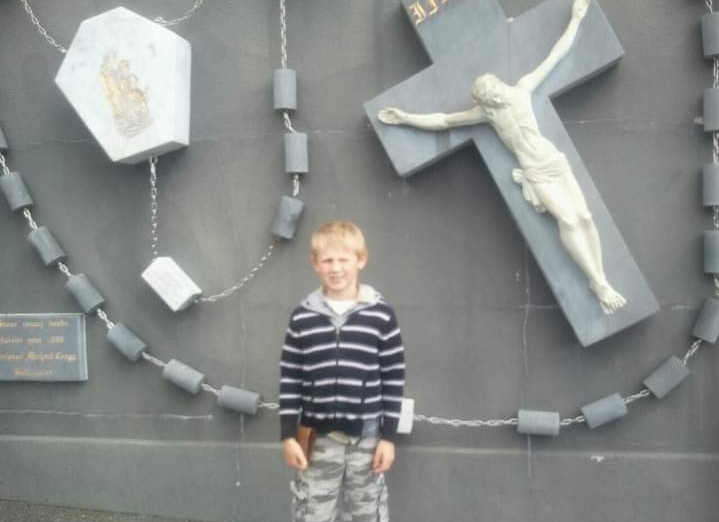
That reminds me of the day my grandson Ben, drank our bottle of holy water. He thought it was River Rock mineral water. I have to say he did have a bit of an obsession with Mass and the missions for a while afterwards. We brought him to Knock once and he insisted on having his picture taken with all the statues. However, the spiritual effects of drinking half a litre of holy water were short lived. Sigh!
Here he is at KnockBless his little cotton socks!
EASTER SUNDAY
🐥People rose as early as sunrise to celebrate Easter Sunday. (That tradition hasn’t completely died.)
🐥After Easter Sunday Mass people attended a ‘herring procession’. Because so much fish (herring in particular) was eaten during Lent, butchers conducted these mock funerals to symbolize the end of Lenten abstinence. Some were known to whip the herring because they were so sick of eating it for 6 weeks.
🐥‘Spoilin meith na hlnide’ was a small piece of meat that people pinned on their wall during Lent. On Easter Sunday it was taken down and burnt to give a nice smell to the inside of the house.
🐥Boil and paint eggs or go on an Easter cludóg. An Easter cludóg was where people would come together and light a bonfire. They’d roast eggs on the fire and eat them saving the egg shells to plant at a May bush.
🐥This tradition lasted right through to the 80’s. Maybe later in some parts of the country. I’d like to know if and where people still have a traditional Easter Cludóg.





 Gloria McBreen